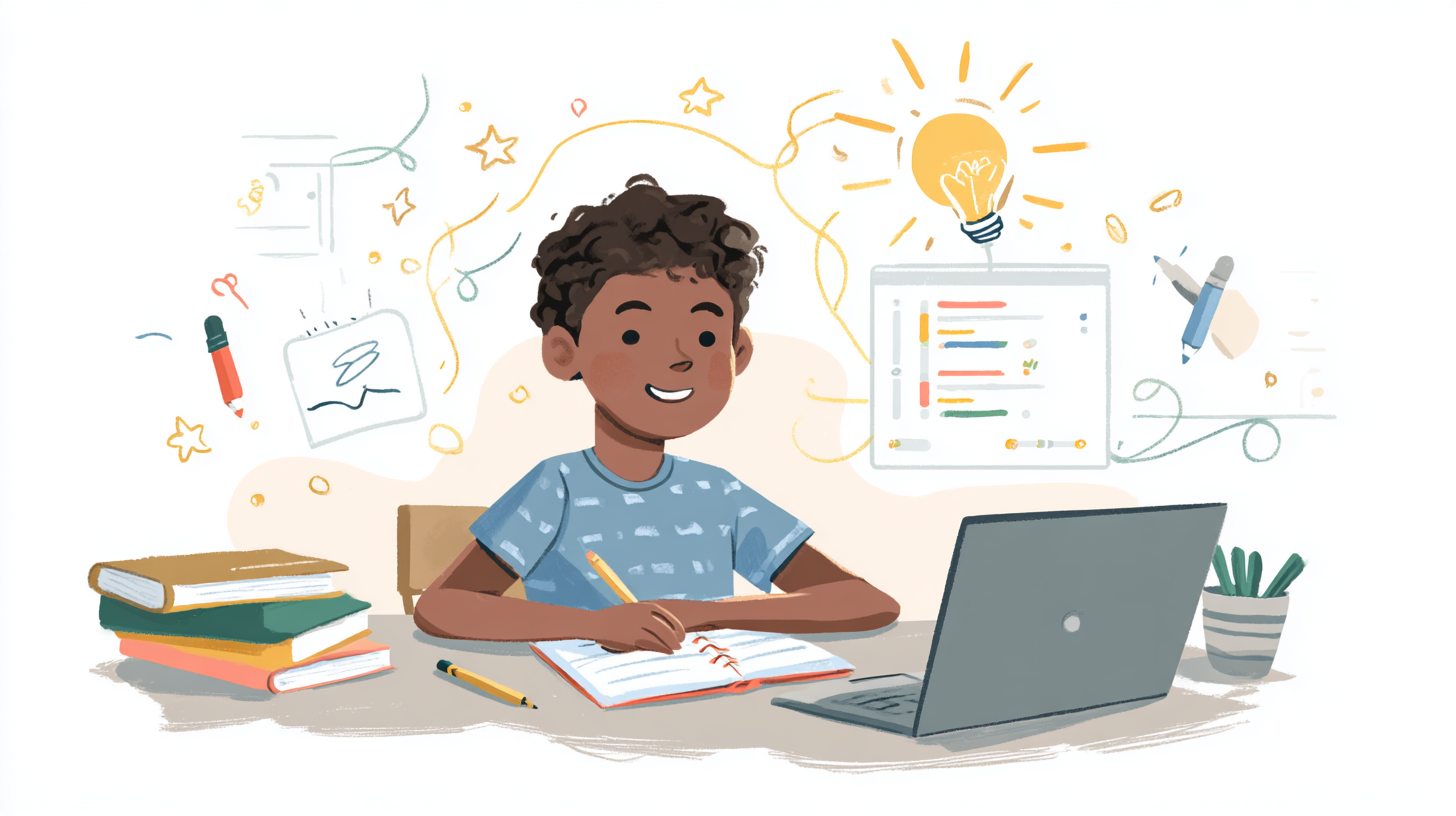

1. Find Your Best Idea
💡 While AI can offer prompts and starting points, DON’T RELY ON AI ALONE to create a truly great idea.
What AI does best is spark your thinking and help you compare existing stories — but the most original ideas still come from your own observations of children, life, and culture.
📚 A smart way to start: adapt a classic.
Use AI tools to search for existing picture books similar to your concept.
- Analyze their strengths and weaknesses.
- Introduce your own twist (new narrator, modern setting, or cultural shift).
That’s how you create something fresh.
2. Build a Unique Character
Many creators jump into writing with just a character image in mind. But appearance alone isn’t enough.
What really makes a character compelling is their “inner portrait”:
- Personality
- Speech style
- Motivation
- Fears
- Unexpected quirks
🐻 Create a character readers won’t forget.
Use AI-powered character card generators or questionnaires to explore:
- What does the main character want and fear?
- Do they have strange habits or secrets?
- How do they talk? (catchphrases, tone)
- Have they ever done something surprising?
3. Get the Right Word Count
📏 Match the target age group.
- Most picture books for ages 3–7 should stay under 750 words.
- Absolutely keep it under 1,000 words — both publishers and AI platforms may reject it otherwise.
📌 Use AI writing tools with word limit enforcement and age-level checking to stay within the ideal range.
4. Start Fast
🎪 Grab attention from the first sentence.
If you let AI write freely, it’ll likely begin with “Once upon a time.” It’s traditional, but too slow for today’s young readers.
Instead, begin with action:
- A dinosaur bursts into a classroom?
- A mysterious box falls from the sky?
- A child wakes up as a frog?
📌 Use AI “opening line boosters” to create attention-grabbing first sentences.
5. Create Conflict + Use Repetition
🧱 Stories that feel flat often lack direction, obstacles, or suspense.
😟 Conflict drives the story:
- What does the main character want?
- What failures or blocks do they face?
- How do they overcome them?
🔁 Repetition adds rhythm and fun:
- Repeating sentence structures
- Repeating story formats
- Repeating sounds or actions
These patterns engage kids and build anticipation.
6. Write for Illustrators
🎨 Write with visual scenes in mind.
A picture book = text + images. Illustrators can’t draw from vague ideas.
Use AI-generated sketch previews to test visual appeal:
- Don’t stay indoors — try forest waterfalls or moon kitchens.
- Add visual flair (lemur, three-legged octopus, goose with goggles).
- Leave space for illustrations by focusing on movement, not tiny details.
7. End Quickly and With Echo
🏁 Wrap it up fast, with a callback.
❌ Don’t over-explain with a forced moral (“So she learned to share”).
✅ Instead, echo something from the beginning:
- If she obsessed over purple lollipops, end with “And from that day on, she only licked red ones.”
📌 Use AI tools to spot opportunities for callback endings.
8. Let AI Be Your Editor
🛠️ AI isn’t your storyteller — it’s your text polisher.
It can:
- Refine translations for local tone
- Catch repeated phrases or clunky rhythms
- Adjust vocabulary for specific age levels (2 vs 6 years)
- Flag cultural or representation issues
📌 Use “Story Polishing Mode” post-draft to automate cleanup.
Final Advice: AI + Human = Creative Superpower
Creating picture books blends text, imagery, and rhythm — and with AI, it’s never been easier.
Use AI to:
- Draft outlines
- Shape characters
- Smooth pacing
- Generate visual prompts
But remember: the soul of the story comes from your understanding of childhood.
One creator once asked, “How do I know what children love?”
The best answers don’t come from AI, but from real life. Step into a child’s world. Play with them. Listen to their words. Watch their moods. Your best story ideas will live in those details.
📌 Let AI handle the mechanics — so you can focus on imagining, feeling, and storytelling.
✨ Now go write your picture book!
📖 Reference: Adapted and expanded from a blog originally published by Bookfox (how-to-write-a-childrens-book).