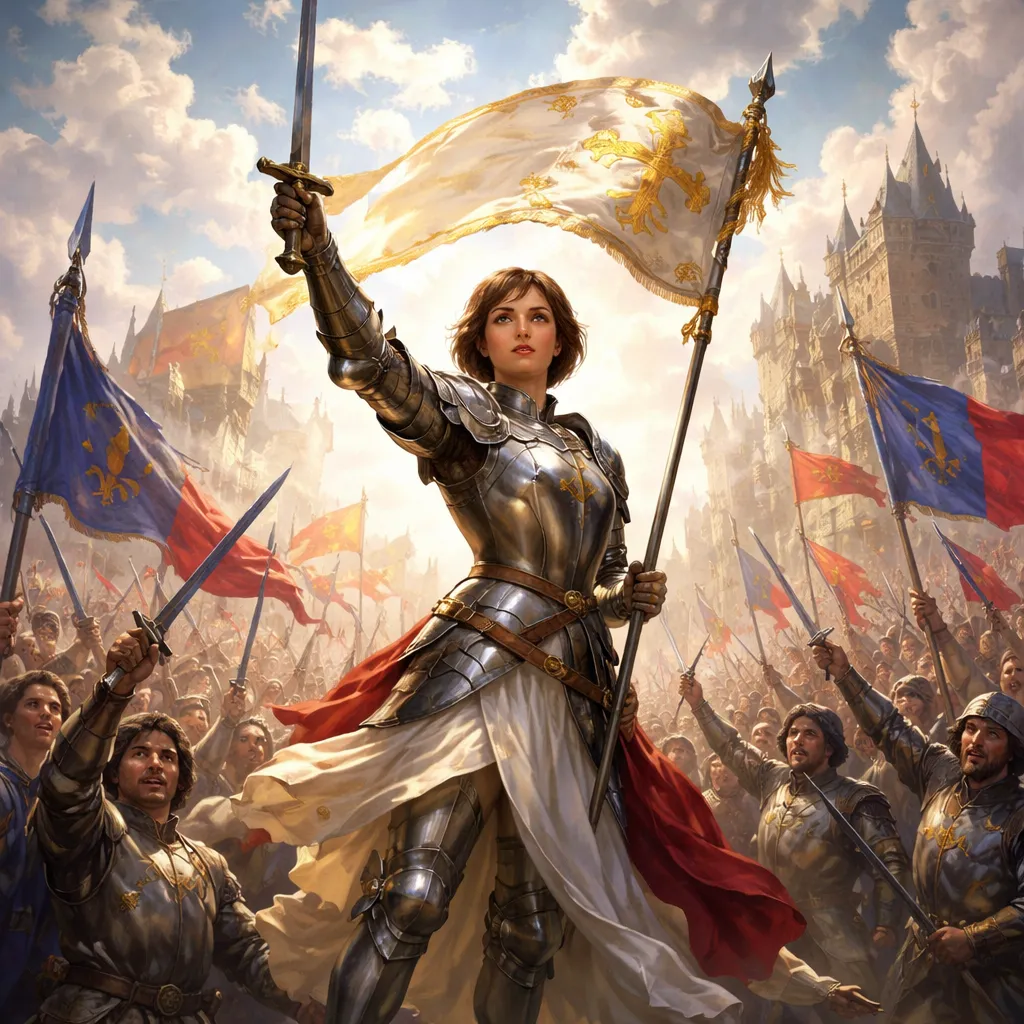

Introduction to Joan of Arc
Joan of Arc, also known as Jeanne d’Arc in French, is one of the most iconic figures in French history. Born around 1412 in Domrémy, France, Joan became a military leader and a symbol of courage, faith, and national pride. At a young age, she rose to prominence for her conviction and leadership during the Hundred Years' War, a long conflict between France and England.
Her life story is one of extraordinary determination. She led the French army to several important victories, which played a pivotal role in the eventual French victory in the war. Joan’s courage and leadership have inspired generations of people around the world, and she is celebrated as a national hero in France. Her legacy has transcended time and remains a beacon of hope, faith, and perseverance, especially for young individuals striving to make a difference.
Understanding Joan of Arc’s story is not only about learning French history but also about recognizing the values of bravery, commitment, and standing up for one’s beliefs. Her extraordinary journey is a powerful example of how a single individual, regardless of their background or age, can change the course of history.
Early Life and Background
Joan was born to Jacques d'Arc and Isabelle Romée in the small village of Domrémy, located in northeastern France. Her family was relatively modest, and she grew up in a peaceful rural environment, spending much of her early years helping her parents with farming and household duties.
As a child, Joan was known for her strong religious faith. She began experiencing visions and hearing voices, which she believed were messages from saints, including Saint Michael, Saint Catherine, and Saint Margaret. These voices guided her toward a life of service, and at the age of 13, she became convinced that she was chosen by God to help France win the war against England.
Joan’s early education was limited, as she was not formally schooled. However, she was well-versed in the teachings of the Catholic Church, which heavily influenced her worldview and decision-making. Her devotion to her faith was a guiding force throughout her life, and it played a central role in her military leadership.
In her late teens, Joan approached local military leaders and claimed that God had sent her to help Charles VII, the Dauphin (heir to the French throne), reclaim his kingdom from English occupation. Despite her lack of military training, she convinced many of her sincerity and determination.
Career Highlights and Achievements
Joan’s career took an unexpected turn when she convinced Charles VII to allow her to lead an army to lift the siege of Orléans, one of the most crucial battles of the Hundred Years’ War. In 1429, she was given a small army and set off to confront the English forces. Under her leadership, the French army achieved a stunning victory. The lifting of the siege of Orléans marked a turning point in the war, and it is often considered Joan's most significant achievement.
Her success in Orléans earned her widespread recognition, and Joan was given command of more troops. She continued to inspire the French forces with her confidence, faith, and leadership. Her remarkable ability to rally troops and strategize on the battlefield allowed her to help Charles VII secure his coronation as the King of France in Reims in July 1429. This victory was a major symbolic and political achievement for the French and played a significant role in boosting their morale.
Joan’s rise to fame was swift, and she was quickly seen as a symbol of hope for France. However, despite her military successes, her fortunes would soon change. In 1430, Joan was captured by the Burgundians, who were allies of the English, during a military campaign. She was handed over to the English and put on trial for charges including witchcraft, heresy, and cross-dressing, as she had worn men’s military attire.
After a lengthy and politically charged trial, Joan was convicted and sentenced to death. On May 30, 1431, at the age of 19, Joan was executed by burning at the stake. Her death did not mark the end of her legacy, however. In 1456, a posthumous retrial declared her innocent, and she was canonized as a saint by the Catholic Church in 1920.
Famous Works or Performances
Joan of Arc’s most famous “performances” are not artistic works, but her military leadership and heroic actions. Her ability to command an army, inspire troops, and fight for her beliefs made her a powerful figure in history. The siege of Orléans, her leadership at the Battle of Patay, and her role in the coronation of Charles VII are her lasting contributions to French history.
Her role in these military campaigns exemplifies how she used her faith and confidence to guide her actions. Joan’s leadership was not based on traditional military strategies but on her unwavering belief in her divine mission. This unique approach allowed her to achieve victories that many thought were impossible, and it continues to inspire people around the world today.
Joan’s story has been told and retold in countless books, films, and plays, and her image has become synonymous with courage and determination. She remains a central figure in the history of France, and her story has influenced many generations of women and men who strive to make a difference in the world.
Personal Life and Fun Facts
Joan of Arc’s life was marked by her devotion to her faith and her unwavering commitment to her mission. Despite her young age, she was fearless and unyielding in her pursuit of victory for France. She was known for her simple, humble nature and her strong sense of purpose.
One interesting fact about Joan is that, although she was a military leader, she never actually fought in hand-to-hand combat. Instead, she led her troops from the front, providing inspiration and moral support. She was often seen riding into battle with her standard (a banner) held high, rallying her soldiers with her presence and words of encouragement.
Joan’s relationship with her family was also important to her. She was very close to her mother and siblings, and her desire to help France was deeply rooted in her love for her country and its people. Despite the trials and hardships she faced, Joan remained resolute in her belief that she was doing God's work, and her faith never wavered.
Legacy and Influence
Joan of Arc’s legacy is vast and continues to inspire people today. She is remembered as a national hero in France, where her image is celebrated in literature, art, and culture. Her courage, faith, and determination have made her a symbol of resistance and hope for many generations.
Joan’s influence extends far beyond France. She is considered a feminist icon because she broke the gender norms of her time by leading an army and fighting in a male-dominated world. Joan demonstrated that leadership, courage, and integrity are not defined by gender, and her story has inspired countless women and men to pursue their own dreams and fight for their beliefs.
Joan's canonization as a saint in the Catholic Church further solidified her place in history. She is now known as Saint Joan of Arc, and her feast day is celebrated on May 30th. Her story continues to inspire not only those interested in history but also individuals who believe in the power of conviction, faith, and perseverance.
Quotes or Famous Sayings
Throughout her life, Joan of Arc said many words that have been passed down through history. One of her most famous quotes is:
"I am not afraid... I was born to do this."
This statement encapsulates Joan’s unwavering confidence and determination. She believed deeply in her mission and her ability to fulfill it, and this conviction carried her through some of the most challenging moments of her life.
Another powerful quote from Joan is:
"God first, and then the king."
This quote demonstrates her commitment to both her faith and her duty to the French crown, highlighting the balance she maintained between personal belief and national loyalty.
How to Learn from Joan of Arc
Joan of Arc’s life offers many lessons for young people today. Her unwavering belief in herself and her mission is a testament to the power of confidence and determination. Joan teaches us the importance of standing firm in our beliefs, even when faced with adversity or opposition.
Her leadership style, based on inspiration and faith, shows that being a good leader is not just about strategy or power but also about leading with integrity and purpose. Joan’s story encourages us to pursue our goals with passion and conviction, no matter the obstacles in our path.
Joan also teaches us about the importance of courage in the face of fear. At the age of 17, she was thrust into a role of leadership, and despite her youth, she led armies into battle and fought for what she believed in. Her life is a powerful reminder that age, gender, or background do not define a person’s ability to make a difference in the world.
Joan of Arc’s legacy is a profound example of how courage, faith, and leadership can change the course of history. Her story continues to inspire individuals all over the world to pursue their dreams, challenge the status quo, and stand firm in their beliefs.
This article offers a glimpse into the life and legacy of Joan of Arc, whose influence continues to inspire young people and adults alike. Her courage, leadership, and unwavering faith remind us of the power of individual determination and the importance of fighting for what we believe in.