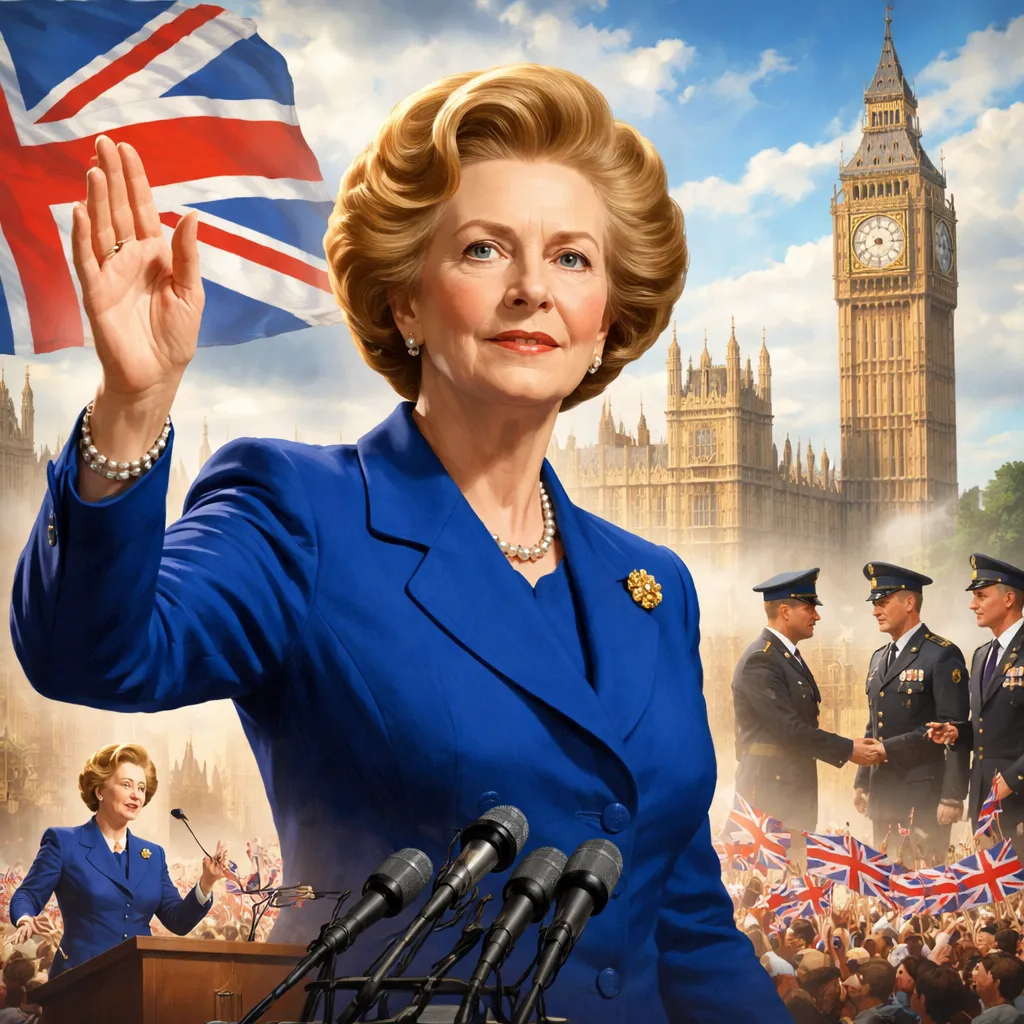

Introduction to Margaret Thatcher
Margaret Thatcher, born in 1925 in Grantham, England, was the first woman to serve as Prime Minister of the United Kingdom. Her tenure, from 1979 to 1990, was marked by dramatic political and economic changes. Known as the “Iron Lady,” Thatcher was admired for her firm leadership and ability to navigate some of the most challenging times in British history. Her approach to politics, policy, and leadership continues to influence not only the UK but many parts of the world today.
Thatcher’s political career is remembered for her strong stances on various issues, particularly her commitment to free-market policies, national security, and restoring the United Kingdom's global influence. Even after her time in office, her legacy continues to provoke discussion and inspire debates about the role of leadership in modern governance.
Her story serves as an important example of how determination, hard work, and a commitment to one’s principles can create lasting change.
Early Life and Background
Margaret Hilda Roberts was born on October 13, 1925, to Alfred and Beatrice Roberts in Grantham, Lincolnshire. Her father was a shopkeeper and local politician, and her mother was deeply religious. Growing up in a working-class family, Margaret learned early the importance of discipline, responsibility, and service to the community.
Margaret was an intelligent and ambitious child, excelling in her studies. She attended Grantham Girls' School and later studied at Somerville College, Oxford, where she earned a degree in chemistry. It was during her time at Oxford that she became more involved in politics, joining the Conservative Party and rising quickly within its ranks.
Her education and early experiences were pivotal in shaping her character and leadership style. As a young woman, Margaret showed a determination to succeed, breaking barriers in a field dominated by men. She was always determined to be heard and to prove that her gender would not stand in her way.
Career Highlights and Achievements
Margaret Thatcher’s political career began in earnest when she was elected as Member of Parliament (MP) for Finchley in 1959. In the following years, she climbed the political ladder, becoming the Secretary of State for Education and Science in 1970. However, her time in office was far from smooth, as she faced strong opposition and criticism, particularly for her decision to end free milk for school children, which earned her the nickname “Milk Snatcher.”
In 1975, she became the leader of the Conservative Party, a position that allowed her to influence British politics more directly. Four years later, she became the Prime Minister of the United Kingdom. Her leadership was defined by her commitment to conservative economic policies, including reducing government spending, privatizing state-owned industries, and curbing the power of trade unions.
Thatcher’s tenure saw Britain’s economy undergo significant transformations, which earned her both praise and criticism. She was instrumental in reducing inflation, revitalizing the British economy, and promoting individual responsibility. However, her policies also led to widespread social unrest and significant divisions in society, especially regarding unemployment and cuts to social services.
Another key achievement was her handling of the Falklands War in 1982. When Argentina invaded the Falkland Islands, a British overseas territory, Thatcher showed decisive leadership, sending British forces to reclaim the islands. Her success in this conflict cemented her image as a strong and resolute leader on the global stage.
Thatcher was also an important figure in international politics, playing a central role in the Cold War. She developed a close working relationship with U.S. President Ronald Reagan, and together they advocated for policies that eventually led to the end of the Cold War. Thatcher’s role in these international developments helped strengthen Britain’s position in world affairs.
Famous Works or Performances
While Margaret Thatcher is not known for artistic or cultural works, her political achievements and speeches are certainly memorable. Some of her most notable contributions include:
The Falklands War Speech (1982): During the Falklands War, Thatcher delivered numerous speeches that showcased her unwavering commitment to defending Britain’s interests. Her firm stance during this time reinforced her “Iron Lady” persona and made her an iconic figure in British politics. The “There Is No Alternative” (TINA) Doctrine: One of Thatcher’s most famous political philosophies was captured in the phrase "There is no alternative," which she used to justify her economic and social policies. This concept became a central theme throughout her leadership. The Iron Lady Speech (1976): When she was still in opposition, Margaret Thatcher gave a speech that would become legendary in shaping her political future. The speech earned her the nickname "Iron Lady" due to her uncompromising and strong rhetoric against the Soviet Union.
Though Margaret Thatcher may not have created works of art or music, her political speeches and actions were defining elements of her legacy. These speeches continue to be cited and referenced for their clear articulation of her values and policies.
Personal Life and Fun Facts
Margaret Thatcher's personal life was a contrast to her public persona. Married to Denis Thatcher, a modest businessman, the couple had two children, twins Mark and Carol. Despite her busy career, Thatcher remained a devoted wife and mother, often emphasizing the importance of family in her life.
Though often seen as stern and unapproachable, Margaret Thatcher had a lighter side. She enjoyed shopping, dining out, and spending time with friends and family. She also had a great love for fashion, known for her impeccable sense of style. Her distinct appearance and formal attire became a trademark of her public image.
Interestingly, Thatcher was also an avid cook and often prepared meals for her family. She took great pride in her culinary skills and enjoyed preparing dinner parties for close friends. This personal interest in domestic life showed a different side of the Iron Lady, demonstrating that her strength in public life was balanced by a sense of warmth and care at home.
Her personal life, while private, added depth to her leadership. It reminded people that even the strongest of leaders have personal lives that shape their experiences and decisions.
Legacy and Influence
Margaret Thatcher’s legacy is vast and complex. She is regarded as one of the most influential and controversial political figures of the 20th century. Her policies transformed the United Kingdom in significant ways, but also generated strong opposition and division in British society.
In Britain, her legacy is still debated, with some praising her for revitalizing the economy and restoring national pride, while others criticize her for increasing inequality and neglecting social welfare. Internationally, Thatcher remains a symbol of strong leadership, and her impact on global politics is still felt today.
Her influence on the Conservative Party and her role in reshaping the British economy and welfare state are key aspects of her lasting impact. The policies she implemented laid the groundwork for the modern conservative movement, both in Britain and around the world.
Quotes or Famous Sayings
Margaret Thatcher was known for her memorable quotes that captured her bold and resolute leadership style. Some of her most famous quotes include:
"Watch your thoughts, for they will become actions. Watch your actions, for they’ll become... habits. Watch your habits, for they will forge your character. Watch your character, for it will make your destiny." "Being powerful is like being a lady. If you have to tell people you are, you aren't." "Don’t follow the crowd, let the crowd follow you."
These quotes not only reflect her values but also inspire individuals to be decisive, confident, and bold in the face of adversity.
How to Learn from Margaret Thatcher
Margaret Thatcher’s life and career offer several lessons that can be applied to today’s world. One key takeaway is the importance of confidence and decisiveness. Thatcher’s ability to stand firm in her beliefs, even in the face of criticism, is a powerful reminder that effective leadership requires both courage and conviction.
Her emphasis on self-reliance and personal responsibility can also serve as a valuable lesson for young people today. Thatcher believed that individuals should have the freedom and responsibility to shape their own futures, a philosophy that continues to resonate in modern society.
Thatcher’s legacy also teaches us about resilience and perseverance. Even when faced with challenges and opposition, she remained determined to achieve her goals and to lead her country through difficult times.
Lastly, Margaret Thatcher’s example shows that leadership is about more than simply holding a position of power. It’s about making tough decisions, standing by them, and leaving a lasting impact on society.
By learning from her leadership style and her dedication to her values, young people can be inspired to lead with strength, integrity, and confidence.