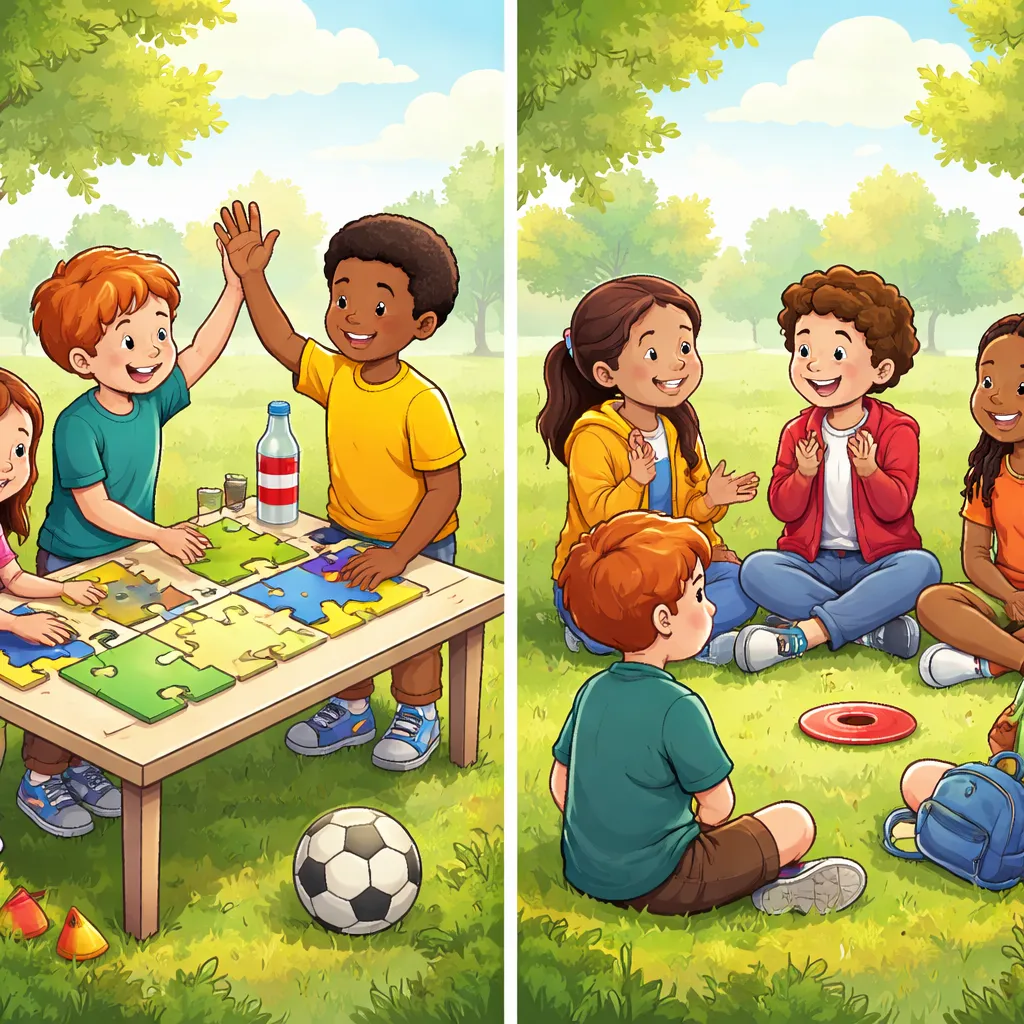

Are Similar Words Really Interchangeable? Many young learners use the words team and group as if they are perfect twins in every sentence. In our busy daily lives, we often see clusters of people working together at school or playing at the park. While these two terms appear together in many stories, they represent very different ideas in the English language. One describes a collection of individuals with a shared goal, while the other refers to any collection of things or people.
Understanding the unique roles of these words helps children communicate with more precision and professional flair. If a student says they are "in a team" for a bus ride, it sounds a bit strange to a native speaker. If they say they are in a "bus group," the listener immediately understands the simple collection of people. These small linguistic details are the building blocks of clear communication for young scholars and leaders.
Learning how these words function together allows parents and children to explore the world of social science more deeply. It moves a student beyond basic labels and into the world of logical and context-aware language application. When a learner knows the specific role of each word, they feel like a true expert in their community. This foundation makes reading social studies or watching news reports much more engaging for the entire family.
Set 1: Team vs Group — Which One Is More Common? The word group is significantly more common in general conversation because it describes a universal way of organizing the world. You will hear it in science class when sorting animals or see it on a math worksheet about sets of numbers. It is a high-frequency noun that children encounter almost every single day in many different academic settings. Because it applies to so many life situations, it is one of the first organizational words a child masters.
Team is a more specialized word that people use when discussing sports, projects, or professional collaboration. While it is a very common word in the media, its usage is more restricted to situations involving a common mission. You might hear it more often at a soccer match or in a business office than in a general nature lesson. It suggests a certain level of cooperation and shared effort that a simple "collection" might not always require.
In daily English, "group" acts as a general word for any bunch of people or things that happen to be together. "Team" acts as a more specific label for a group of people who work together to win a game or solve a problem. Both words are essential for a child's vocabulary, but "group" serves as the broader and more frequent starting point. Knowing which one is more common helps a child prioritize their learning and sound more natural when they speak.
Set 2: Team vs Group — Same Meaning, Different Contexts We use the term team when we want to emphasize the cooperation, the shared goal, and the mutual support of the members. For example, a parent might say, "Your basketball team worked very hard to win the championship trophy this year." In this context, the focus remains on the unity of the players and their shared desire to reach a specific result. It describes the deep bond of people who rely on each other to succeed in a challenge.
We use the term group to describe a collection of people or things that are gathered in one place for any reason. If a child is going on a field trip, a teacher might say, "Please stay with your assigned group while we walk through the museum." Here, the word provides a focus on the organization and location rather than a competitive or shared professional goal. The context moves from the mission of the people to the simple act of being gathered together.
Think of it like the difference between "orchestra" and a "crowd" in a large city park. "Team" is the organized group with a specific job to do, much like the musicians playing a beautiful song together. The "group" is the essential collection of people who might just be watching or walking by without a shared task. Using these contexts helps children understand that how we gather changes the name of the collection we form.
Set 3: Team vs Group — Which Word Is “Bigger” or More Emphatic? Team is the "bigger" word because it represents a powerful social bond and a high level of personal commitment. It encompasses the history of famous sports clubs, the spirit of collaboration, and the pride of wearing a shared uniform. When a student says, "I am part of the team," they are expressing a deep connection to their peers and a shared identity. It is an emphatic word that carries the weight of responsibility and the excitement of working together for a victory.
Group is an emphatic word when it is used to describe a massive collection or a significant social category. Phrases like "a large group of supporters" or "the minority group" show how much impact this word can have on a person's perspective. It highlights a specific segment of society or a large number of items that need careful attention and study. While it covers a general collection, the social impact of a "large group" is very high for young learners.
For a young learner, "team" feels like a grand adventure where they must learn to trust and help their friends. "Group" feels like a helpful way to organize their toys, their friends, or the different types of food they eat. One word represents a lifelong habit of leadership and cooperation, while the other represents the skill of organization and categorization. Both words have power, but they inspire different types of social awareness and logic in a child's growing mind.
Set 4: Team vs Group — Concrete vs Abstract The word group is often more concrete because it refers to a physical, tangible collection that you can see and count. You can see a group of birds in the sky, feel a group of marbles in your pocket, and count the people in a room. It is very easy for children to point to a cluster of objects and know exactly what that group looks like. This concrete nature makes it an excellent word for beginners to learn through direct observation and sorting games.
Team can be more abstract because it often refers to a spirit of cooperation or a professional bond that you cannot touch. You cannot "touch" the team spirit, but you can see the results of the action through the players' combined success. It involves abstract ideas like "loyalty," "synergy," and "coordination" that guide how a person works with others toward a goal. This makes it a great word for teaching children about invisible qualities like kindness and shared responsibility.
Bridging these two concepts helps children see how physical gatherings support abstract goals in their personal development. A concrete "group" provides the physical presence of people, but "team" provides the internal drive and the abstract progress toward a goal. This connection helps children develop a more sophisticated way of describing their experiences and their social growth. It turns a simple gathering into a meaningful lesson about the relationship between being together and working together.
Set 5: Team vs Group — Verb or Noun? First Understand the Role In standard English, the word group is very flexible because it functions as both a common noun and an active verb. You can "identify the group" (noun) or you can "group the red blocks together" (verb) to organize your play area. Understanding this double role helps children build more creative and flexible sentences in their daily writing and speaking. It allows them to describe their organizational actions with more variety during their language and math lessons.
The word team primarily functions as a noun that names the specific collection of people with a shared goal. You might say, "The debate team is practicing for the big competition on Friday," or "I love my new team jersey." However, people also use "team up" as a phrasal verb to describe the act of starting to work together on a project. Teaching this difference helps children understand how nouns can transform into actions when we add a small helping word.
Teaching kids to identify the roles of these words prevents them from making common grammatical mistakes in their schoolwork. They learn that they "belong to a team" (noun) or that they "group items by color" (verb) to be more organized. This level of awareness makes their English sound more polished and shows they understand the deeper rules of the language. It gives them the right tools to express their social interests with both technical accuracy and total clarity.
Set 6: Team vs Group — American English vs British English In American English, the word "team" is used very frequently in the context of school sports and business projects. Americans often talk about "team building" as a way to improve how people work together in an office or classroom. You will find that many children in America are introduced to "teams" through youth leagues and community clubs. The language used is very direct and reflects the word's popularity as a symbol of shared effort and success.
In British English, "team" is also the standard term, but the grammar used with the word can be slightly different. In Britain, people often use a plural verb with the word team, such as "The team are playing well today." In America, people almost always use a singular verb: "The team is playing well today." These regional variations are a fun way for curious children to see how English changes its rules across different cultures.
Despite these small regional flavors, the core meaning of these words remains a universal bridge for kids everywhere. A soccer team looks and behaves the same way whether you are in London, Sydney, or Chicago. Learning that language can have different "styles" in different countries is a wonderful way to encourage a global mindset. It shows children that they are part of a worldwide community of students who share the same language tools.
Set 7: Team vs Group — Which Fits Formal Situations? Team is a very formal term when it is used in the context of professional research, government task forces, and international sports. If a child is writing a formal report on a famous discovery, they might mention the "research team" that found the fossils. It sounds academic and shows that the student understands the official structure of the professional world. Using the formal name indicates a high level of respect and dedication to the collaborative effort being studied.
Group is a formal term when it is used in the context of scientific classification, sociology, and official demographics. For example, a formal report might discuss "age groups" or "experimental groups" in a psychological study about how children learn. While it is a common word, it is also a precise academic term that involves careful measurement and statistical study. Knowing this helps children realize that even simple collections involve high professional standards and technical data.
Guiding children to choose the right word for the right situation is a key part of their social and educational development. When they use "team" in a formal presentation, they sound prepared and mature for their age and learning level. When they use "group" in a technical way, they show they have a "scientist's eye" for the details of classification. Formal language is a tool that helps children communicate their big ideas with authority and total clarity.
Set 8: Team vs Group — Which One Is Easier for Kids to Remember? Group is often easier for children to remember because it is a "logical" word they hear in school every single day. Most kids associate the sound of the word with their "reading group" or the "group project" they do with their classmates. The name is easy to recognize and has a very clear association with being gathered with others for any reason. It is one of the first social organization words that many children master when learning English.
Team is also easy to remember because it is a short, one-syllable word that is associated with sports and fun games. Children quickly learn that this special word refers to the group of friends they play with to win a match or a race. Its connection to uniforms, cheering, and shared goals makes it a very memorable and joyful word for young learners. This simplicity helps the word stick in the brain much more effectively over time for younger students.
To help a child remember both, parents can use the "Goal and Gathering" memory trick during a fun family outing. You are a "group" of people at the park, but you become a "team" when you play a game of tag together. This hands-on practice ensures that the words are linked to physical movements and positive social emotions in the brain. When learning is tied to fun activities, it becomes a permanent and happy part of their growing memory.
Mini Exercise: Can You Spot the Differences Between These Similar Words? Are you ready to test your knowledge and see if you can tell these two social words apart in a sentence? Read the sentences below and decide whether the word team or group is the best fit for each blank space. This is a great way for parents and kids to work together while improving their reading and logic. Let's see if you can get all four correct!
My brother joined the school debate ______ because he loves to speak in front of people.
A large ______ of birds flew over the playground while we were eating our lunch.
Our science teacher asked us to ______ the different types of leaves by their shape and size.
If we work as a ______, we can finish cleaning the playroom much faster than if we work alone.
How did you do on our mini-quiz? For sentences one and four, "team" is the best choice because it refers to a specific goal and working together. For sentences two and three, "group" is correct because it refers to a collection of birds and the action of organizing items. If you got them all right, you are ready to be the captain of your own vocabulary team!
Parent Tips: How to Help Kids Learn and Remember Similar Words Helping your child learn new words is most successful when it is part of the activities they already love. If your child enjoys social play, use their time with friends to introduce terms like "partner," "member," and "leader." Instead of a long list of words, these terms become part of the exciting story of their personal social progress and fun. This makes the language feel useful and worth remembering for their future classes and daily conversations.
Encourage your child to "narrate" their own activity as if they were a professional commentator watching a social event. Ask them to say things like, "The group is gathering... now they are starting their team project... they are working together!" This active use of language helps bridge the gap between knowing a word and being able to use it correctly. It also builds their confidence in speaking English aloud in a very fun and low-pressure environment.
Keep a "Community Word Chart" on the wall where you can add new terms as your child discovers them in books. You can even draw a picture of a team and label the different roles, like "captain" and "player." Seeing the words every day helps with spelling and ensures they become a permanent part of your child's growing vocabulary. Your encouragement and participation make every new word a fresh opportunity for success and a love of learning.
Exploring the world of social interaction through English is a wonderful way to build a child's mind and heart at the same time. By understanding the specific roles of team and group, children gain a clearer view of the world and how to describe it. These words are not just for games; they are the tools that help us share our lives and achievements with others. Keep gathering, keep talking, and enjoy every moment of this incredible educational journey together as a family.