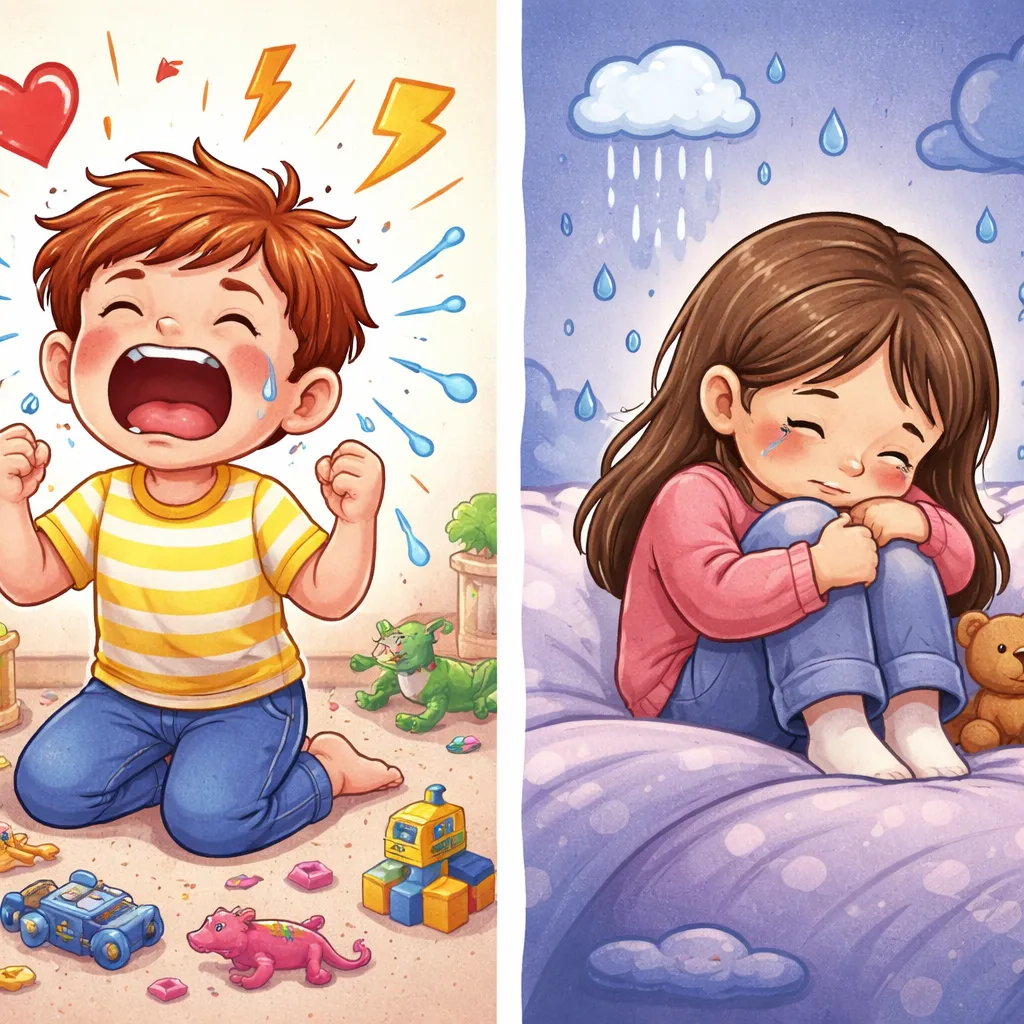

Hello, feeling explorer! Have you ever felt so sad that tears fell? Or maybe you got hurt and your face got wet. Do you say you started to cry? Or do you say you began to weep? They both seem to mean tears coming from your eyes. But are they the same? They are like two different kinds of rain. One is a sudden summer shower. One is a gentle, steady stream. Let's find out! Today, we explore the word friends "cry" and "weep". Knowing their secret is a superpower. It lets you describe feelings perfectly. Let's start our emotional adventure!
First, let's be Feeling Detectives. Listen at home. Here are two sentences. "The baby will cry loudly if his toy falls." "The old story was so sad it made my grandma weep quietly." They both talk about tears. A lost toy. A sad story. Do they sound the same? One feels like a loud, sudden sound. One feels like a soft, deep feeling. Can you sense it? Great observation! Now, let's look at the tears.
Adventure! Into the World of Tears
Welcome to the world of big feelings! "Cry" and "weep" are two different tear-shedders. Think of "cry" as a sudden summer rain shower. It can be loud or soft. It is the general word for tears. Think of "weep" as a quiet, steady stream from a deep spring. It is softer, deeper, and more about deep sadness. Both involve tears. But one is common and general. The other is special and quiet. Let's learn about each one.
The Summer Shower vs. The Quiet Stream Think about the word "cry". "Cry" feels like a summer shower. It is the everyday word. It means to have tears fall from your eyes. You can cry from pain, sadness, or even joy. Babies cry. I cry at happy movies. Don't cry. It is a common, general word. Now, think about "weep". "Weep" feels like a quiet stream. It is a more poetic, older word. It often means to cry quietly for a long time, usually from deep sadness. The word sounds soft and sad. She wept at the funeral. He wept with joy. "Cry" is the shower. "Weep" is the stream. One is everyday. The other is deeper.
The General Word vs. The Deep Feeling Word Let's compare their strength. "Cry" is the general word. It covers all kinds of tears. You can cry loudly, softly, happily, or sadly. It is the word you use most often. "Weep" is more specific. It usually means to cry quietly, often from a deep emotion like grief or sometimes great joy. "Cry" is like talking in a normal voice. "Weep" is like a whisper from the heart. "Cry" is for any tear. "Weep" is for deep feeling tears. One is common. The other is special.
Their Special Word Partners and Common Uses Words have best friends. "Cry" has many common friends. Cry out loud. Cry yourself to sleep. Make someone cry. Burst into cry? No! Burst into tears. "Weep" has fewer, softer friends. Weep silently. Weep bitter tears. Weep for joy. Note: We often say "cry" for sounds too, like "The cat cried at the door." But we don't say an animal "weeps". "Weep" is mostly for people.
Let's visit a school scene. You fall and scrape your knee on the playground. It hurts! You might run to the teacher and cry. This is a natural, immediate reaction to pain. In a history lesson, you read about a very sad event. The story might make you feel like you could weep for the people long ago. This is a quiet, deep feeling of sadness. Using "weep" for the scraped knee sounds too dramatic. Using "cry" for the deep historical sadness is perfectly fine, but "weep" adds a deeper feeling.
Now, let's go to the playground. Someone takes your ball. You shout and start to cry in frustration. This is a loud, upset reaction. You see a friend sitting alone, looking very, very sad. They are not making a sound, but tears roll down their face. They are beginning to weep. The word "cry" paints the loud, frustrated tears. The word "weep" paints the silent, deep sadness.
Our Little Discovery So, what did we find? "Cry" and "weep" both mean to have tears. But they are used in different ways. "Cry" is the general, everyday word for all kinds of tears. It can be loud or soft, happy or sad. "Weep" is a quieter, older, and more poetic word. It usually means to cry softly from a very deep feeling, like great sadness or sometimes even joy. You cry when you're scared. You might weep at a very touching movie. Knowing this helps you paint a perfect picture with your words.
Challenge! Become a Feeling Word Champion
Ready for an emotional test? Let's try your new skills!
"The Best Choice" Challenge Let's imagine a nature scene. A baby bird falls from its nest. It chirps loudly and fearfully. Its mother bird hears it and lets out sharp, worried calls. We can imagine the baby bird might cry out in fear. This is a loud, alarmed sound for its situation. An old, wise owl sees its forest home being cut down. It watches in silent sorrow. The owl does not make a sound, but we might say a sense of deep sadness makes it weep inside. This is for the deep, quiet feeling of loss. "Cry" wins for the baby bird's alarm. "Weep" is the champion for the owl's inner sorrow.
"My Sentence Show" Your turn to create! Here is your scene: Watching a very sad movie with your family. Can you make two sentences? Use "cry" in one. Use "weep" in the other. Try it! Here is an example: "The movie's ending was so happy it made me cry tears of joy." This is for the general, happy tears. "The sad scene with the old dog made my sister weep quietly into her pillow." This describes the soft, deep sad tears. Your sentences will show two kinds of tears!
"Eagle Eyes" Search Look at this sentence. Can you find the word that could be better? Let's check a home context. "When I couldn't find my favorite toy, I went to my room and started to weep loudly for ten minutes." Hmm. This describes a loud, frustrated reaction from a child. The word "cry" is the much more common and natural choice here. "Weep" sounds too formal and poetic for this everyday upset. "When I couldn't find my favorite toy, I went to my room and started to cry loudly for ten minutes." Using "weep" here feels a bit strange and too strong. Did you spot it? Excellent word work!
Harvest and Action! Turn Knowledge Into Your Superpower
Great exploring! We started thinking "cry" and "weep" were the same. Now we know they are two different tear-shedders. We can describe the sudden shower with "cry". We can describe the quiet stream with "weep". You can now talk about feelings and tears with perfect accuracy. This is a great skill for understanding stories and your own heart.
What you can learn from this article: You can now feel that "cry" is the general, everyday word for when tears come from your eyes, whether you are sad, hurt, scared, or even very happy, and it can be loud or soft. You can now feel that "weep" is a quieter, deeper word, often used in stories or to describe someone crying softly from a very strong, deep feeling like great sadness or sometimes overwhelming joy. You know that a baby will cry when hungry, but a character in a book might weep at a tragic moment. You learned to match the word to the moment: "cry" for most everyday situations, "weep" for describing very deep, quiet, or poetic sad