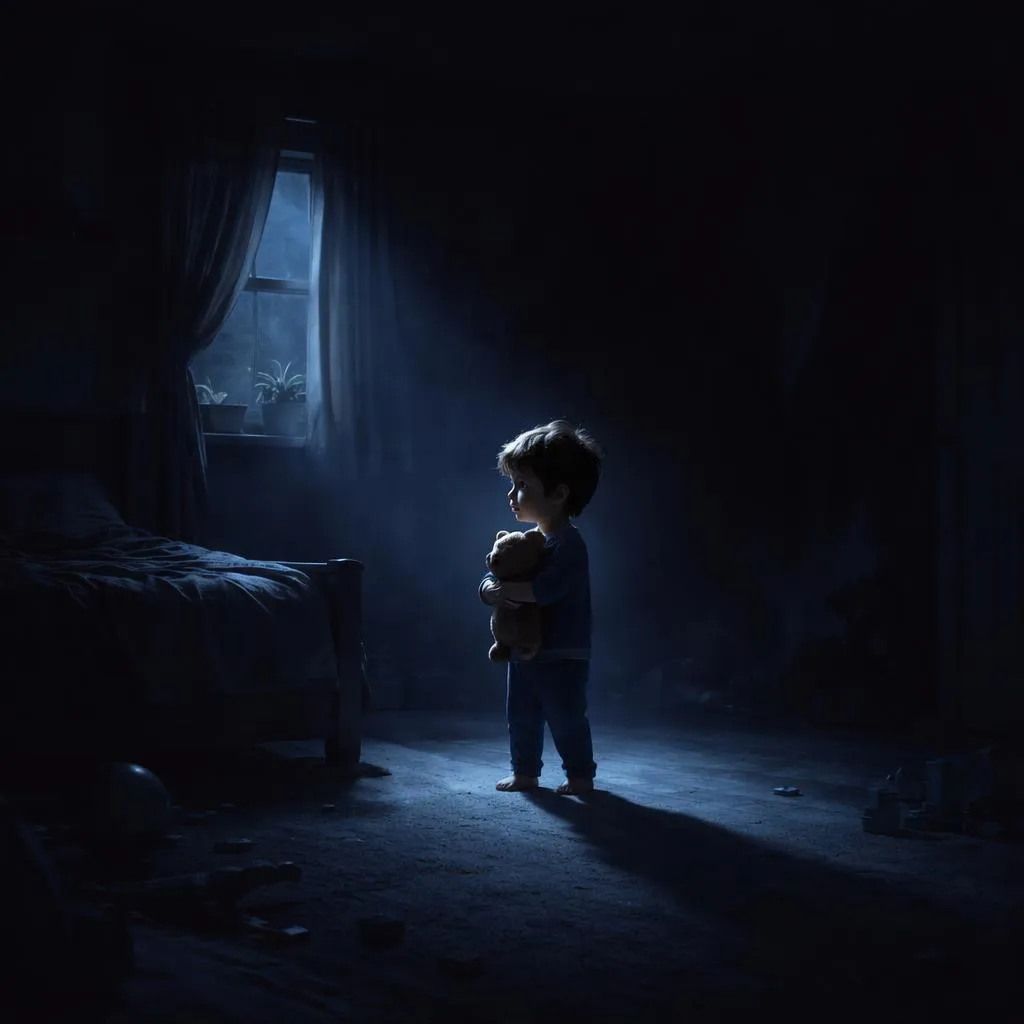

What Do These Expressions Mean? “It's dark” and “it's shadowy” both mean there is little or no light in a space. They tell someone that visibility is low because light is absent or blocked. Children say these words at night, in closets, or under beds. Both describe dimness.
“It's dark” means there is very little light, often making it hard to see. It is common and direct. A child says it when the lights go out. It is the everyday word.
“It's shadowy” means there are shadows present because light is partially blocked. It is not completely dark, but there are dark shapes. A child says it in a room with curtains partly drawn. It feels spooky or mysterious.
These expressions seem similar. Both mean “not bright.” Both describe low light. But one is for complete darkness while one is for partial darkness with shadows.
What's the Difference? One is for total or near-total lack of light. One is for partial darkness with visible shadows. “It's dark” means you cannot see well or at all. A room with no lights, a cave, a night without a moon. It is a strong word.
“It's shadowy” means there is some light, but it creates dark shapes. A hallway at dusk, a forest under trees, a room with one small lamp. It has texture. It feels mysterious.
Think of a child in a closet. No light. “It's dark” is right. Now think of a child in a room with a single nightlight. You can see shapes and shadows. “It's shadowy” fits better. One is for total darkness. One is for partial with shadows.
One is for fear or practicality. The other is for mystery or mood. “It's dark” for bedtime. “It's shadowy” for a spooky story. Use the first for no light. Use the second for shadows.
Also, “shadowy” suggests shapes are still visible. “Dark” may mean no shapes at all.
When Do We Use Each One? Use “it's dark” for total or near-total lack of light. Use it for night time, closets, or power outages. Use it to say you cannot see. It fits practical talk.
Examples at home: “It's dark in here. Can you turn on the light?” “It's dark outside. Let’s go inside.” “The basement is dark. I don’t want to go down there.”
Use “it's shadowy” for partial light with visible shadows. Use it for dusk, under trees, or rooms with dim light. Use it to describe a mood or mystery. It fits descriptive talk.
Examples for mood: “The room is shadowy with only one candle.” “The forest path is shadowy in the evening.” “The hallway was shadowy and quiet.”
Children can use both. “Dark” for no light. “Shadowy” for mystery. Both describe low light.
Example Sentences for Kids It's dark: “It's dark at night.” “The closet is dark. I can’t see anything.” “When the power went out, it was dark.”
It's shadowy: “The room is shadowy with the curtains drawn.” “It's shadowy under the big tree.” “The alley was shadowy and a little scary.”
Notice “dark” is for no light. “Shadowy” is for some light creating dark shapes. Children learn both. One for fact. One for mood.
Parents can use both. A dark room: “it's dark.” A dim hallway: “it's shadowy.” Children learn different low-light words.
Common Mistakes to Avoid Some children say “shadowy” when the room is pitch black. That is not accurate. Shadowy needs some light to make shadows. Say “dark” for total black.
Wrong: “It's shadowy in the basement” (no light at all). Better: “It's dark in the basement.”
Another mistake: saying “dark” for a room with a dim light. That is fine, but “shadowy” is more precise. If you can see shapes from a small light, say “shadowy.”
Wrong: “The room is dark with the nightlight on.” (not really dark) Better: “The room is shadowy with the nightlight.”
Some learners think “shadowy” is only for scary places. A shadowy garden can be peaceful. The word is neutral. Tone and context add the feeling.
Also avoid saying “it's dark” in the daytime with curtains open. If the lights are off but the sun is shining, say “it's dim” or “the lights are off.” Be accurate.
Easy Memory Tips Think of “dark” as a black crayon. No light. All black. For no light.
Think of “shadowy” as a dark shape under a tree. Some light. Dark spots. For partial light with shadows.
Another trick: remember the visibility. “Dark” = can’t see. “Shadowy” = can see shapes and shadows. Can’t see gets “dark.” Can see shadows gets “shadowy.”
Parents can say: “Dark for a deep night. Shadowy for a dim light.”
Practice at home. Closet at night: “it's dark.” Room with one small lamp: “it's shadowy.”
Quick Practice Time Let us try a small exercise. Choose the better phrase for each situation.
A child opens a closet with no windows and no light. They see nothing. a) “It's shadowy.” b) “It's dark.”
A child walks through a park at sunset. Trees make long shadows on the path. a) “It's dark.” b) “It's shadowy under the trees.”
Answers: 1 – b. A closet with no light fits the total-dark “dark.” 2 – b. A path with tree shadows fits the partial-light “shadowy.”
Fill in the blank: “When the lights go out at night, the room becomes ______.” (“Dark” is the total-dark, no-light, practical choice.)
One more: “When the sun sets behind the trees and long shadows stretch across the grass, the yard is ______.” (“Shadowy” fits the partial-light, visible-shadows, moody description.)
Darkness is not always scary. “It's dark” names the absence of light. “It's shadowy” names the dance of light and dark. Teach your child both. A child who learns both can describe the world in every kind of light.