
Opening Introduction
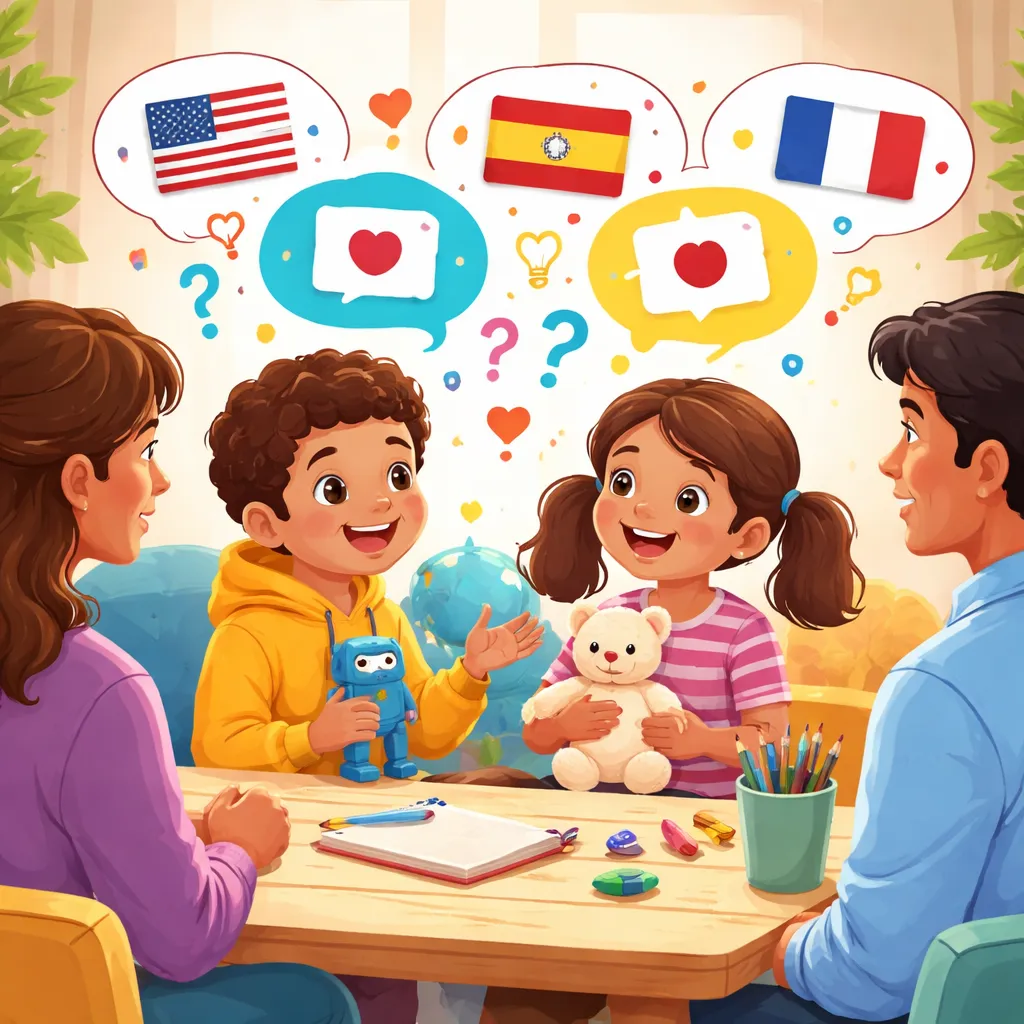
Leo is playing with his friend, Sofia. Sofia speaks Spanish at home and English at school. She is building a tower and says, "Look, Leo! I made a big torre!" Leo looks. He knows "torre" means "tower" in Spanish. He is a little confused. Why did she mix the words? Sofia's mom smiles. "Sofia is using all the words she knows. This is called language mixing. It is very common. We are learning about dealing with language mixing in bilingual kids. It is not a problem. It is a step in learning two languages." Leo is curious. Is mixing okay? How do you deal with it? Let's find out together.
Core Knowledge Explanation
What is language mixing? Language mixing is when a person uses words or grammar from two languages in one sentence. For example, "I want agua" (I want water). Or, "The cat is peque?o" (The cat is small). This is also called code-mixing. Why do bilingual children do this? There are many reasons. First, they might not know the word in one language. If Sofia knows the word "big" in English but forgets "tower", she uses the Spanish word "torre". She is filling a gap. She is communicating. Second, they might be more comfortable with a word in one language. The word "agua" might feel easier than "water". Third, they are experimenting. Their brains are playing with two sets of words. It is a sign of creativity.
Is it a bad thing? No, it is not bad. It is normal. Many bilingual children go through this stage. It is a sign that their brain is working with two languages. It does not mean they are confused. It means they are smart. They have two toolboxes of words, and they are using tools from both. Over time, as they learn more words in both languages, they will mix less. They will learn which language to use with which person. This is part of dealing with language mixing in bilingual kids. We do not get angry. We do not say, "Don't mix!" We help them in a kind way.
How can we help? The best way is to be a good language model. If a child says, "I want agua," you can say, "Oh, you want water? Here is your water." You say the word in the target language (the language you are speaking) in a natural way. You are not correcting. You are repeating the sentence correctly. This gives the child the right word without making them feel wrong. Another way is to provide the right word gently. "In English, we say 'tower'. Can you say 'big tower'?" Keep it positive. Also, make sure the child gets enough input in both languages. Read books, sing songs, and talk in each language. This builds their vocabulary so they do not have gaps. This is the positive way of dealing with language mixing in bilingual kids.
Fun Interactive Learning
Let's play some games that help with language separation. These games are part of dealing with language mixing in bilingual kids in a fun way. First, the "Language Hat" game. Get two hats. Decorate one hat with English flags or words. Decorate the other with symbols of the other language (like a Spanish flag or words). When you wear the English hat, you only speak English. When you wear the other hat, you only speak that language. This is a silly, physical way to remember which language to use. It makes switching a game.
Second, the "Word Basket" game. Have two baskets or boxes. Label one "English" and the other with the other language, like "Espa?ol". Get picture cards of common objects (apple, car, book, house). Work with the child to sort the cards. Put the picture of the apple in the English basket and say "apple". Then, put it in the other basket and say the word in the other language, like "manzana". This teaches that objects can have two names, and we can practice them separately.
Third, play "Translator for a Toy". Get a stuffed animal that only "understands" one language, say English. The child must speak to the toy only in English. Then, get another toy that only understands the other language. The child must switch between toys. This gives a clear reason to use one language at a time. It is a fun way to practice.
Fourth, sing "Same Tune, Different Language" songs. Sing "Head, Shoulders, Knees, and Toes" in English. Then, sing it in the other language. This shows that the same activity can be done in two separate languages. It celebrates both without mixing. These games make dealing with language mixing in bilingual kids an adventure, not a chore.
Expanded Learning
Language mixing is a natural part of bilingualism all over the world. In many communities, people mix languages on purpose. This is called code-switching. It is a skill. Adults do it when talking to friends who speak both languages. It can be a way of expressing identity. For children, it is often a temporary stage. In countries like India, many people mix English and Hindi in daily conversation. In Paraguay, people mix Spanish and Guarani. It is a normal part of life.
Scientists who study the brain say that bilingual children have very active brains. They are always deciding which language to use. Sometimes, the switch does not happen fast enough, and a word from the other language pops out. This is not a mistake. It is the brain being efficient. Knowing this helps us be patient. The goal of dealing with language mixing in bilingual kids is not to stop it completely, but to help them also be able to use each language separately when needed, like in school or with grandparents who speak only one language.
Let's make a chant about our two languages. Chants are fun and positive.
I have two languages, one, two! They help me talk to me and you! Sometimes they mix, and that's okay! I learn more words every day! I'll practice each, with joy and cheer, In my heart, both languages are dear!
What You Will Learn
You are learning about bilingual brain development. You are learning new words: language mixing, code-mixing, code-switching, model, efficient, identity, temporary. You are learning about strategies and the global nature of bilingualism.
You are learning supportive sentences. You can say, "Mixing languages is a normal step." You can explain, "I am modeling the correct word for my friend." You can ask, "Can you say that in English?" You are using English to talk about language learning in a kind and informed way.
You are building important skills. You are building empathy. You understand why a friend might mix words. You are building teaching skills. You learn to model language gently. You are building linguistic awareness. You think about how languages work. You are building patience. You know that language development takes time.
You are forming an accepting habit. The habit of supporting bilingual friends and family without criticism. You see language mixing as a phase of growth, not an error. Understanding and dealing with language mixing in bilingual kids makes you a great friend and ally in the amazing journey of learning two languages.
Using What You Learned in Life
If you have a bilingual friend or sibling, be a supportive language partner. If they mix words, just say the sentence back in the language you are using, clearly and kindly. Play the hat game with them. Read books in both languages. Celebrate when they know a word in both languages. "You know 'dog' and 'perro'! That's awesome!"
If you are bilingual and you sometimes mix words, do not worry. It is your brain being clever. If you are in a situation where you need to use one language, like an English class, take a deep breath and try to focus. You can do it. Your brain is strong. The strategies for dealing with language mixing in bilingual kids are tools for you, too. Use them to feel confident in both languages.
Remember, being bilingual is a superpower. Mixing words is just one tiny part of the adventure. With time, practice, and positive support, you will feel comfortable switching between your languages smoothly. You are a language superhero.
Closing Encouragement
You are amazing. You are a language scientist. You are a kind friend. You are a patient helper. I am so proud of you. Learning about dealing with language mixing in bilingual kids shows you are thoughtful and supportive.
Keep celebrating all languages. Keep playing language games. Keep being proud of every word you know, in every language. The world needs people who can build bridges between cultures, and you are one of them.
Remember, every bilingual child is on a unique path. Your kindness and understanding make that path smoother. You are brilliant, empathetic, and on your way to being a fantastic global citizen. Great work, my wonderful language champion.