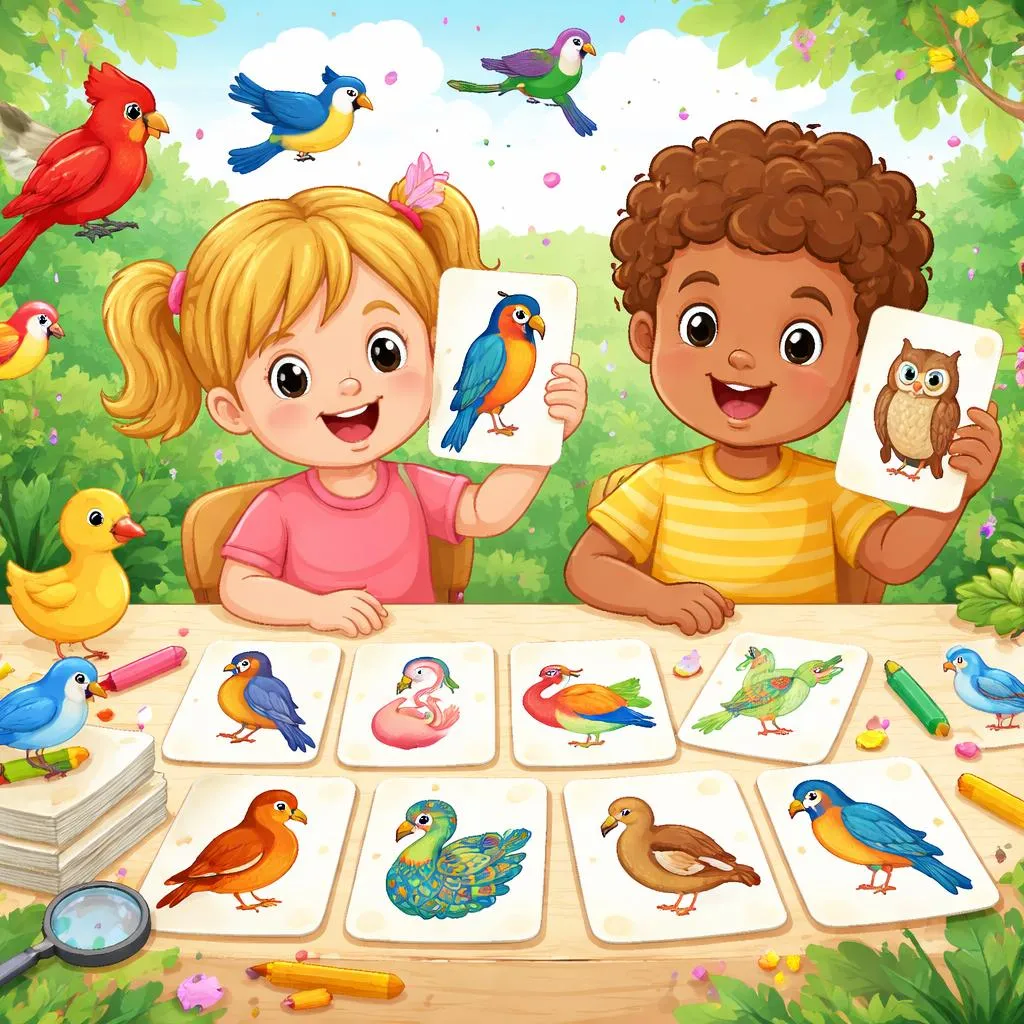

Dear parents and lovely children, today we will learn and practice with this type of English flashcard content: Birds Flashcards For Kids – Free Printable PDF
Word list: bird, duck, chicken, owl, parrot, pigeon, sparrow, crow, swan, goose, robin, turkey, peacock, woodpecker, hawk, heron, crane, magpie, canary, finch, ostrich, kiwi, hummingbird, pelican, albatross, seagull, flamingo
Click here to download Birds Flashcards For Kids – Free Printable PDF
Meaning and Explanation of Each Flashcard Word
- bird: A warm-blooded animal with feathers, wings, and a beak. Example: "The bird is singing in the tree."
- duck: A water bird with a broad bill and webbed feet. Example: "The duck swims in the pond."
- chicken: A common farm bird raised for eggs and meat. Example: "The chicken lays eggs every morning."
- owl: A nocturnal bird known for its large eyes and hooting sound. Example: "The owl hunts at night."
- parrot: A colorful bird that can mimic human speech. Example: "The parrot talks very clearly."
- pigeon: A common city bird often found in parks. Example: "Pigeons like to eat breadcrumbs."
- sparrow: A small, brown bird often seen in gardens. Example: "The sparrow builds a nest in the tree."
- crow: A large, black bird known for its intelligence. Example: "The crow is very clever."
- swan: A large white bird with a long neck that swims gracefully. Example: "The swan glides across the lake."
- goose: A water bird similar to a duck but larger. Example: "The goose honks loudly."
- robin: A small bird with a red chest, often seen in spring. Example: "The robin is singing a happy song."
- turkey: A large bird often eaten at Thanksgiving. Example: "The turkey is big and brown."
- peacock: A bird known for its beautiful, colorful tail feathers. Example: "The peacock shows its feathers proudly."
- woodpecker: A bird that pecks at trees to find insects. Example: "The woodpecker makes a tapping sound."
- hawk: A bird of prey with sharp eyesight and claws. Example: "The hawk flies high in the sky."
- heron: A tall bird with long legs found near water. Example: "The heron stands still by the river."
- crane: A large bird with long legs and neck, often seen in wetlands. Example: "The crane dances during mating season."
- magpie: A black and white bird known for collecting shiny objects. Example: "The magpie is curious and smart."
- canary: A small yellow bird known for its singing. Example: "The canary sings sweet songs."
- finch: A small bird with a short beak, often colorful. Example: "The finch eats seeds from the garden."
- ostrich: The largest bird that cannot fly but runs very fast. Example: "The ostrich runs faster than a horse."
- kiwi: A small, flightless bird native to New Zealand. Example: "The kiwi is a unique bird."
- hummingbird: A tiny bird that can hover and fly backward. Example: "The hummingbird drinks nectar from flowers."
- pelican: A large water bird with a big bill and throat pouch. Example: "The pelican catches fish with its bill."
- albatross: A large seabird with long wings. Example: "The albatross soars over the ocean."
- seagull: A common coastal bird that scavenges food. Example: "The seagull flies over the beach."
- flamingo: A pink bird that stands on one leg. Example: "The flamingo lives in warm, watery places."
How to Teach Birds Flashcards with Flashcards
Parents and teachers can use these bird flashcards to help children learn new vocabulary in a fun and interactive way. Start by showing each flashcard and saying the word clearly. Encourage children to repeat after you to practice pronunciation. Use the pictures to help children associate the word with the image. You can also tell interesting facts about each bird to keep children engaged. For example, explain how the peacock uses its feathers to attract a mate or how the owl is active at night. Repetition and daily practice with these flashcards will help children remember the words better. You can also ask children to sort the flashcards into groups, such as water birds, flying birds, or farm birds, to build categorization skills.
Fun Birds Flashcard Games
- Memory Match: Lay all flashcards face down and have children flip two at a time to find matching pairs. This helps with memory and word recognition.
- Guess the Bird: Describe a bird’s features or sounds and have children guess which flashcard it is.
- Fly Like a Bird: Show a flashcard and ask children to mimic the bird’s movement or sound.
- Flashcard Bingo: Create bingo cards with bird pictures or names and call out words for children to mark.
- Sentence Building: Use the flashcards to create simple sentences. For example, "The duck swims," or "The owl flies at night."
Example Sentences with Birds Vocabulary
- "The sparrow is small and brown."
- "I saw a flamingo standing on one leg at the zoo."
- "The hawk has very sharp eyes."
- "A pelican uses its big beak to catch fish."
- "The chicken lays eggs every day."
Free Birds Flashcards PDF Download
You can easily download and print the Birds Flashcards for Kids for free from the provided link. These printable flashcards are perfect for classroom activities, homeschooling, or fun learning at home. Simply print them on sturdy paper, cut along the lines, and start learning! Using printable flashcards saves money and allows you to have multiple sets for group activities or games. The flashcards are designed with colorful images and clear words to make learning enjoyable and effective.
FAQ about Birds Flashcards
-
Q: What age group are these flashcards suitable for?
A: These flashcards are ideal for preschool and early elementary children aged 3 to 8 years. -
Q: How often should children practice with flashcards?
A: Daily short sessions of 10-15 minutes work best for retention. -
Q: Can these flashcards help with pronunciation?
A: Yes, repeating the words aloud while looking at the pictures improves pronunciation and speaking confidence. -
Q: Are there any digital versions available?
A: Currently, the flashcards are available as printable PDFs, but you can use them on tablets or computers by viewing the PDF. -
Q: What if my child loses interest?
A: Try different games, use real bird sounds, or take nature walks to spot birds and relate them back to the flashcards. -
Practice Activity: Have children draw their favorite bird from the flashcards and write its name. Encourage them to tell a short story about the bird using the new vocabulary.
Using these Birds Flashcards, children will expand their English vocabulary, improve memory, and develop a love for nature and animals. The combination of visual aids, interactive games, and practical sentences makes learning engaging and effective.