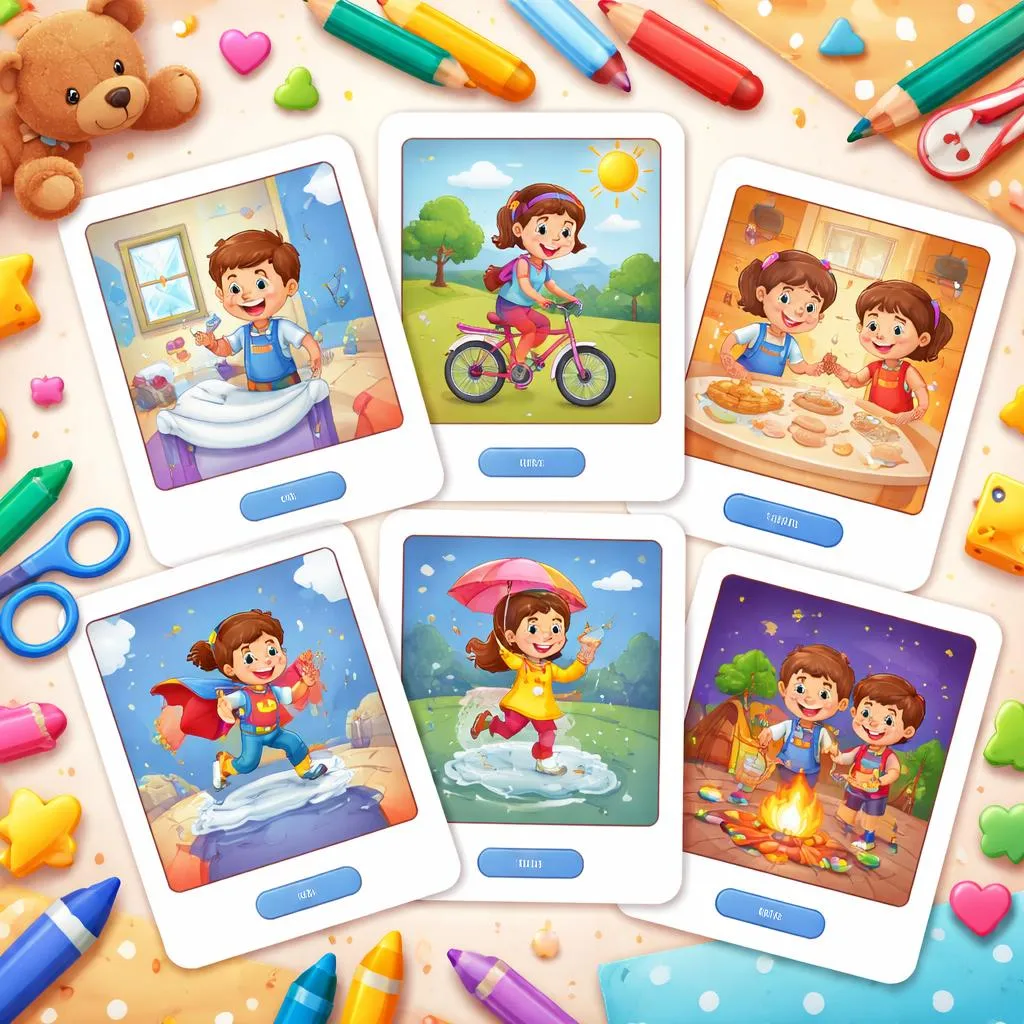

How often do you find yourself needing simple flashcards to prompt frequency adverbs ? Occasionally? Often? Always? This flashcard set includes seven adverb cards with simple check marks to illustrate frequency. The download options in this set include: Image cards – with or without labels. Word cards – with or without the corresponding percentage. Two full-page charts– one with check marks, the other with percentages– displaying all seven adverbs on a single page. The adverbs and percentages in this set: always – 100% usually – 90% often – 70% sometimes – 50% occasionally -30% hardly ever – 5% never – 0% Here are a couple websites with good suggestions for class activities: BusyTeacher.org – 5 Advantageous Tips to Introducing Adverbs of Frequency ESLActivity.org – Frequency Adverb Games, Activities, Worksheets & Lesson Plans https://www.englishclub.com/efl/tefl-articles/adverbs-of-frequency/
Word list: always, hardly ever, never, occasionally, often, sometimes, usually
By practicing with frequency adverb flashcards, children can:
These flashcards help children understand how often actions happen by introducing key frequency adverbs such as always, usually, often, sometimes, occasionally, hardly ever, and never. Using visual cues like check marks and percentages, children can easily grasp the concept of frequency in daily activities. This builds their vocabulary and improves their ability to describe routines and habits in English. The flashcards also encourage memory retention, speaking practice, and engagement through interactive learning.
How to Teach Frequency Adverb Flashcards with Flashcards
Parents and teachers can start by showing each flashcard to the child, pronouncing the adverb clearly and explaining its meaning with simple examples. For instance, "I always brush my teeth in the morning" or "She sometimes plays outside." Repeating this regularly helps children associate the words with real-life actions. Using the cards with or without labels allows gradual learning, from recognition to reading. Parents can also encourage children to place the cards in order from most frequent to least frequent to reinforce understanding.
Fun Frequency Adverb Flashcard Games
(1) Memory Match: Lay the flashcards face down and have children find pairs of adverbs and their corresponding percentages or images.
(2) Frequency Sorting: Children sort flashcards based on how often they do certain activities, discussing their choices aloud.
(3) Role Play: Using example sentences, children act out daily routines, emphasizing the frequency adverbs.
Example Sentences with Frequency Adverbs
- "I usually eat breakfast at 7 a.m."
- "He never forgets his homework."
- "We sometimes go to the park on weekends."
Free Frequency Adverb Flashcards PDF Download
You can easily download and print these flashcards for free from educational websites offering printable resources. The sets typically include image cards, word cards with or without percentages, and full-page charts displaying all frequency adverbs. These printable materials make it convenient for parents and teachers to provide hands-on practice anytime, anywhere.
FAQ about Frequency Adverb Flashcards
Q: At what age can children start learning frequency adverbs?
A: Children aged 5 and above can begin learning with simple flashcards and examples.
Q: How often should children practice with these flashcards?
A: Short daily sessions of 5-10 minutes are effective for gradual learning.
Q: Can these flashcards be used for group activities?
A: Yes, they work well in classrooms and group settings to encourage speaking and interaction.
Q: Are there digital versions available?
A: Many websites offer downloadable PDFs and interactive digital flashcards for varied learning styles.
These flashcards provide a fun and effective way to build foundational English skills related to frequency concepts, supporting both independent and guided learning.