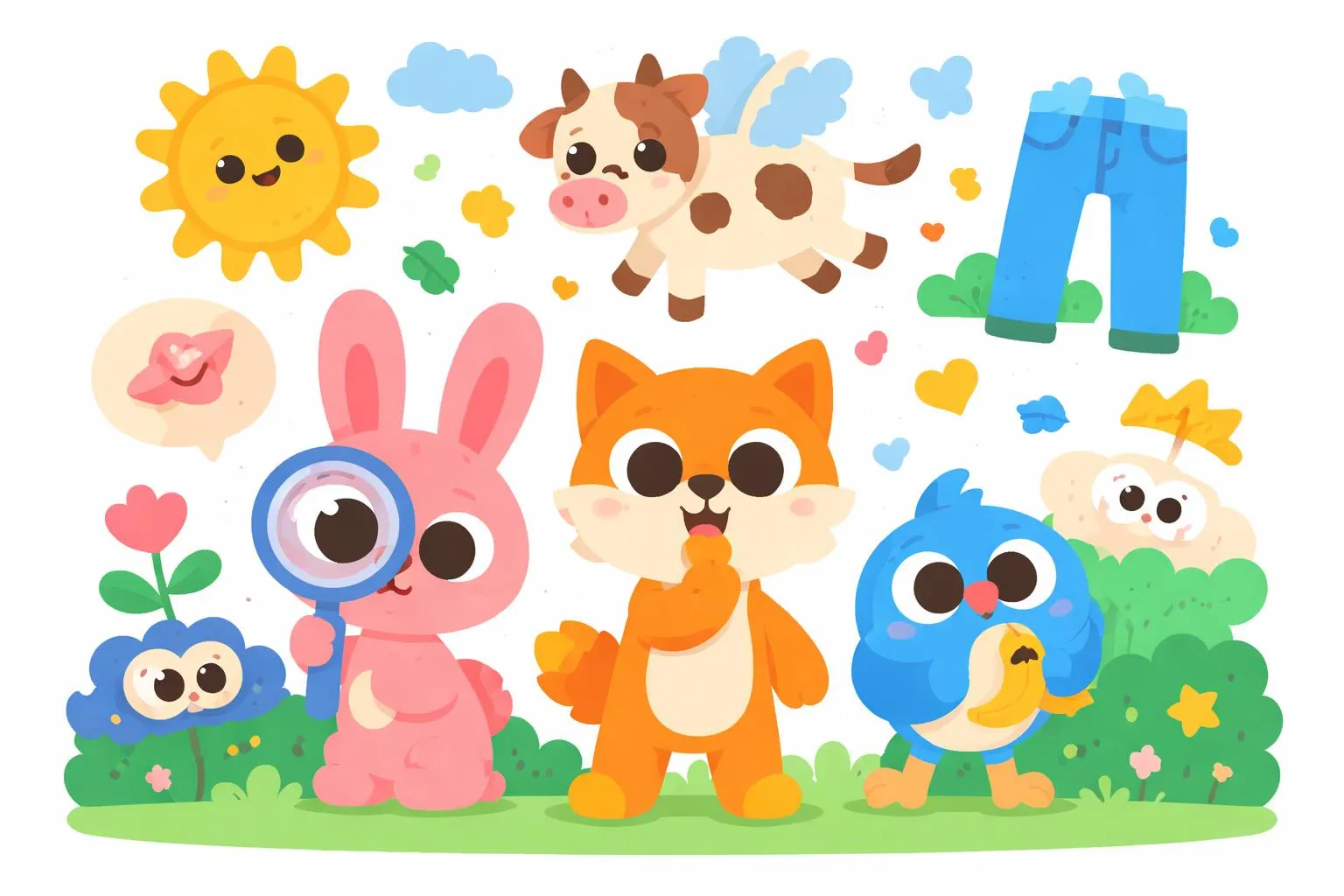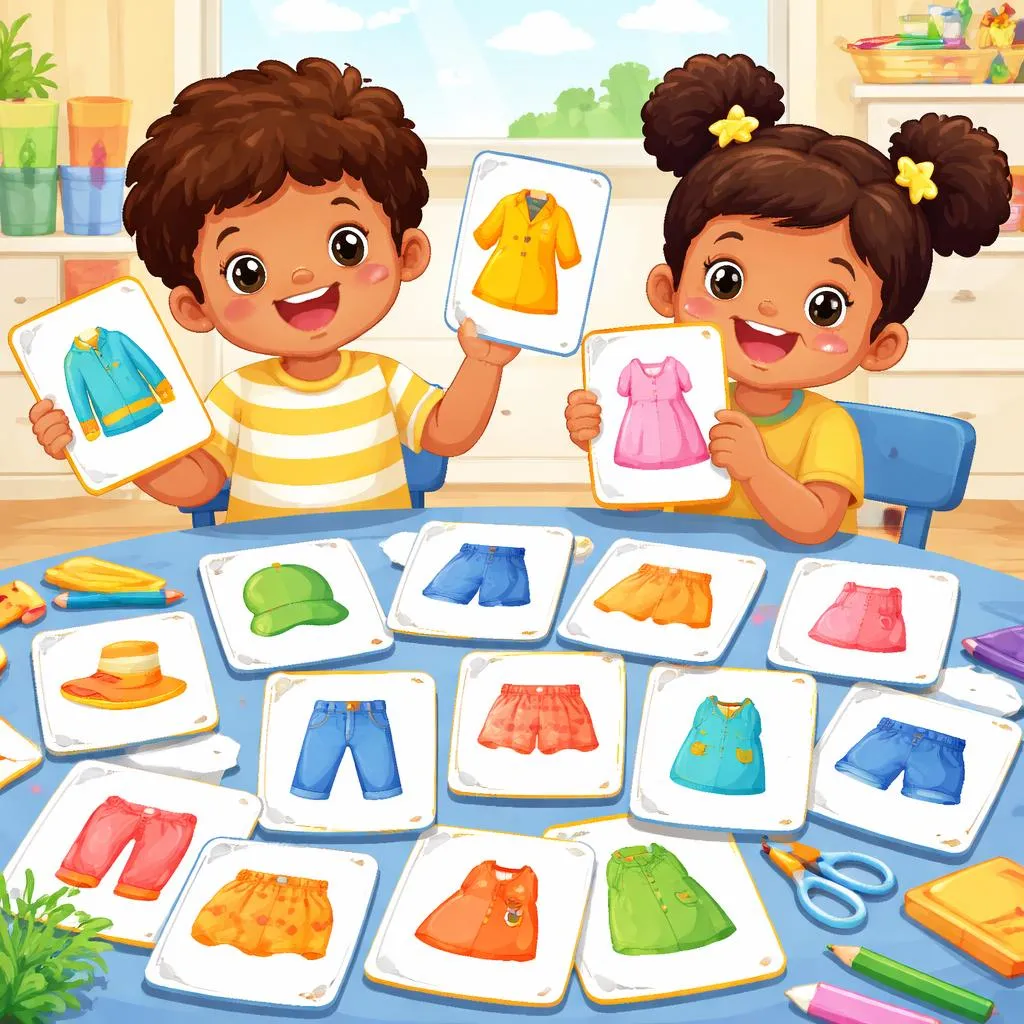

Dear parents and lovely children, today we will learn and practice with this type of English flashcard content: Outfits Flashcards For Kids – Free Printable PDF
Word list: shirt, pants, dress, skirt, hat, shoes, socks, coat, jacket, gloves, scarf, boots, sweater, jeans, shorts, t-shirt, blouse, vest, hoodie, uniform, pajamas, tank top, mittens, raincoat, robe, sneakers, heels, slippers, beanie, overalls, swimsuit, leggings, cape, gown, tights, headband, cardigan, jumpsuit, bow tie, tie, rain boots, cap, crown, glasses, sunglasses, belt, underwear, suit, flip flops, bikini, pumps, clothes
Click here to download Outfits Flashcards For Kids – Free Printable PDF
Meaning and Examples of Each Flashcard Word
-
Shirt: A piece of clothing worn on the upper body, usually with buttons.
Example: "I am wearing a blue shirt today." -
Pants: Clothing that covers the lower body from waist to ankles.
Example: "He put on his pants before going outside." -
Dress: A one-piece garment for girls or women that covers the body and extends down over the legs.
Example: "She wore a pretty red dress to the party." -
Skirt: A piece of clothing that hangs from the waist and covers part or all of the legs.
Example: "My skirt is pink and fluffy." -
Hat: Something worn on the head for warmth or style.
Example: "Don’t forget your hat when it’s cold." -
Shoes: Footwear that protects and covers the feet.
Example: "I bought new shoes for school." -
Socks: Soft coverings for the feet, worn inside shoes.
Example: "My socks are white and clean." -
Coat: A warm outer garment worn over clothes.
Example: "She wore a thick coat in winter." -
Jacket: A lighter outer garment than a coat, often worn in cool weather.
Example: "He zipped up his jacket." -
Gloves: Coverings for the hands to keep them warm.
Example: "Put on your gloves before going outside." -
Scarf: A piece of fabric worn around the neck for warmth or decoration.
Example: "Her scarf is very colorful." -
Boots: Shoes that cover the foot and ankle, sometimes higher.
Example: "I wear boots when it rains." -
Sweater: A knitted garment worn on the upper body for warmth.
Example: "He put on a cozy sweater." -
Jeans: Durable pants made from denim fabric.
Example: "I love wearing my blue jeans." -
Shorts: Pants that end above the knees.
Example: "Shorts are perfect for hot days." -
T-shirt: A casual shirt without buttons, usually short-sleeved.
Example: "My favorite t-shirt has a cartoon on it." -
Blouse: A woman’s or girl’s shirt, often dressier than a t-shirt.
Example: "She wore a white blouse to school." -
Vest: A sleeveless garment worn over a shirt.
Example: "He wore a vest to look smart." -
Hoodie: A sweatshirt with a hood.
Example: "I like my hoodie because it’s warm." -
Uniform: Special clothes worn by students or workers.
Example: "We wear uniforms at school." -
Pajamas: Clothes worn for sleeping.
Example: "I put on my pajamas before bed." -
Tank top: A sleeveless shirt.
Example: "He wore a tank top at the beach." -
Mittens: Gloves that cover the whole hand without separate fingers.
Example: "Mittens keep your hands warmer than gloves." -
Raincoat: A waterproof coat worn in rain.
Example: "She wore a yellow raincoat." -
Robe: A loose garment worn at home or after a bath.
Example: "He put on his robe after swimming." -
Sneakers: Comfortable shoes for sports or casual wear.
Example: "I run fast in my sneakers." -
Heels: Shoes with raised backs, often worn by women.
Example: "She wore red heels to the party." -
Slippers: Soft shoes worn indoors.
Example: "I wear slippers at home." -
Beanie: A close-fitting knitted hat.
Example: "He wore a beanie to keep warm." -
Overalls: Pants with a front flap and straps over the shoulders.
Example: "She wore overalls to the farm." -
Swimsuit: Clothing worn for swimming.
Example: "I packed my swimsuit for the pool." -
Leggings: Tight-fitting pants made of stretchy material.
Example: "She wore leggings for dance class." -
Cape: A sleeveless outer garment hanging from the shoulders.
Example: "The superhero wore a red cape." -
Gown: A long dress, often formal.
Example: "She wore a beautiful gown to the ball." -
Tights: Close-fitting leg coverings.
Example: "She wore black tights with her skirt." -
Headband: A band worn around the head to keep hair back.
Example: "She wore a pink headband." -
Cardigan: A knitted sweater that opens at the front.
Example: "He put on a cardigan when it got chilly." -
Jumpsuit: A one-piece garment with sleeves and legs.
Example: "The mechanic wore a jumpsuit." -
Bow tie: A small tie tied in a bow shape.
Example: "He wore a bow tie to the wedding." -
Tie: A long piece of cloth worn around the neck.
Example: "He wore a tie with his suit." -
Rain boots: Waterproof boots worn in wet weather.
Example: "She wore rain boots on the muddy path." -
Cap: A soft hat with a visor.
Example: "He wore a baseball cap." -
Crown: A decorative headpiece worn by royalty.
Example: "The queen wore a golden crown." -
Glasses: Eyewear to help see better.
Example: "He wears glasses to read." -
Sunglasses: Glasses that protect eyes from the sun.
Example: "She wore sunglasses at the beach." -
Belt: A band worn around the waist to hold up pants.
Example: "He fastened his belt." -
Underwear: Clothes worn under outer clothes.
Example: "Put on clean underwear every day." -
Suit: A matching jacket and pants or skirt, usually formal.
Example: "He wore a suit to the interview." -
Flip flops: Open sandals with a Y-shaped strap.
Example: "I wear flip flops at the beach." -
Bikini: A two-piece swimsuit for women.
Example: "She wore a colorful bikini." -
Pumps: Women’s shoes with heels.
Example: "She bought new pumps for the party." -
Clothes: General term for garments worn.
Example: "I like to wear comfortable clothes."
How to Teach Outfits Flashcards with Flashcards
Parents and teachers can use these outfit flashcards to help children recognize and name different clothing items. Start by showing each card and saying the word clearly. Encourage children to repeat after you. Use real clothes to match the flashcards, helping children connect words to real objects. You can also ask children to sort the cards by categories such as warm clothes, summer clothes, or accessories. This hands-on approach makes learning interactive and fun.
Fun Outfits Flashcard Games
- Memory Match: Lay all flashcards face down. Children take turns flipping two cards to find matching pairs by name or picture.
- Dress Up Relay: Place flashcards around the room. Call out a clothing item, and children race to find the matching card and put on a similar real item if available.
- Flashcard Bingo: Create bingo cards with pictures or words from the flashcards. Call out words and children mark their cards.
- Example Sentences with Outfits Vocabulary:
- "I wear a jacket when it’s cold."
- "She has a red dress for the party."
- "Put on your raincoat if it’s raining."
- "My sneakers are very comfortable."
Free Outfits Flashcards PDF Download
You can download and print the Outfits Flashcards for Kids for free from the provided link. Printing them on sturdy paper or laminating the cards will make them durable for repeated use. These printable flashcards are perfect for home or classroom activities, making learning clothing vocabulary easy and accessible.
FAQ about Outfits Flashcards
-
Q: At what age can children start using these flashcards?
A: These flashcards are suitable for preschoolers and early elementary children, around ages 3-8. -
Q: How often should children practice with the flashcards?
A: Daily short sessions (5-10 minutes) are more effective than long infrequent ones. -
Q: Can these flashcards help with sentence building?
A: Yes, once children know the words, you can encourage them to make sentences using the clothing vocabulary. -
Q: Are there digital versions of these flashcards?
A: Yes, some websites offer interactive digital flashcards for practice on tablets or computers. -
Q: How can parents involve children in learning?
A: Parents can play games, label clothing at home, and encourage children to describe what they are wearing using the flashcard words.
Using these flashcards regularly will help children build a strong vocabulary about clothing, improve their speaking skills, and gain confidence in English.