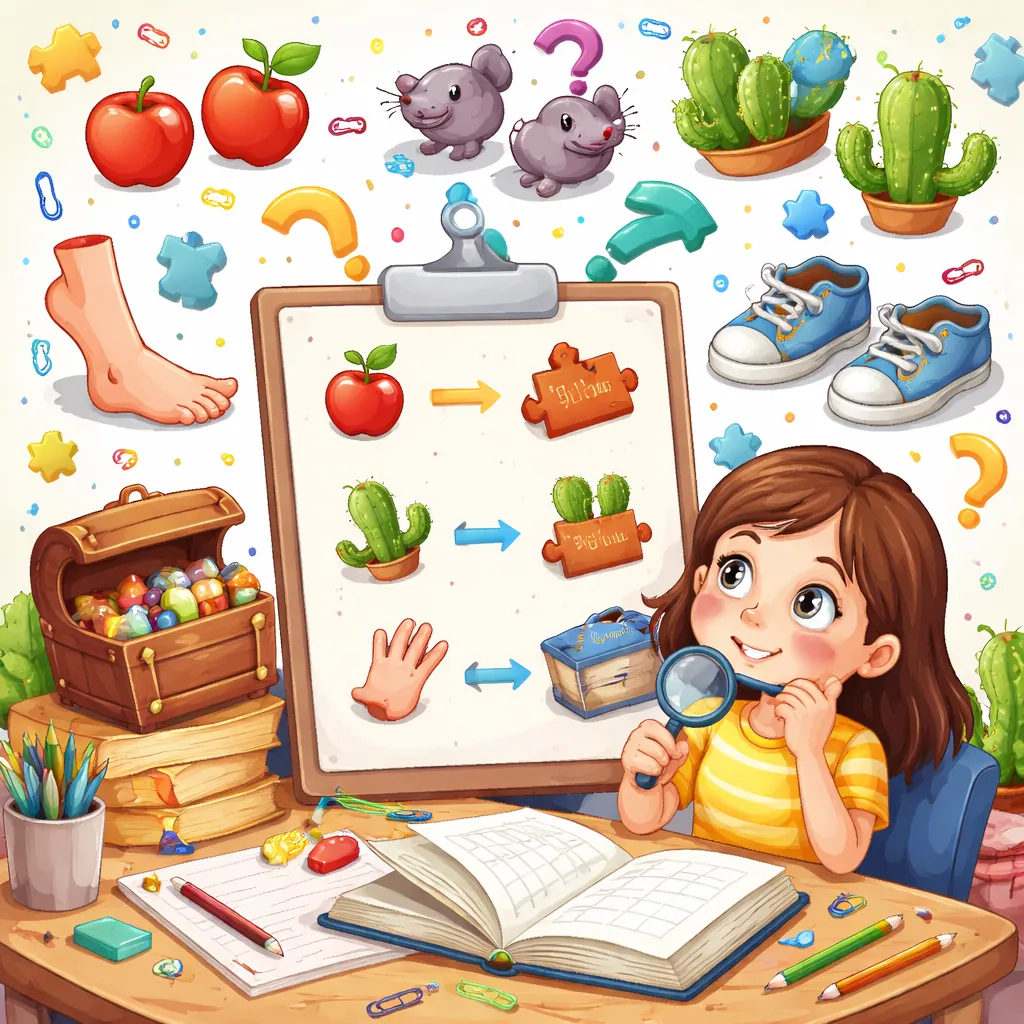

What Is Plural nouns? Imagine you are looking at a single, shiny red apple on a wooden table. In English, we call a word that represents one thing a singular noun. Now, imagine your friend brings a whole basket filled with many apples. To describe this group, we must use the special form known as Plural nouns.
Plural nouns tell the listener that there is more than one of something. It could be two items, ten items, or even a million items. Most words in English change their spelling when they become plural. This helps everyone understand exactly how many objects we are discussing.
Learning these words is like gaining a superpower for your daily conversations. You can talk about your many toys, your friends, or the stars in the sky. Without them, it would be very difficult to describe the world around us. Mastering these nouns is a vital step for every young English learner.
Rules of Plural nouns The most common way to create Plural nouns is by adding the letter "s." For most words like "dog," "cat," or "book," this simple change is enough. "Dog" becomes "dogs," and "book" becomes "books" with very little effort. This is the "Golden Rule" that works for the majority of English words.
Some words end in sounds like "ch," "sh," "x," "s," or "z." When you see these endings, you must add "es" instead of just "s." This makes the word easier to say aloud, like "bus" becoming "buses." Think of "es" as a little extra space for these "hissing" or "buzzing" sounds.
Words that end in a consonant followed by a "y" follow a "swap" rule. You must change the "y" to an "i" and then add "es" to the end. For example, the word "candy" changes its spelling to become "candies." If a vowel comes before the "y," like in "toy," you just add a simple "s."
English also has a few "rebel" words that do not follow the standard patterns. We call these irregular nouns because they change in very surprising ways. "Child" becomes "children," and "mouse" becomes "mice" when there are many. Learning these special words takes a bit of extra practice and memory work.
How to Use Plural nouns We use Plural nouns whenever we want to be precise about a quantity. If you are at a toy store, you might ask to see the "trains" or "dolls." Using the correct plural form shows that you have excellent communication skills. It helps people understand your needs and your questions more clearly.
When you use a plural noun, the action word in the sentence might change too. For one thing, we often use "is," but for many things, we use "are." "The cat is cute" describes one pet, while "The cats are cute" describes many. Matching your nouns with the right verbs creates a very smooth sentence.
Numbers and words like "many," "few," or "some" love to sit next to Plural nouns. You can say "three birds" or "some flowers" to give more detail to your story. These "quantity words" act like clues that a plural noun is coming next. They help prepare the listener for a description of a group or a collection.
Practice using these words while you are playing or helping around the house. Count the "spoons" in the drawer or the "pillows" on your bed. Naming things in their plural form during daily life makes the rules stick. The more you use them, the more natural they will feel to your ears.
Examples of Plural nouns Let's look at a busy day at a local park to see these words in action. You might see several "benches" where people are sitting and relaxing. High above in the leafy "trees," many "birds" are singing happy songs. Notice how "bench" takes an "es," while "tree" and "bird" just need an "s."
Think about the delicious "sandwiches" you might pack for a picnic. You might also bring some "strawberries" or "peaches" for a healthy snack. The "y" in strawberry changes to "i" before we add the "es" ending. These yummy examples show how different rules apply to different food words.
In a science classroom, you might study many different "species" of animals. Some "wolves" hunt in the forest, while "foxes" hide in their small dens. "Wolf" ends in an "f," so we change it to "v" to make the plural "wolves." "Fox" ends in an "x," so it follows the "es" rule to become "foxes."
Consider the irregular Plural nouns that we see every single day. When you look in a mirror, you see your "teeth" and your two "feet." "Tooth" and "foot" change their middle vowels to show there is more than one. These unique words add a lot of character and history to the English language.
Common Mistakes The most frequent mistake is forgetting to change the "y" to "i." A child might write "babys" instead of the correct spelling "babies." Always look at the letter right before the "y" to decide which rule to use. If it is a consonant, the "y" must go away to make room for "ies."
Some learners try to add an "s" to words that are already plural. For example, they might say "childrens" instead of just "children." Since "children" already means many, it does not need an extra "s" at the end. Think of irregular plurals as words that are already "full" of many items.
Adding "es" to every word is another hurdle for many young students. They might write "bookes" instead of "books" because they want to be careful. Remember that "es" is only for words ending in "ch," "sh," "x," "s," or "z." For almost every other word, a single "s" is the perfect and simple choice.
Confusing "f" and "v" endings can also be a bit tricky at first. A learner might write "leafs" instead of the correct plural form "leaves." Most words ending in "f" or "fe" want to swap that sound for a "v." Practice saying the words aloud to hear the soft "v" sound in the plural.
Comparison It is helpful to compare regular and irregular Plural nouns side-by-side. Regular nouns follow a predictable path, like a train on a straight track. Irregular nouns are like explorers who choose their own unique way home. One group uses patterns, while the other group requires special memorization.
We also compare count nouns with nouns that we cannot easily count. Words like "water" or "rice" usually stay singular even if there is a lot. You wouldn't say "waters" unless you mean different types of water. Understanding this difference helps children pick the right noun for the job.
Compare words ending in "o" as they can sometimes be a bit confusing. "Potato" becomes "potatoes" with an "es," but "piano" becomes "pianos." Musical words often just take an "s," while many vegetables prefer "es." These small comparisons help children notice the fine details of English.
Finally, notice that a few words stay exactly the same in both forms. One "sheep" and ten "sheep" look and sound identical in a sentence. The same is true for "fish" and "deer" when we talk about a group. These "changeless" words are a fun part of the Plural nouns family.
Practice Exercises Let's test your knowledge with some fun challenges and activities! Change these singular words into their correct plural forms.
One hat -> Two ________
One wish -> Many ________
One party -> Three ________
One knife -> Five ________
One man -> Ten ________
One box -> Six ________
One story -> Four ________
One person -> A group of ________
Now, try to find the plural noun in each of these fun sentences.
The busy bees are making honey in the hive.
We saw three large moose near the cold lake.
My new shoes are very blue and comfortable.
The children played games in the green park.
Read your answers aloud to see if they sound correct to you. Ask a family member to check your spelling for the "y" and "f" words. Which ones were the easiest, and which ones made you think the most?
Answers and Explanations hats: Just add a simple "s" to this regular noun.
wishes: Add "es" because the word ends in the "sh" sound.
parties: Change the "y" to "i" and add "es" for this consonant-y word.
knives: Change the "fe" to "v" and add "es" to complete the change.
men: This is an irregular noun that changes its middle vowel.
boxes: Add "es" because the word ends in an "x."
stories: Swap the "y" for "ies" to follow the consonant rule.
people: This is the most common irregular plural for "person."
Sentences Identification:
bees: The plural of "bee."
moose: This is a special word that stays the same in the plural!
shoes: The plural of "shoe."
children / games: Both are Plural nouns in this sentence.
If you got the irregular ones right, you have a very sharp memory. If you struggled with "moose," don't worry, it is a very rare rule. Most animals follow the "s" rule, but a few choose to be different. Keep practicing the patterns, and they will become second nature.
Learning Tips Create a "Plural Picture Book" with your child using paper and crayons. Draw one item on the left side and a group of them on the right side. Write the singular and plural names under each drawing in bright colors. This visual connection helps the brain organize the different spelling rules.
Play a "Plural Hunt" game while you are walking through your neighborhood. See who can find the most Plural nouns on signs or in store windows. If you see "Flowers for Sale," shout it out and talk about the "s" at the end. Making it a game turns a grammar lesson into an outdoor adventure.
Use building blocks to represent the singular word and the plural ending. One block can be "cat," and a smaller, different block can be the "s." Snap them together to show how the word grows into a plural form. This tactile practice is excellent for children who love to learn by doing.
Sing songs or rhymes that use lots of Plural nouns in their lyrics. "Old MacDonald Had a Farm" is filled with animals like "chicks" and "ducks." Emphasize the "s" sound at the end of the words as you sing together. The rhythm of the music helps the ear get used to the plural sounds.
Be patient and celebrate every small victory in your child's learning. Grammar is a long journey, and every correct plural is a big success. If they make a mistake, gently point out the rule and try again together. Your encouragement is the most important tool for their educational growth.
Mastering Plural nouns opens up a whole new world of description. It allows children to talk about their lives with detail and energy. From "stories" in books to "cookies" in the kitchen, plurals are everywhere. Enjoy the process of discovering these words together as a family.
Every time your child uses a plural noun correctly, give them a smile. They are building the skills they need to be great readers and writers. Keep exploring the wonders of the English language with curiosity. Learning is an exciting path, and you are doing a wonderful job!