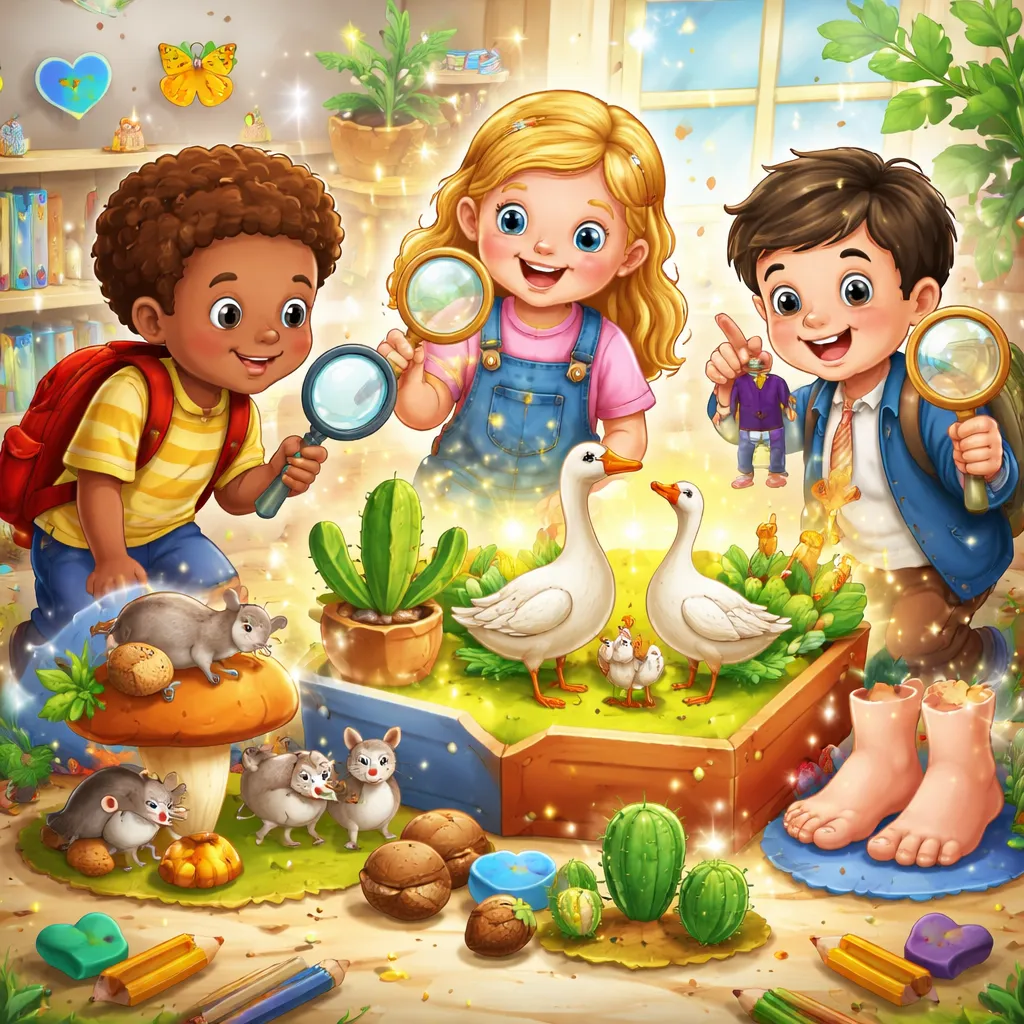

What Is Irregular plurals? Imagine you are looking at one fluffy sheep in a green field. If another sheep joins the first one, the word does not change. We do not say "sheeps" because English has some very special rules. These unique words are what we call Irregular plurals.
Most English words simply add an "s" to show there is more than one. However, Irregular plurals prefer to change their spelling in surprising ways. Some change their middle letters, while others change their endings entirely. A few words even stay exactly the same whether they are singular or plural.
Learning these words is like discovering the hidden treasures of a language. They tell us about the long history of how people spoke many years ago. By mastering them, children can express themselves more accurately and clearly. It transforms a simple sentence into a sophisticated piece of communication.
Understanding these nouns helps children feel more confident when they read books. They will recognize that "mice" are many small animals, not just one. They will know that "feet" come in pairs at the bottom of their legs. Irregular plurals add variety and fun to the journey of learning English.
Rules of Irregular plurals There is no single rule that covers every irregular noun in the dictionary. Instead, these words follow several small patterns that are easy to group. One common pattern involves changing the vowel sounds inside the word. For example, "man" becomes "men" and "goose" becomes "geese."
Another pattern focuses on words that end in "f" or "fe." In many cases, you must change the "f" to a "v" and add "es." The word "leaf" turns into "leaves" to describe a pile of autumn colors. "Knife" becomes "knives" when you are setting the table for a big family dinner.
Some Irregular plurals end in the letters "en" to show a group. The word "child" is a classic example because it becomes "children." "Ox" follows this same old-fashioned pattern to become "oxen." These words are very old and give English a very traditional and rich feeling.
A final group of words chooses to be "zero plurals" or changeless words. This means the singular and the plural forms are identical in every way. "Fish," "deer," and "aircraft" stay the same no matter how many there are. Context clues in the sentence help the listener know if you mean one or many.
How to Use Irregular plurals Using Irregular plurals correctly requires a little bit of extra attention to detail. When you use a plural noun, the verb in your sentence must match it. For one child, we say "The child is playing" in the sunny backyard. For many, we must say "The children are playing" together.
We often use these words when we talk about our bodies and our families. You might say "I brushed my teeth" instead of "I brushed my tooths." Using the correct form shows that you have a strong grasp of English grammar. It makes your speech sound natural to native speakers around the world.
You can combine these nouns with numbers or words like "many" and "some." "I saw three mice in the garden" is a clear and accurate description. "There are many people at the park today" uses a very common irregular plural. These combinations help you provide specific details in your stories and reports.
Practice using these words in your daily life to make them feel familiar. While you eat dinner, you can count the "knives" and "forks" on the table. When you look at a photo, identify the "men," "women," and "children." Connecting the words to real objects helps the brain remember the unique spellings.
Examples of Irregular plurals Let's look at some common examples that children use every single day. In a story about a farm, you might meet several "geese" by the pond. You might also see "sheep" eating grass and "oxen" pulling a heavy cart. Notice how each word follows a different irregular path to show a group.
Think about the parts of your body that come in pairs or groups. You have two "feet" to help you walk, run, and jump over puddles. Inside your mouth, you have many "teeth" to help you chew your food. "Foot" and "tooth" are perfect examples of the vowel-change rule in action.
In the kitchen, we find many Irregular plurals that help us describe tools. A set of "knives" is kept safely in a wooden block on the counter. If you bake a cake, you might cut it into several delicious "halves." "Half" and "knife" both change their "f" sounds to a "v" in the plural form.
Sometimes we talk about groups of people in our community and our world. One "person" becomes a group of "people" when they gather for a party. A group of "men" and "women" might work together to build a new library. These examples show how essential Irregular plurals are for social conversation.
Common Mistakes The most frequent mistake is trying to add an "s" to every single noun. Children often say "mouses" or "childs" because they know the general rule. Gently remind your child that these special words have their own "rebel" rules. Mistakes are a natural part of learning and show that the child is trying hard.
Another common hurdle is forgetting to change the "f" to "v" for certain words. A learner might write "wolfs" instead of the correct plural "wolves." Encourage them to listen to the sound of the word as they say it aloud. The "v" sound is often easier to pronounce when the word becomes plural.
Some students get confused by words that stay exactly the same. They might say "fishes" when they see a group of the same kind of fish. While "fishes" is sometimes used in science, "fish" is the standard plural. Focusing on "deer," "sheep," and "fish" as changeless words simplifies the lesson.
Spelling the vowel changes can also be tricky for young English writers. Writing "foot" as "foots" or "feets" is a very common phase in learning. Remind them that once the word changes to "feet," it is already plural. It does not need an extra "s" at the end to show that there are two.
Comparison It is helpful to compare regular plurals with Irregular plurals to see the difference. Regular: One book, two books (Just add a simple "s" to the end). Irregular: One child, two children (The whole ending of the word changes). Seeing them side-by-side helps children appreciate the uniqueness of the rebels.
We can also compare different types of irregular changes to find patterns. Compare "leaf/leaves" with "thief/thieves" to see the "f to v" pattern. Compare "foot/feet" with "tooth/teeth" to see the "oo to ee" pattern. Grouping these words makes the long list of irregulars feel much smaller.
Compare how some words change completely while others stay the same. "Person" to "people" is a very big change for a young learner to remember. "Sheep" to "sheep" is no change at all, which can also feel a bit strange. Discussing these differences helps children stay curious about the language.
Comparing how these words are used in other languages can also be fun. Some languages do not have Irregular plurals at all, while others have many. English is unique because it combines rules from many different cultures. This comparison makes the grammar lesson feel like a history adventure.
Practice Exercises Let's test your knowledge with some fun challenges and sentence puzzles! Change the singular word in the brackets to the correct plural form.
The hungry [mouse] ________ ate all the yellow cheese in the kitchen.
I saw three [deer] ________ standing quietly in the dark forest.
All the [leaf] ________ turned bright red and orange in October.
The [woman] ________ in the office are working on a big project.
Brush your [tooth] ________ every morning and every night.
A group of [child] ________ played tag in the green park.
We need four [knife] ________ to cut the vegetables for soup.
The shepherd looked after his flock of [sheep] ________ on the hill.
Now, try to find the one mistake in each of these sentences.
The mouses are hiding under the big sofa.
I have two foots and ten toes.
Look at those beautiful gooses in the sky!
Answers and Explanations mice: This is a classic irregular plural that changes "ou" to "i."
deer: This word stays exactly the same in the plural form.
leaves: Change the "f" to a "v" and add "es" for this word.
women: Change the "a" to an "e" just like in "man" and "men."
teeth: The "oo" changes to "ee" to show there are many.
children: This old pattern adds "ren" to the end of the word.
knives: Change the "fe" to a "v" and add "es" for safety.
sheep: This is another changeless word that never adds an "s."
Mistake Identifications:
mouses should be mice. (Irregular vowel change)
foots should be feet. (Irregular vowel change)
gooses should be geese. (Irregular vowel change)
If your child got the changeless words like "deer" and "sheep" right, celebrate! Those are often the hardest for beginners because they expect a change. Remind them that these words are like "steady rocks" that never move. The vowel-change words like "teeth" and "men" are very common in daily life.
Learning Tips Create a "Rebel Word Wall" in your child's bedroom or study area. Write one irregular plural on a colorful card and stick it to the wall. Add a small drawing of the items to help with visual memory. Seeing the words every day makes them much easier to remember.
Play a "Memory Match" game using two sets of cards for each noun. One card has the singular "person," and the match has the plural "people." Turn them face down and try to find the pairs that belong together. This turns a grammar lesson into a fun and competitive family game.
Use silly rhymes and songs to help the irregular patterns stick. "One foot, two feet, one tooth, two teeth, let's tap to the beat!" Rhythm and music are powerful tools for memorizing tricky spellings. You can even make up your own songs about mice, geese, and wolves.
Read a variety of books together and look for "secret" plurals. When you find an irregular noun, ask your child to point it out. Discuss why the author used "children" instead of "childs." Active reading helps children see how these words work in real stories.
Always keep the atmosphere light and full of positive encouragement. Irregular plurals are one of the trickiest parts of English grammar. Celebrate every time your child remembers a difficult word like "knives." Your support is the most important factor in their learning success.
Mastering Irregular plurals is a significant milestone for any student. It shows that they are paying attention to the fine details of the language. Every word they learn helps them become a better reader and a clearer writer. Enjoy the process of exploring these unique English treasures together.
Encourage your child to use these words in their own creative writing. A story about "mice" and "elves" is much more exciting than a simple one. As their vocabulary grows, so will their ability to imagine and create. Keep up the wonderful work and enjoy the magic of learning every day!