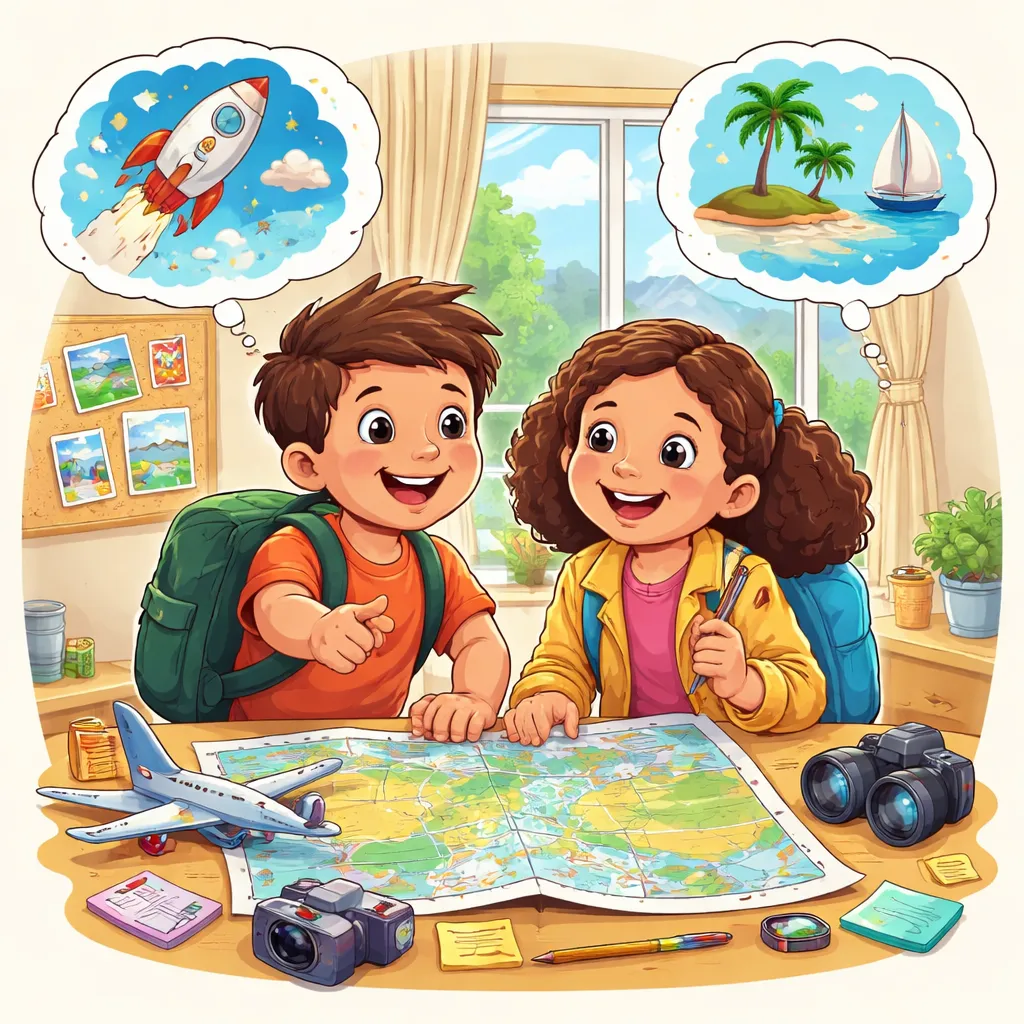

What Is Future forms: 'will' and 'going to'? Imagine you are sitting at the kitchen table on a sunny Sunday morning. You are dreaming about your birthday party or a trip to the blue ocean. To talk about these wonderful things that have not happened yet, we use the future. In English, the most common tools are the Future forms: 'will' and 'going to'.
These two forms act like a bridge from "now" to "later" for every young learner. They help children share their big dreams, their small plans, and their smart guesses. While both talk about the future, they each have a special job to do. One is for quick choices, and the other is for plans we have already made.
Think of these forms as the "Time Traveler" tools of the English language. They allow kids to look ahead and describe what they think or know is coming. "I will help you" sounds different from "I am going to help you" to a native speaker. Learning the difference makes a child's English sound very natural and clear.
Mastering these future expressions is a vital step for every growing student. It gives them the power to make promises, offer help, and schedule fun playdates. It turns a simple sentence into an exciting look at what the world holds next. This clarity builds great confidence for both speaking and writing in school.
Rules of Future forms: 'will' and 'going to' The rules for "will" are very simple and stay the same for every single person. You just put the word "will" right before the base action word you want to use. "I will play," "She will eat," and "They will go" all follow this easy pattern. It never changes its shape, which makes it a very friendly word for beginners.
The rules for "going to" require a little bit more teamwork from other words. First, you must use the "to be" verb (am, is, or are) to match the person. Then you add the phrase "going to" followed by your main action word. "I am going to jump" or "He is going to sleep" are perfect examples of this.
To make a negative sentence with "will," we usually use the short word "won't." "I won't forget" is the same as saying "I will not forget" your special day. For "going to," we simply add the word "not" after our "to be" helping verb. "They are not (aren't) going to stay" shows a plan that has changed.
To ask a question with "will," move the word to the very front of the line. "Will you play with me?" is a classic way to start a fun game together. For "going to," move the "am, is, or are" to the front to start the question. "Are you going to eat that?" helps children interact with others politely.
How to Use Future forms: 'will' and 'going to' We use "will" when we make a quick decision right at the moment we speak. If the phone rings, you might say, "I will answer it!" without thinking first. It is the perfect tool for offers, promises, and sudden bursts of helpfulness. "I will carry that heavy bag for you" shows a kind and immediate choice.
We use "going to" when we talk about a plan we decided on in the past. If you bought a ticket for a movie yesterday, you have a solid plan. "I am going to see the movie tonight" shows that you are ready and prepared. It is the best choice for birthday parties, school trips, and weekend visits.
We can use both "will" and "going to" when we make a guess about the future. If you see dark clouds, you can say "It is going to rain" because of the evidence. If you just think it might happen, you can say "I think it will rain later." Using these forms correctly helps children describe what they see and think.
Children also use "will" to make firm promises to their parents and friends. "I will tidy my room after I finish this drawing" is a very strong promise. Using the right future form shows the person listening how serious you are. It helps children build trust and clear communication with the people they love.
Examples of Future forms: 'will' and 'going to' Let's look at a busy family morning to see how these words work in real life. The milk carton is empty, so Dad says, "I will go to the store and get more." He made that choice quickly because he saw the empty box on the table. This "will" shows an immediate reaction to something happening right now.
In the afternoon, the children are packing their colorful bags for a sleepover. "We are going to stay at Grandma's house tonight," they shout happily. They have been planning this fun visit for a whole week with their parents. The "going to" shows a planned event that they are very excited to start.
Think about a student who is looking at a very difficult math problem. Her friend sees her struggling and says, "Don't worry, I will help you!" This is a kind offer made in the moment to make a friend feel better. The "will" makes the offer sound warm, immediate, and very supportive.
Consider a small seed that a child just planted in a pot of dark soil. "I am sure this tiny seed is going to grow into a beautiful red flower." The child sees the soil and the water, so they have evidence for their guess. These examples show how Future forms: 'will' and 'going to' fill our days.
Common Mistakes The most frequent mistake is using "will" for a plan that is already decided. A child might say "I will have a party on Saturday" when they mean "going to." If the invitations are already sent, "going to" is the much better choice. Remind your child that "going to" is for things that are already on the calendar.
Another common hurdle is forgetting the "to be" verb when using "going to." "I going to play" is a very common error for many young English learners. The phrase "going to" always needs its partners "am," "is," or "are" to work. They act like a team that must stay together to make the sentence strong.
Sometimes learners forget to use the base form of the verb after "will." Saying "I will playing" or "I will played" is a mistake in English grammar. Always use the simple, original action word like "play," "run," or "eat." This "Simple Rule" keeps the future sentences sounding clean and professional.
Pronunciation of the word "going to" often sounds like "gonna" in songs. While "gonna" is fine for a chat, children should learn the full form first. Encourage them to write "going to" in their schoolwork and formal letters. This builds a strong foundation for both casual speech and serious writing.
Comparison It is helpful to compare "will" and "going to" side-by-side to see the difference. "Will": Quick decisions, promises, and offers (The "In-the-Moment" tool). "Going to": Prior plans and predictions based on evidence (The "Prepared" tool). One is like a lightning bolt, and the other is like a carefully built path.
We can also compare how they both handle predictions or guesses. Evidence: "Look at those clouds! It is going to rain!" (We see it coming). Opinion: "I think the blue team will win the game." (It is just a feeling). Seeing this difference helps children explain their thoughts more accurately.
Compare the negative forms "won't" and "not going to" in a single sentence. "I won't go" sounds like a firm refusal or a quick choice not to go. "I am not going to go" sounds like a plan that has been decided already. These small changes in words can change the whole meaning of a story.
Understanding these comparisons helps children build a better mental map. They learn to choose the right future tool for the specific message they have. It turns grammar into a logical system of choices, plans, and exciting guesses. This clarity is the key to becoming a confident and very fluent storyteller.
Practice Exercises Let's test your future-planning skills with these fun and interactive challenges! Fill in the blanks with the correct form of "will" or "going to."
The phone is ringing! I ________ (answer) it for you, Mom.
We ________ (visit) the science museum next Tuesday with our class.
I promise I ________ (not / tell) anyone your secret, I promise!
Look at that cat on the high branch! It ________ (fall) off!
________ you ________ (help) me with these heavy books, please?
My parents ________ (buy) a new car next month because our old one broke.
I think it ________ (be) a very hot and sunny day tomorrow.
I'm hungry. I think I ________ (make) a big peanut butter sandwich.
Try to tell a family member one thing you "will" do now and one you "are going to" do later. "I will give you a hug now, and I am going to go to bed at eight o'clock." Practicing with your own life is the best way to make these rules stick.
Answers and Explanations will answer: This is a quick decision made the moment the phone rang.
are going to visit: This is a plan that the school made in the past.
will not tell / won't tell: We use "will" to make a firm promise.
is going to fall: You see the cat wobbling, so you have clear evidence.
Will ... help: This is a polite request or an offer for someone to help.
are going to buy: The family has already decided to get a new car.
will be: This is a personal opinion or a guess about the weather.
will make: You just realized you are hungry, so it is a quick choice.
If your child got the "promise" and "evidence" questions right, celebrate! Recognizing these specific situations is the hardest part of future grammar. If they remembered to use "am, is, or are" with "going to," they are doing great. Steady practice will make these future choices feel like second nature.
Learning Tips Create a "Future Calendar" with your child using stickers and bright markers. Label the things they are "going to" do this week, like soccer or music class. Then, practice making "will" offers for chores around the house today. "I will set the table!" is a great way to practice while being helpful.
Play a game of "The Fortune Teller" using a crystal ball made of paper. Have your child make predictions about the future using "will" and "going to." "I think robots will cook our dinner" or "It is going to be a fun summer." It turns a grammar lesson into a creative and very imaginative activity.
Draw a "Future Tree" on a large piece of paper for the playroom wall. Put "will" on one branch and "going to" on another branch of the tree. Add leaves with examples of quick choices, promises, and long-term plans. Visual aids are powerful tools for helping young learners organize ideas.
Read a favorite storybook together and look for how characters talk about later. When you find a sentence like "I will return," point it out to your child. Discuss if it was a promise, a quick choice, or a plan they made before. Active reading is one of the best ways to see grammar working in the world.
Always keep your guidance warm, professional, and full of great encouragement. Learning the different ways to talk about time is an adventure for kids. Celebrate every time your child describes a plan or a promise correctly. Your support is the most powerful tool for their educational success.
Mastering Future forms: 'will' and 'going to' gives children the keys to tomorrow. It allows them to share their dreams and their plans with everyone they meet. Every "I will" and "I am going to" is a step toward becoming a better speaker. Enjoy the journey of exploring these exciting future patterns together as a team!