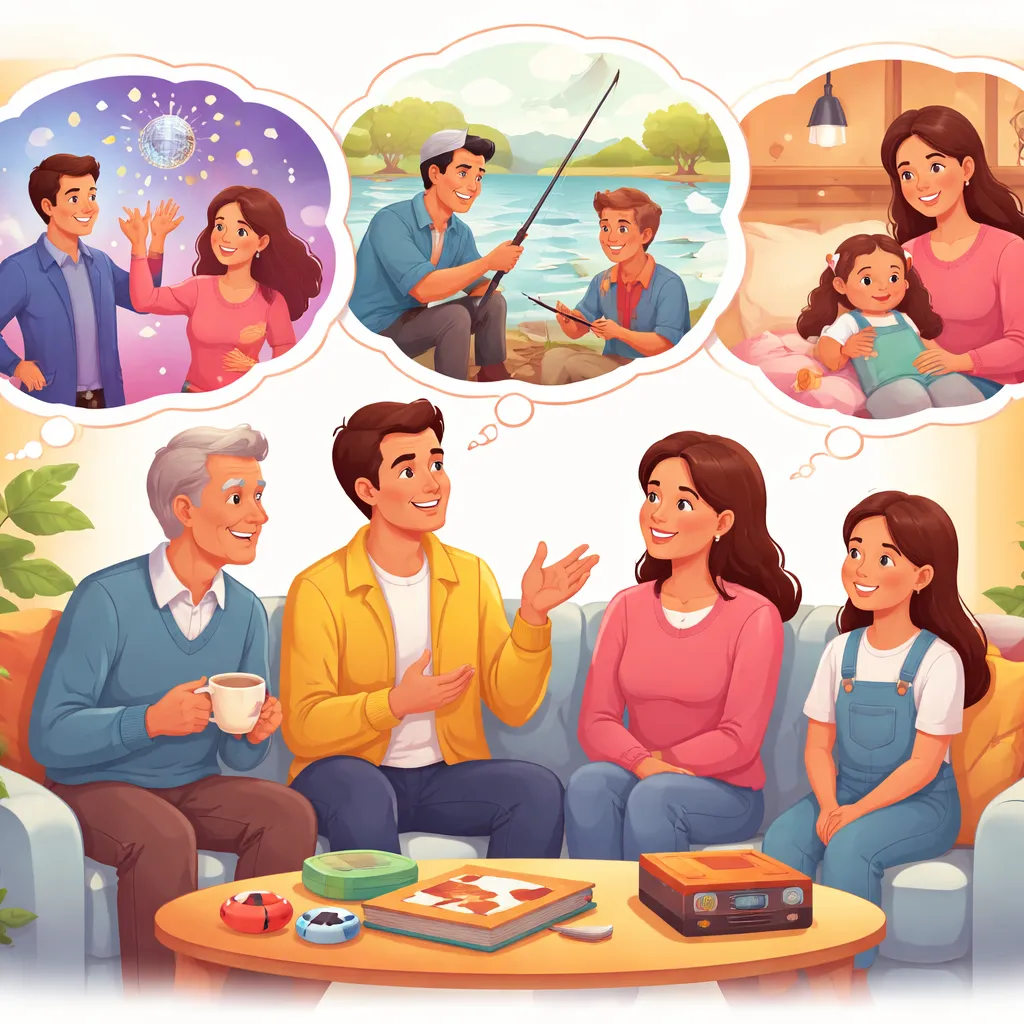

What Is Past habits: 'used to', 'would' and the past simple? Think about the things you did every single day a few years ago. Maybe you played with small toy cars every morning before breakfast. Perhaps your family visited the same blue lake every single summer. In English, we call these repeated actions Past habits: 'used to', 'would' and the past simple.
These structures help us talk about things that were true for a long time. They describe actions that happened again and again in the past. However, these actions do not happen in our lives anymore. Using these words helps children share their history and personal growth.
Learning about these habits is like opening an old family photo album. One word might describe a state of being, like living in a big house. Another word might describe a fun activity, like riding a shiny bicycle. Together, they make English stories sound rich, natural, and very clear.
Rules of Past habits: 'used to', 'would' and the past simple The phrase "used to" is a very reliable tool for all types of past habits. You follow it with the base form of the action verb. We say "I used to swim" to show it was a regular part of our life. It works for both actions and states, like "I used to be shy."
The word "would" is a bit more specific than "used to." We only use "would" for repeated actions that we can physically see. You can say "I would play games," but you cannot say "I would be short." Like "used to," it also takes the base form of the verb that follows it.
The past simple is the most basic way to talk about the past. We use it for single finished actions or for regular habits. Usually, we add "-ed" to the end of regular verbs to create this tense. It is the foundation that every young learner needs to build upon.
To make "used to" negative, we use "didn't use to" without the "d." This is a very important spelling rule that often surprises students. For "would," the negative form is "would not" or the contraction "wouldn't." For the past simple, we use "did not" plus the base verb.
How to Use Past habits: 'used to', 'would' and the past simple We use "used to" when we want to emphasize that things are different now. It is perfect for talking about old hobbies that you no longer enjoy. "I used to like broccoli" suggests that you might prefer carrots today. It highlights a contrast between the past and the present moment.
Use "would" when you are telling a nostalgic story about the past. It sounds very poetic and friendly, like a grandfather telling a tale. "Every Sunday, we would go to the park" creates a warm feeling. It focuses on the repetition of the fun activity itself.
The past simple is the best choice when you mention a specific time. If you say "In 2022, I played soccer," the past simple is the right tool. It is also the only choice for actions that only happened one time. "I went to the zoo yesterday" must use the past simple tense.
Mix these three structures together to make your writing more interesting. Start a story with "used to" to set the general scene. Then, use "would" to describe the specific things you did repeatedly. Finally, use the past simple for the specific events that ended the story.
Examples of Past habits: 'used to', 'would' and the past simple Let’s look at a story about a young boy named Leo and his dog. Leo used to live in a small apartment in a very busy city. This describes a state that lasted for a long time in the past. Now, Leo lives in a house with a big, green backyard.
Every morning, Leo would take his dog for a long walk. They would run through the grass and jump over the small bushes. These were repeated actions that Leo did every single day. Using "would" makes the memory feel very active and happy.
Last Saturday, Leo and his dog played catch for three hours. This is a specific event that happened on one particular day. We use the past simple "played" because it is a finished action. It tells the reader exactly when the fun activity took place.
Think about how you felt when you were just a tiny baby. You used to sleep in a crib and drink milk from a bottle. You wouldn't eat pizza or apples because you didn't have teeth yet. These examples show how habits change as we grow and learn.
Common Mistakes The biggest mistake with "used to" happens in the negative form. Many people write "didn't used to" with a "d" at the end. The correct spelling is "didn't use to" because "did" already shows the past. Always double-check this spelling when writing your English homework.
Another common error is using "would" to describe a state. A student might say, "I would have a cat when I was five." Since having a cat is a state, not a repeated action, use "used to." The correct sentence is "I used to have a cat when I was five."
Sometimes learners use the past simple for everything without variety. While it is not wrong, it can make a story sound a bit flat. Instead of "I ran every day," try "I would run every day." This adds flavor and shows that you understand different ways to speak.
Be careful not to use "used to" for things that only happened once. "I used to go to Paris last year" is an incorrect sentence. Since you went once, you should say "I went to Paris last year." Keep "used to" for things that happened many, many times.
Comparison "Used to" and "would" are like two different types of brushes for a painter. "Used to" is a broad brush that covers both actions and feelings. It describes the whole background of your past life and personality. It is the most flexible tool in your grammar toolkit.
"Would" is a smaller, more detailed brush for specific actions. It brings the story to life by showing the things you actually did. However, "would" cannot describe things you "were" or things you "had." You cannot use it for words like "be," "live," "know," or "love."
The past simple is the simplest brush of all for any finished task. It doesn't care if the action was a habit or a one-time event. It simply states that the action is over and belongs to yesterday. Use it when you want to be direct and very clear about the timing.
Choosing between them depends on the "vibe" of your sentence. If you want to show a big change, "used to" is your best friend. If you want to tell a sweet story, "would" is a wonderful choice. If you just want to state a fact, stick with the past simple.
Practice Exercises Let's try some exercises to test your knowledge of these structures! Choose the best option to complete each sentence about the past.
When I was a baby, I ________ (used to / would) be very small.
Every summer, my family ________ (would / used to) visit Grandma. (Both work!)
Last night, I ________ (watched / used to watch) a movie about space.
I ________ (didn't use to / didn't used to) like spinach, but now I do.
We ________ (would have / used to have) a red car ten years ago.
My teacher ________ (would always give / gave) us stickers on Fridays.
Ten years ago, my father ________ (worked / would work) in a bank.
I ________ (used to / would) know how to speak a little bit of Spanish.
Read your answers aloud to see if they sound natural to your ears. Think about whether the sentence describes a state or a repeated action. Ask your parents to help you check the spelling of your negative sentences.
Answers and Explanations used to: Being small is a state, so we cannot use "would" here.
would / used to: Both are correct because visiting is an action.
watched: This was a single event that happened last night.
didn't use to: Remember to drop the "d" after the word "didn't."
used to have: "Have" is a state verb, so "would" is not allowed.
would always give / gave: Both show a repeated habit in the past.
worked: The past simple is perfect for stating a past job or fact.
used to: Knowing something is a state of the mind, not an action.
If you chose "would" for "be" or "have," remember the "State Rule." Actions are things you can see someone doing, like running or eating. States are things that are just true, like being tall or living in a house. Only "used to" and the past simple can describe these past states.
Learning Tips Create a "Memory Map" of your life starting from when you were born. Draw pictures of your old house, your old toys, and your old friends. Write sentences under each picture using "used to" and "would." This helps you connect grammar rules to your own happy memories.
Play a game of "Spot the Habit" when listening to English songs. Many songs talk about the past and use these specific words. Listen carefully for "used to" or "would" and write them down. This improves your listening skills while you enjoy your favorite music.
Practice telling "Then and Now" stories with your family members. Find an old photo of your parents and ask them about their habits. "Did you use to have long hair?" or "What would you do after school?" This makes learning a fun social activity that everyone can join.
Keep a small notebook for "Spelling Traps" like "didn't use to." Write the correct version in bright colors to help your brain remember. The more you see the correct spelling, the easier it becomes to write. Always celebrate when you catch a mistake before you finish your work.
Teaching these rules to a younger sibling or a friend is also helpful. When you explain a rule to someone else, you understand it better yourself. Use simple examples and draw little pictures to help them learn too. Being a "teacher" for a day is a great way to build your own confidence.
Every new grammar point is a tool that helps you express yourself. Past habits: 'used to', 'would' and the past simple allow you to share your past. By mastering these, you become a more skilled and interesting storyteller. Enjoy the journey of learning and keep exploring the beauty of English.
Your ability to describe your history shows how much you have grown. Don't be afraid to experiment with "would" in your creative writing. It adds a special touch that makes your English sound very advanced. Keep practicing, stay curious, and always have fun with your language learning.