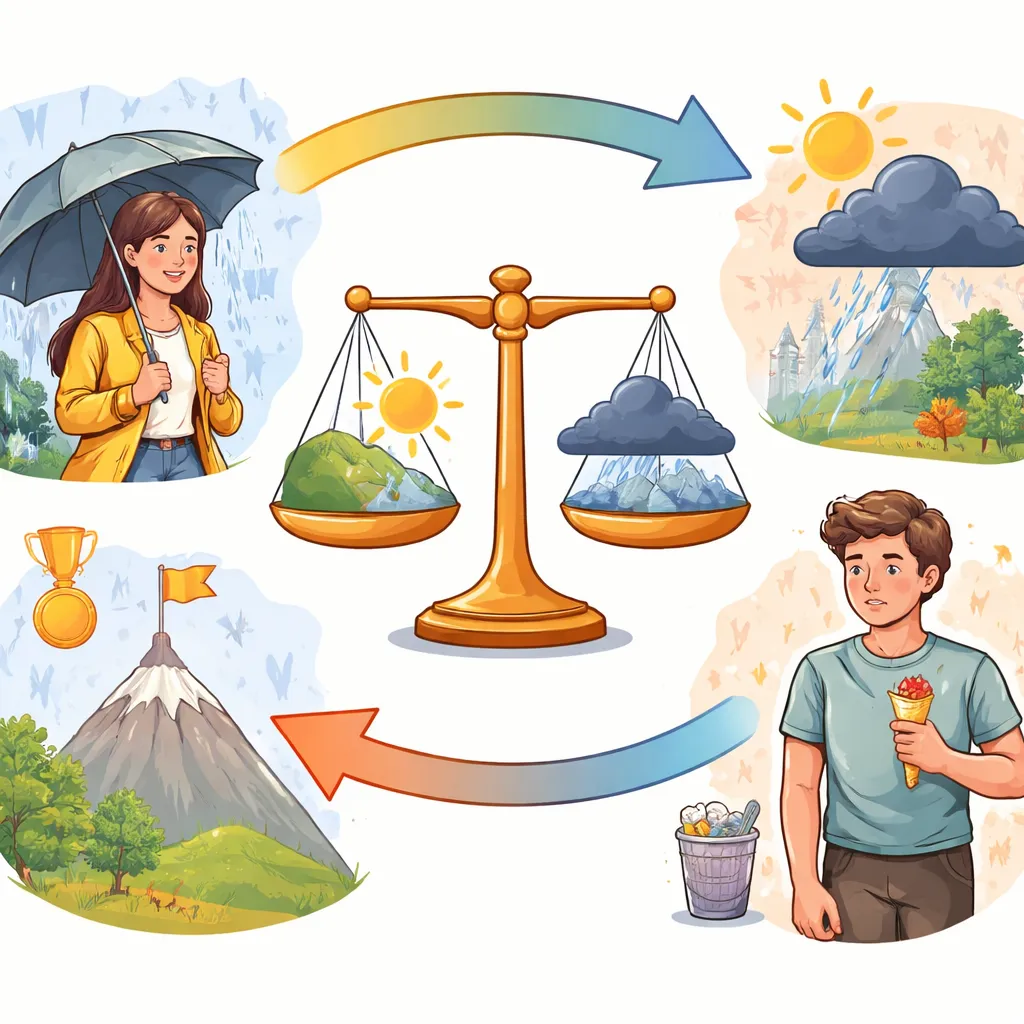

What Is Contrasting Ideas: 'Although', 'Despite', and Others?
In English, expressing contrasting ideas is a powerful way to add depth and clarity to sentences. These contrasts help highlight differences or present opposing viewpoints in a clear, structured way. The words 'although', 'despite', and others like 'however', 'on the other hand', and 'in spite of' are essential tools to express these ideas.
These words and phrases are used to connect two parts of a sentence where one idea contrasts or conflicts with another. For example, you might use them to show a situation where something happens despite an obstacle or to present a situation where two things are true but seem to contradict each other.
Understanding how and when to use these words can significantly improve children’s writing and speaking skills, helping them express more complex thoughts.
Rules of Contrasting Ideas: 'Although', 'Despite', and Others 'Although' and 'Though'
Both 'although' and 'though' are conjunctions used to introduce a contrast between two ideas. They are used to show that one idea is true despite the other. These words can be used at the beginning or middle of a sentence.
Structure:
Although/Though + subject + verb, subject + verb.
Example:
Although it was raining, they went to the park. They went to the park, although it was raining. 'Despite' and 'In Spite Of'
'Despite' and 'in spite of' are prepositions that also express contrast. They are often used with nouns, pronouns, or gerunds (verbs ending in -ing) to show that something happens even though there is a problem or obstacle.
Structure:
Despite/In spite of + noun/gerund, subject + verb.
Example:
Despite the rain, they went to the park. In spite of the rain, they went to the park. 'However' and 'On the Other Hand'
'However' and 'on the other hand' are adverbs and transitional phrases that show a contrast between two ideas or viewpoints. 'However' is used to introduce a different or opposing idea, often at the beginning or middle of a sentence. 'On the other hand' is used to show an alternative or contrasting point of view.
Structure:
Subject + verb + however, subject + verb. On the other hand, subject + verb.
Example:
She loves swimming; however, she is afraid of the sea. He enjoys going to the beach; on the other hand, his sister prefers staying at home. 'But'
'But' is one of the simplest conjunctions used to show contrast. It can be used in various situations where two ideas are in opposition.
Structure:
Subject + verb + but, subject + verb.
Example:
I wanted to go to the beach, but it started raining. How to Use Contrasting Ideas: 'Although', 'Despite', and Others Using 'Although' and 'Though'
The key to using 'although' and 'though' correctly is to understand that they connect two ideas that seem to contradict each other. The first clause expresses one idea, and the second clause presents a situation that contrasts with it.
Example:
Although she was tired, she finished her homework. She finished her homework, though she was tired.
In both sentences, there is a contrast between being tired and finishing the homework, but the sentence suggests that despite being tired, the second action was still completed.
Using 'Despite' and 'In Spite Of'
Both 'despite' and 'in spite of' are used to show that something happens in contrast to expectations. These words are used before a noun or gerund, making them different from conjunctions like 'although'. The phrase 'in spite of' has the same meaning as 'despite', but it is more formal.
Example:
Despite being tired, she finished her homework. In spite of being tired, she finished her homework.
These sentences highlight the contrast between being tired and still completing the homework.
Using 'However' and 'On the Other Hand'
'However' introduces a contrast or opposite idea. It’s often used to introduce a fact that contradicts the previous statement. It can also be used at the beginning, middle, or end of a sentence.
Example:
I enjoy watching movies; however, I don’t like watching them alone. He loves ice cream; on the other hand, his brother prefers cake.
In the first example, 'however' introduces a contrast between the speaker enjoying movies and not wanting to watch them alone. In the second example, 'on the other hand' contrasts two preferences: one person enjoys ice cream, while the other prefers cake.
Using 'But'
'But' is a simple and versatile conjunction used to show contrast. It is the most commonly used word for this purpose. It connects two clauses that present opposing ideas.
Example:
I wanted to go to the park, but it started raining. She tried to study, but she was too tired.
In both examples, 'but' shows a contrast between the desire to go to the park and the reality of rain, or between the effort to study and the tiredness that prevented it.
Examples of Contrasting Ideas: 'Although', 'Despite', and Others Using 'Although' and 'Though' Although it was cold, he went outside without a jacket. She likes to read, though she doesn’t have much time for it. Using 'Despite' and 'In Spite Of' Despite being scared, she rode the roller coaster. He went to the party in spite of feeling sick. Using 'However' and 'On the Other Hand' He loves playing soccer; however, he’s not good at it. She loves the beach; on the other hand, her brother prefers the mountains. Using 'But' I like chocolate, but I don’t eat it every day. She wanted to go out, but it was too late. Common Mistakes with Contrasting Ideas: 'Although', 'Despite', and Others
When using contrasting words and phrases, children may make several common mistakes. Here are a few to watch for:
Using 'although' with a noun: Incorrect: Although the rain, we went to the park. Correct: Despite the rain, we went to the park. 'Although' is a conjunction and should be followed by a subject and verb, while 'despite' is a preposition and can be followed by a noun or gerund. Placing 'however' in the wrong part of the sentence: Incorrect: He is nice however his brother is rude. Correct: He is nice; however, his brother is rude. 'However' should be used to introduce a contrast and is often preceded by a semicolon or comma. Misusing 'but' with more than two clauses: Incorrect: I like soccer, but my brother likes basketball, but he doesn’t play. Correct: I like soccer, but my brother likes basketball. He doesn’t play. 'But' should only connect two ideas, so breaking them into separate sentences can improve clarity. Practice Exercises for Contrasting Ideas: 'Although', 'Despite', and Others Fill in the blanks: _______ she studied hard, she didn’t pass the test. They went to the beach _______ the bad weather. He likes pizza, _______ he doesn’t eat it often. Choose the correct option: (Although/Despite) it was late, they decided to go for a walk. He is good at math, (however/on the other hand) he struggles with science. Rewrite the sentences using the contrasting words: The movie was interesting, but it was too long. It was raining, but they went out to play. Answers and Explanations Exercise 1: Fill in the blanks Although she studied hard, she didn’t pass the test. They went to the beach despite the bad weather. He likes pizza, but he doesn’t eat it often. Exercise 2: Choose the correct option Although it was late, they decided to go for a walk. He is good at math, however, he struggles with science. Exercise 3: Rewrite the sentences using the contrasting words The movie was interesting; however, it was too long. Despite the rain, they went out to play. Learning Tips for Contrasting Ideas: 'Although', 'Despite', and Others Practice with Real-Life Situations: Encourage children to create contrasting sentences based on their daily experiences. For example, “I like to play outside, but it’s too cold today.” Use Visual Aids: Drawing simple diagrams can help visualize the contrast. For instance, a T-chart with two opposing ideas might help children better understand how these words are used. Make It Fun: Use games and storytelling to reinforce the concept of contrasting ideas. Ask children to tell stories using contrasting words like 'although', 'despite', and 'however'.
By practicing contrasting ideas, children can develop clearer, more interesting sentences that better express their thoughts and ideas. Mastering these words and phrases will give them the tools to explain complex relationships between different actions, situations, and feelings.