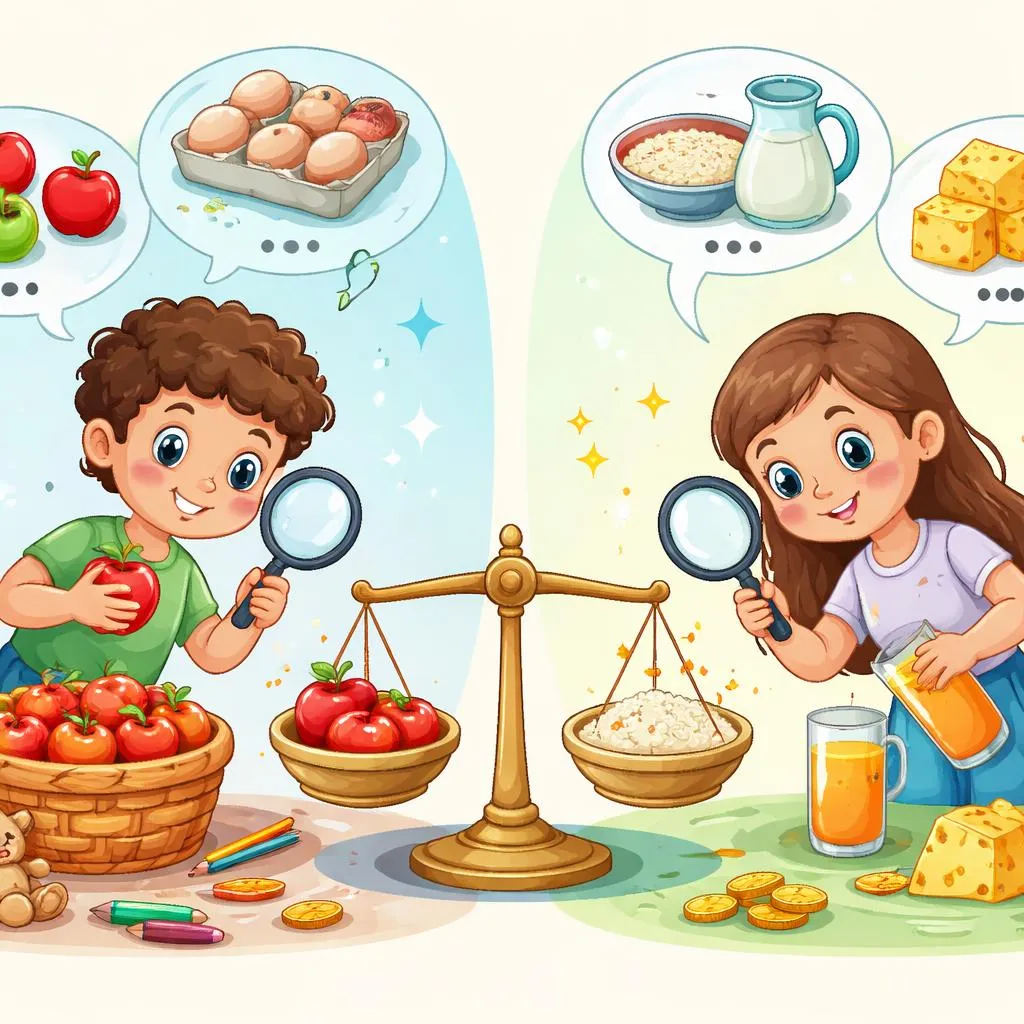

Learning English can feel like a big adventure. Every new word opens a door. But sometimes, words act in surprising ways. You might see a word that looks simple. Yet, it changes shape depending on the situation.
This happens with nouns. Nouns name people, places, things, or ideas. But some nouns like to be counted. Others do not. Understanding this difference makes your English clearer. It also helps your child speak and write with confidence.
Let us explore the world of nouns: countable and uncountable. Together, we will learn the rules. We will see many examples. And we will practice until it feels natural.
What Is Nouns: Countable and Uncountable? Countable nouns are things you can count. You can put a number in front of them. One apple. Two cars. Three books. These nouns have a singular form and a plural form.
The singular form means one. The plural form means more than one. You usually add -s or -es to make the plural. For example, dog becomes dogs. Box becomes boxes.
Uncountable nouns are different. You cannot count them with numbers. They do not have a plural form. You cannot say “one water” or “two rices.” Instead, these nouns stay the same.
Uncountable nouns often refer to liquids, powders, or ideas. Think of milk, sugar, or happiness. You cannot separate these into individual pieces. They flow like a river.
For young learners, think of countable nouns as blocks. Each block stands alone. You can pick up one block. You can pick up ten blocks. Uncountable nouns are like water in a glass. You cannot count the water drops one by one easily.
Rules of Nouns: Countable and Uncountable The first rule is simple. Countable nouns use a or an for one thing. A cat. An elephant. For more than one, add -s or -es. Cats. Elephants.
Some countable nouns change spelling in the plural. One child becomes two children. One mouse becomes two mice. These are exceptions. But children learn them through practice.
Uncountable nouns never use a or an. You cannot say “a milk” or “an advice.” Instead, you can use some, any, or a little. Some milk. Any advice. A little sugar.
Another important rule involves verbs. Countable singular nouns need a singular verb. The dog runs fast. Countable plural nouns need a plural verb. The dogs run fast.
Uncountable nouns always take a singular verb. The milk is cold. The advice helps. Even though milk feels like many drops, the grammar treats it as one thing.
You can make uncountable nouns countable by adding a phrase. A glass of water. A piece of advice. A bowl of rice. This trick helps children express amounts clearly.
How to Use Nouns: Countable and Uncountable Use countable nouns when you see separate items. Apples on a tree. Chairs in a room. Stars in the sky. Ask your child, “Can I count them one by one?” If yes, use a countable noun.
Use uncountable nouns for substances or abstract ideas. Water, air, sand, love, time. Ask, “Does this feel like a whole?” If yes, use an uncountable noun.
Teach your child to use some with both types. Some apples (countable plural). Some water (uncountable). Some makes positive sentences friendly. “I have some oranges.” “She has some juice.”
Use any for questions and negatives. “Do you have any pencils?” “I do not have any paper.” Any works for countable plural and uncountable nouns.
Use many with countable nouns. “How many cookies did you eat?” Use much with uncountable nouns. “How much sugar do we need?” Many and much help children ask about amounts.
Use a few with countable nouns. A few friends. A few ideas. Use a little with uncountable nouns. A little time. A little help. These phrases show small amounts.
Examples of Nouns: Countable and Uncountable Let us look at common countable nouns. Dog, cat, bird, table, chair, book, pen, apple, orange, banana, car, bus, train, house, room, window, door, shoe, sock, hat, toy, game, friend, teacher, student, story, song, picture.
Now common uncountable nouns. Water, milk, juice, tea, coffee, rice, bread, pasta, sugar, salt, flour, butter, cheese, meat, chicken (the food), fish (the food), air, wind, rain, snow, thunder, lightning, wood, paper, plastic, glass (the material), gold, silver, money, music, art, love, hate, happiness, sadness, information, advice, news, homework, work, time, space.
Some nouns can be both. But the meaning changes. Glass as a material is uncountable. “The window is made of glass.” A glass as a drinking container is countable. “I drank two glasses of water.”
Chicken as meat is uncountable. “We ate chicken for dinner.” Chicken as a live animal is countable. “I see three chickens in the yard.”
Hair on your head is often uncountable. “She has long hair.” But individual hairs are countable. “I found two gray hairs.”
Teach your child to notice context. The same word can act differently. This makes English rich and interesting.
Common Mistakes Many children say “a rice” or “a bread.” Remind them gently. Rice and bread are uncountable. Say “a bowl of rice” or “a slice of bread.”
Another mistake is adding -s to uncountable nouns. “Moneys” or “informations” are incorrect. Use money and information as singular. “The money is on the table.” “The information helps us.”
Children also confuse many and much. “How many water?” is wrong. Water is uncountable. Say “How much water?” “How many bottles of water?” uses bottles, which is countable.
Using a singular verb with a plural countable noun is common. “The dogs runs” sounds strange. Teach your child to match the verb. “The dogs run.”
Using a plural verb with an uncountable noun is another error. “The milk are cold” is incorrect. “The milk is cold” sounds right.
Some children forget that news is uncountable. “The news are good” is wrong. “The news is good” is correct. Even though news ends with s, it acts singular.
Practice spotting these mistakes. Gently correct them. Over time, your child will hear what sounds right.
Comparison Let us compare countable and uncountable nouns side by side.
Countable nouns have numbers. One cat, two cats. Uncountable nouns do not use numbers. You cannot say one water.
Countable nouns use a or an. An apple. Uncountable nouns never use a or an. No a milk.
Countable nouns have plurals. Dogs, boxes, children. Uncountable nouns have no plural form. Milks is wrong.
Countable nouns use many and a few. Many cars, a few books. Uncountable nouns use much and a little. Much sugar, a little time.
Countable nouns use how many. How many eggs? Uncountable nouns use how much. How much butter?
Countable nouns take plural verbs for plural forms. The students study. Uncountable nouns always take singular verbs. The water flows.
When you need to measure an uncountable noun, add a countable phrase. A piece of paper. A cup of coffee. A drop of rain. The phrase becomes countable, even though the original noun is not.
This comparison helps children see the pattern. English grammar becomes a map, not a mystery.
Practice Exercises Exercise 1: Decide if each noun is countable (C) or uncountable (U).
Apple
Milk
Chair
Happiness
Dog
Rice
Book
Air
Friend
Money
Exercise 2: Fill in the blank with many or much.
How ______ apples do you have?
How ______ water is in the bottle?
I don’t have ______ friends.
She doesn’t drink ______ coffee.
How ______ cars are in the parking lot?
Exercise 3: Fill in the blank with a few or a little.
I have ______ oranges left.
Add ______ salt to the soup.
We need ______ minutes to finish.
He speaks ______ English.
She gave me ______ ideas.
Exercise 4: Correct the mistake in each sentence.
I need a rice for dinner.
How many sugar do you want?
The informations are useful.
She has a lot of moneys.
The news are interesting today.
Exercise 5: Write the plural form of these countable nouns.
Cat
Box
Child
Mouse
Party
Answers and Explanations Exercise 1 answers:
C (apple)
U (milk)
C (chair)
U (happiness)
C (dog)
U (rice)
C (book)
U (air)
C (friend)
U (money)
Explanation: You can count apples, chairs, dogs, books, and friends. You cannot count milk, happiness, rice, air, or money as single units.
Exercise 2 answers:
many (apples is countable plural)
much (water is uncountable)
many (friends is countable plural)
much (coffee is uncountable)
many (cars is countable plural)
Explanation: Many pairs with countable nouns. Much pairs with uncountable nouns.
Exercise 3 answers:
a few (oranges is countable)
a little (salt is uncountable)
a few (minutes is countable)
a little (English as a language is uncountable)
a few (ideas is countable)
Explanation: A few for countable items. A little for uncountable substances or concepts.
Exercise 4 corrected sentences:
I need some rice for dinner. (or a bowl of rice)
How much sugar do you want?
The information is useful.
She has a lot of money.
The news is interesting today.
Explanation: Rice, sugar, information, money, and news are uncountable. They never take -s. They always use singular verbs.
Exercise 5 answers:
Cats
Boxes
Children
Mice
Parties
Explanation: Most add -s or -es. Some nouns change completely. Children learn these special plurals over time.
Learning Tips Create a picture chart at home. Draw two columns. Label one “Countable” and the other “Uncountable.” Cut out magazine pictures. Let your child place each picture in the correct column.
Play the “I Spy” game with nouns. Say, “I spy with my little eye something countable.” Your child guesses. Then switch roles. Use “something uncountable” next.
Cook together in the kitchen. Name each ingredient. Sugar is uncountable. Eggs are countable. Cups of flour use a countable phrase for an uncountable noun. Cooking makes grammar real.
Read books and pause on nouns. Ask, “Can we count this?” Build the habit of noticing. Do this gently. Make it a game, not a test.
Sing songs with nouns. Many children’s songs repeat countable nouns. “Five little ducks” teaches counting. Add your own verses with uncountable nouns like “some bread and some honey.”
Be patient. Children learn grammar through repetition and kindness. Celebrate small victories. When your child says “a water,” smile and say, “We say some water. You are learning so well.”
Keep a noun notebook. Write down new words. Mark C or U next to each one. Review the notebook once a week. Your child will build a strong mental map.
Learning nouns: countable and uncountable takes time. But with playful practice, your child will master this skill. Every correct sentence builds confidence. And confident children become joyful learners.