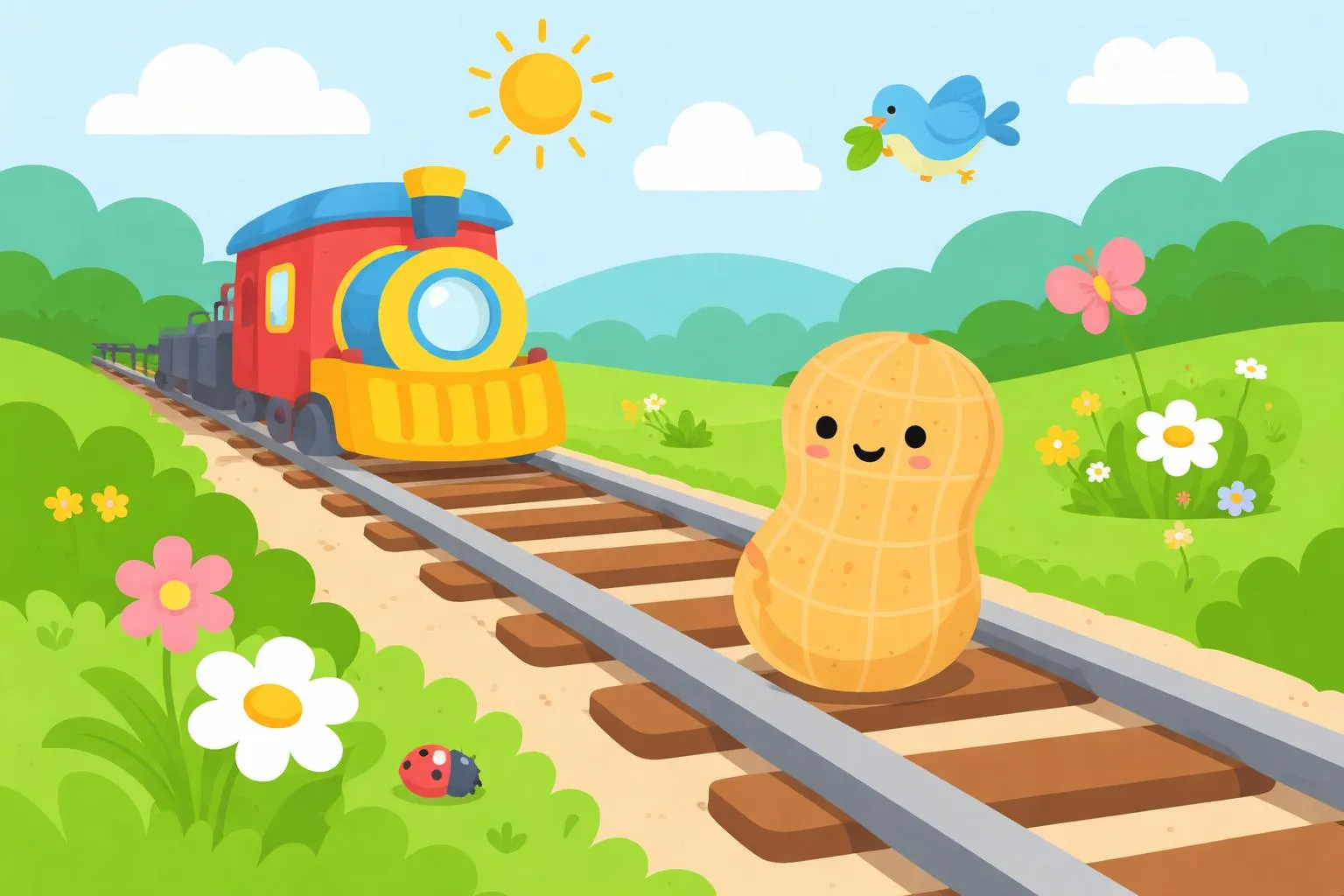

Original Poem:
A peanut sat on a railroad track,
His heart was all a-flutter.
The five-fifteen came rushing by--
Toot toot!???Peanut butter!</p>
Introduction and Explanation
This short and playful poem tells the story of a peanut sitting on a railroad track, nervously awaiting the arrival of a train. The peanut’s heart is described as "all a-flutter," suggesting excitement or anxiety. When the train, referred to as "the five-fifteen," rushes by with a loud "toot toot," the poem delivers a humorous twist by ending with the phrase "Peanut butter!" This pun cleverly combines the literal peanut and the idea of it being crushed by the train, turning into peanut butter.
The poem uses simple language and rhyme, making it engaging and memorable for children. The vivid imagery of the peanut on the track and the sound of the train whistle help young readers visualize the scene and enjoy the playful wordplay.
Background and Author Information
This poem is a classic example of children’s nursery rhymes that blend humor with simple storytelling. While the specific author is unknown, such rhymes have been passed down through oral tradition and often appear in collections of children’s poetry. The poem’s brevity and rhythmic style make it ideal for early childhood education, helping children develop phonemic awareness and an appreciation for language play.
Interpretation and Appreciation
At its core, the poem is a fun and imaginative way to teach children about anticipation and surprise. The peanut’s nervousness mirrors how people feel when awaiting something unknown or exciting. The sudden arrival of the train and the pun "Peanut butter!" provide a delightful surprise that encourages laughter and enjoyment.
The poem also subtly introduces concepts of cause and effect: the peanut sitting on the track is in danger of being crushed, leading to the humorous outcome. This can spark conversations about safety and consequences in a lighthearted manner.
Learning Opportunities for Children and Students
From this poem, children can learn several important skills and concepts:
- Rhyming and Phonetics: The poem’s rhyme scheme helps children recognize sound patterns, which is essential for reading development.
- Vocabulary Building: Words like "flutter," "rushing," and "toot" enrich children’s vocabulary with expressive terms.
- Humor and Wordplay: The pun "Peanut butter" introduces children to playful uses of language, encouraging creativity.
- Cause and Effect: Understanding how the peanut’s position leads to the punchline helps develop logical thinking.
- Emotional Awareness: The peanut’s "heart all a-flutter" introduces children to feelings of nervousness or excitement.
Practical Applications and Life Lessons
- Safety Awareness: The poem can be a starting point to teach children about the dangers of playing near train tracks or roads.
- Creative Writing: Students can be encouraged to write their own short poems using puns or playful language.
- Public Speaking: Reciting the poem helps build confidence and expressive reading skills.
- Critical Thinking: Discussing the poem’s meaning and humor enhances interpretive skills.
Reading Comprehension Exercises
- Where was the peanut sitting in the poem?
- How did the peanut feel while sitting on the track?
- What came rushing by the peanut?
- What sound did the train make?
- What is the pun at the end of the poem? What does it mean?
- Why do you think the poem is funny?
- What lesson can we learn from this poem about safety?
Answers
- The peanut was sitting on a railroad track.
- The peanut’s heart was all a-flutter, meaning it felt nervous or excited.
- The five-fifteen train came rushing by.
- The train made a "toot toot" sound.
- The pun is "Peanut butter," which plays on the fact that the peanut on the track would be crushed by the train, turning into peanut butter.
- The poem is funny because it uses a surprise twist and wordplay with the peanut and peanut butter.
- The poem reminds us that being on or near train tracks is dangerous and we should stay safe.
This poem, with its simple yet clever language, serves as an excellent tool for early learners to explore poetry, language, and safety awareness in a fun and engaging way.