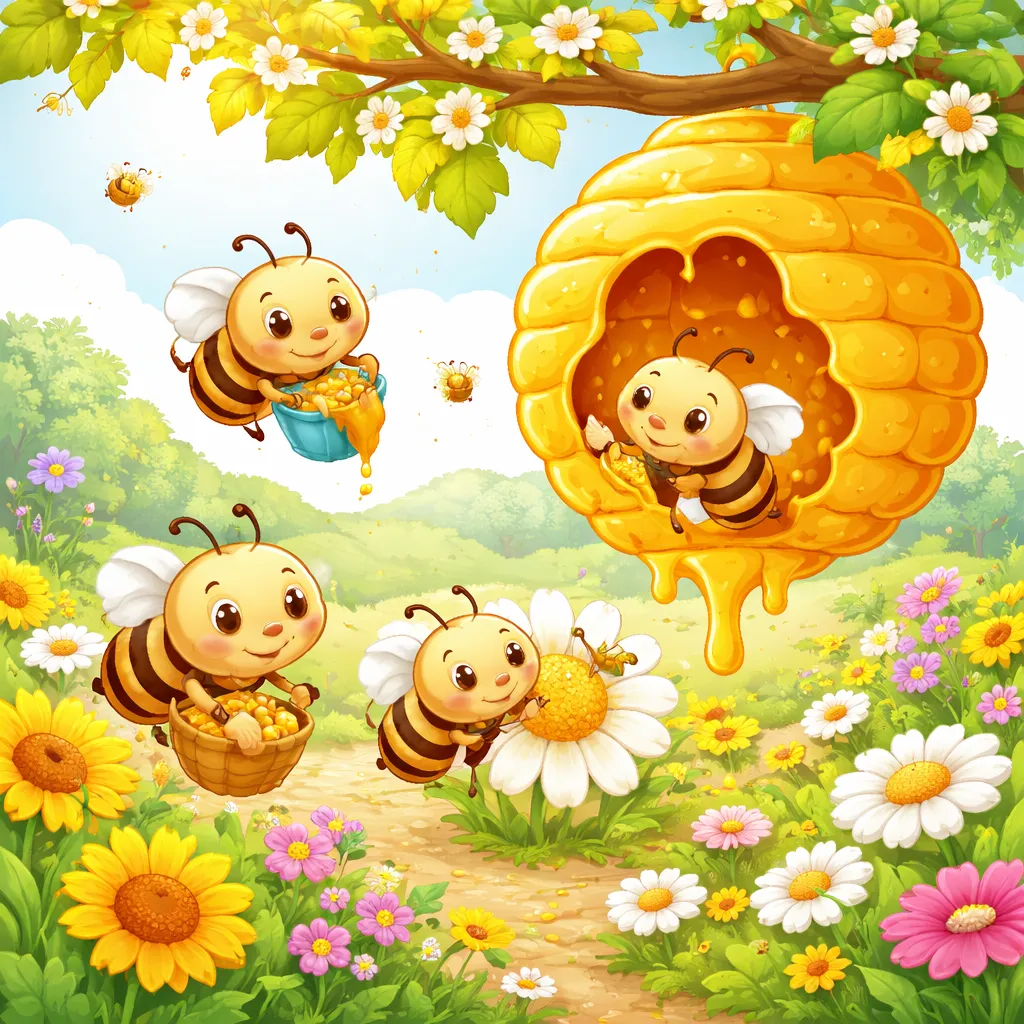

Have you ever watched a fuzzy, striped insect buzz from flower to flower on a sunny day? It’s not just playing—it’s doing one of the most important jobs in nature! In Korea, a country that celebrates the beauty of the seasons, there is a busy song about this tiny, hard-working hero. Let’s buzz along with the Korean Song: The Little Bee (꿀벌).
About the Song
Here is a classic verse from this beloved song in Korean and English:
꿀벌 꿀벌 부지런한 꿀벌
(Kkulbeol kkulbeol bujireonan kkulbeol)
Honey bee, honey bee, diligent honey bee
꽃에서 꽃으로 날아다니며
(Kkoteseo kkoteuro naradanimyeo)
Flying from flower to flower
달콤한 꿀을 열심히 모아
(Dalkomhan kkureul yeolsimhi moa)
Diligently gathering sweet honey
우리에게 맛있는 꿀을 주네
(Uriege masinneun kkureul june)
Giving us delicious honey
This song’s original name is “꿀벌” (Kkulbeol), which means “honey bee.” It is a very popular and traditional Korean children’s song. The song is a cheerful tribute to the bee’s essential work. The music is often lively, buzzy, and full of energy, imitating the sound of busy wings. The Korean Song: The Little Bee (꿀벌) is a musical celebration of diligence, nature’s gifts, and the sweet results of hard work.
What the Song is About
The song is a song of thanks to the bee. First, we greet it and note its character: “Honey bee, honey bee, diligent honey bee.” We see its action: “Flying from flower to flower.” The bee doesn’t stay in one place; it travels far and wide. We learn about its mission: “Diligently gathering sweet honey.” This is hard work that requires many trips. Finally, we see the wonderful result for us: “Giving us delicious honey.” The bee’s hard work creates a sweet treat that we can all enjoy. The whole song shows the beautiful cycle of nature, where the bee’s job helps the flowers and gives us food.
Who Made It & Its Story
This song is a traditional Korean folk song, passed down through generations. The original creator is unknown, as it comes from the people’s close observation of nature and the changing seasons. Bees are vital for pollinating fruit trees and crops, which is especially important in Korea’s agricultural society. The Korean Song: The Little Bee (꿀벌) is adored for three sweet reasons. First, it teaches children about a crucial ecological process (pollination and honey-making) in a simple, joyful way. Second, it instills an appreciation for hard work and the natural sources of our food. Third, its melody is catchy and energetic, perfect for singing and dancing, making the learning process fun and active.
When to Sing It
You can sing this song while moving around the room with quick, small steps, pretending to buzz from one “flower” (a cushion or a toy) to another. It’s perfect to chant on a walk in a garden or park, looking for real bees and flowers. You could also sing it during snack time when eating something sweet like bread with honey, thinking gratefully of the bees.
The Korean Song: The Little Bee (꿀벌) teaches us about nature’s sweet factory. But to understand the whole process, we can learn more. This song is our hive of knowledge. It introduces us to new words about nature, shows us how to connect ideas, and shares the importance of bees in Korean culture. Let’s follow the bee’s path and collect some knowledge.
What Children Can Learn
Vocabulary
This song helps us learn words for nature, insects, and food.
Pollination: The process of moving pollen from one flower to another, which helps plants make fruit and seeds. Bees are expert at pollination.
Nectar: The sweet liquid made by flowers that bees collect to make honey.
Hive: The structure where bees live and store honey. A hive is a busy home.
Ecosystem: A community of living things and their environment, all interacting. Bees are a key part of the ecosystem.
Sustainable: Able to be continued over time without harming the environment. Beekeeping is a sustainable practice.
Diligence: Careful and persistent work. The song praises the bee’s diligence.
Language Skills
This song beautifully uses Sequential Actions to describe a process. The lyrics show a sequence: the bee flies, then gathers, then gives. We use words like “and” and “then” to show order.
What Is It?: Think of sequential actions as steps in a recipe. One action leads to the next, telling a story in order.
Finding the Secret: Look for a series of actions (verbs) that happen one after another. Sometimes words like “and,” “then,” or “while” connect them. Ask: “What does the bee do first? What happens next?”
Using It:
◦   You can use: [First action], [and] then [next action].

◦   Example: “The bee flies from flower to flower and then gathers nectar.”

◦   The song describes the sequence: Flying, gathering, and giving. Each step is part of the bee’s important job.
Sounds & Rhythm Fun
Listen to the buzzing, energetic rhythm! The Korean Song: The Little Bee (꿀벌) often has a fast, vibrating, and steady beat. It might sound like the bzzz of bee wings. The melody is lively and repetitive, easy to remember and fun to move to. This energetic rhythm mimics the bee’s constant motion and makes the song’s message about busy, productive work easy to remember. You can use this same buzzing, quick rhythm to make up a song about any fast, important job, like a delivery person or a chef.
Culture & Big Ideas
This song connects to the Korean appreciation for nature’s gifts and hard work. A traditional Korean holiday that celebrates spring and new life is Buchae nori (fan dance), which sometimes includes movements inspired by nature, like butterflies and bees. The song also reflects the importance of agriculture in Korean history. The Korean Song: The Little Bee (꿀벌) teaches three vital ideas. First, Interdependence: Flowers need bees to spread pollen, and bees need flowers for food. We all depend on each other in nature. Second, Hard Work Yields Sweet Results: The bee’s diligent work creates honey, teaching us that effort leads to sweet rewards. Third, Gratitude for Nature’s Workers: We should be thankful for even the smallest creatures, as their work makes our world livable and beautiful.
Values & Imagination
Imagine you are the little bee. What does the flower’s pollen feel like on your legs? How do you know the way back to the hive? This song teaches you to appreciate the hard work of all living things, no matter how small. It shows that everyone has a role to play in the big world. A simple idea: The next time you eat a fruit like an apple or a strawberry, remember that a bee probably helped the flower turn into that fruit. You can say a quiet “thank you” to the bees.
Your Core Takeaways
The Korean Song: The Little Bee (꿀벌) is a lively, sweet lesson in ecology, hard work, and gratitude. You learned nature words like “pollination,” “nectar,” and “ecosystem.” You discovered how to describe a sequence of actions, like the steps a bee takes to make honey. You moved to the song’s buzzy, energetic rhythm. You also connected the bee to Korean appreciation for nature and agriculture. Most importantly, the song teaches that all creatures are connected in nature’s web, that hard work creates sweet rewards, and that we should always be grateful for the small workers who make our world bloom and taste sweet.
Your Practice Missions
- Be a “Sequence Storyteller.” Choose a simple task like making a sandwich or brushing your teeth. Say the steps out loud in order, using “first,” “then,” and “finally.” Example: “First, I take the bread. Then, I spread the jam. Finally, I eat it.” This practices describing a sequence.
- Create a “Bee’s Journey” Map. Draw a large flower at one end of a paper and a beehive at the other. Draw a winding path between them. Along the path, draw the sun, clouds, and other flowers. Use your finger to trace the bee’s flight from the hive to the flower and back, buzzing the song. Explain how the bee helps the flower by moving pollen. This shows the bee’s important role in the ecosystem.














