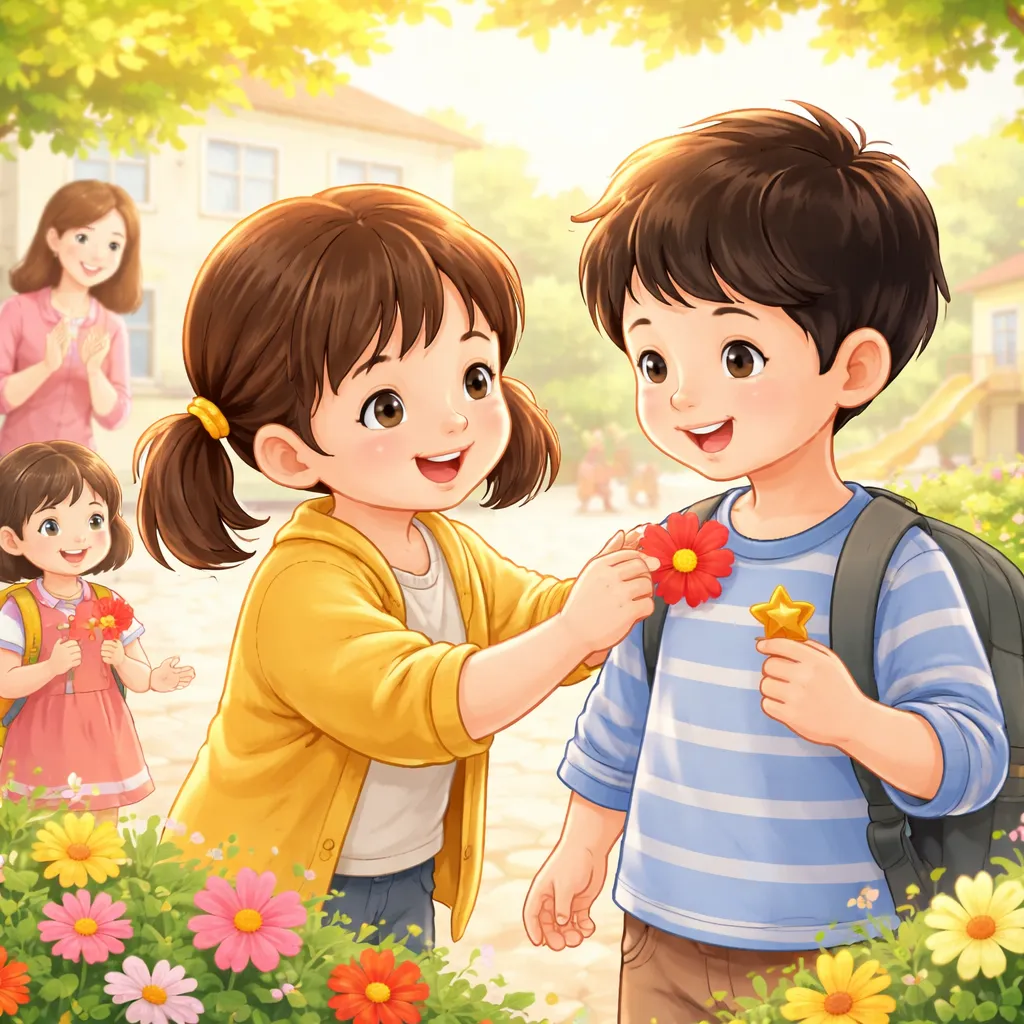

Some songs bloom with messages of love and encouragement. The Chinese Songs: Little Red Flower (小红花) does exactly that. This gentle children's song celebrates the tradition of giving little red flowers as rewards for good behavior and kind actions. For families learning English and Chinese together, this song offers a beautiful way to explore flower vocabulary, positive behavior, and the joy of receiving recognition. Let us discover what makes this traditional song so heartwarming for young learners.
What Is the Story Behind This Famous Song?
The Chinese Songs: Little Red Flower (小红花) is a beloved children's song from China. It describes the tradition of teachers and parents giving small red flowers to children when they do something good. The flower represents praise, encouragement, and love.
In Chinese kindergartens and elementary schools, teachers often use stickers or paper flowers to reward good behavior. A child who shares, helps others, or works hard might receive a little red flower to wear or take home. This simple reward brings great joy.
The red flower has special meaning in Chinese culture. Red represents happiness, good fortune, and celebration. A red flower given as a reward carries all these positive meanings. It tells a child they have done well and are loved.
The song's melody is bright and cheerful, like sunshine on a flower. Children often smile while singing, remembering times they received praise. The simple message encourages kindness and effort.
Understanding this背景 helps families appreciate the song's connection to positive reinforcement and the universal desire to be recognized for good deeds. It opens conversations about kindness, rewards, and how we encourage each other.
The Complete Lyrics of the Song
Reading the words helps us understand this encouraging message. Here are the lyrics to the Chinese Songs: Little Red Flower (小红花) in Chinese characters, pinyin, and English.
小红花,小红花,开在阳光下 Xiǎo hóng huā, xiǎo hóng huā, kāi zài yáng guāng xià Little red flower, little red flower, bloom in sunlight
老师夸我好孩子,送我小红花 Lǎo shī kuā wǒ hǎo hái zi, sòng wǒ xiǎo hóng huā Teacher praises me good child, gives me little red flower
小红花,小红花,戴在胸口前 Xiǎo hóng huā, xiǎo hóng huā, dài zài xiōng kǒu qián Little red flower, little red flower, wear on front of chest
小朋友们都看我,心里乐开花 Xiǎo péng you men dōu kàn wǒ, xīn lǐ lè kāi huā Little friends all look at me, heart inside happy bloom flower
小红花,小红花,我要爱护它 Xiǎo hóng huā, xiǎo hóng huā, wǒ yào ài hù tā Little red flower, little red flower, I will cherish it
天天做好事,多得小红花 Tiān tiān zuò hǎo shì, duō dé xiǎo hóng huā Every day do good deeds, many get little red flowers
Learning New Words from the Song
The Chinese Songs: Little Red Flower (小红花) introduces many useful words. Let us explore them in both Chinese and English.
First, "小红花" (xiǎo hóng huā) means little red flower. "红" (hóng) means red, an important color word. "花" (huā) means flower. Together they create a beautiful image.
"开在阳光下" (kāi zài yáng guāng xià) means bloom in sunlight. "开" (kāi) means open or bloom. "阳光" (yáng guāng) means sunlight. "下" (xià) means under or beneath.
"老师" (lǎo shī) means teacher. This important word helps children talk about school.
"夸" (kuā) means praise. This verb teaches about positive feedback.
"好孩子" (hǎo hái zi) means good child. "好" (hǎo) means good. "孩子" (hái zi) means child. Every child wants to be called this.
"送" (sòng) means give as a gift. This verb shows generosity.
"戴在胸口前" (dài zài xiōng kǒu qián) means wear on front of chest. "戴" (dài) means wear (accessories). "胸口" (xiōng kǒu) means chest. "前" (qián) means front.
"小朋友们" (xiǎo péng you men) means little friends. Adding "们" (men) makes it plural. This teaches plural formation.
"都看我" (dōu kàn wǒ) means all look at me. The child feels proud when others notice.
"心里乐开花" (xīn lǐ lè kāi huā) means heart inside happy bloom flower. This beautiful phrase means feeling extremely happy. The heart "blooms" like a flower.
"爱护" (ài hù) means cherish or take good care of. This combines "爱" (love) and "护" (protect).
"天天" (tiān tiān) means every day. Repeating "天" (day) creates the meaning of daily.
"做好事" (zuò hǎo shì) means do good deeds. "做" (zuò) means do. "好事" (hǎo shì) means good things.
"多得" (duō dé) means many get. The child wants to earn many flowers by being good every day.
Exploring Pronunciation and Rhythm
The Chinese Songs: Little Red Flower (小红花) offers wonderful practice with Mandarin tones and rhythm. The cheerful melody matches the happy message.
Listen to "Xiǎo hóng huā" repeated. The tones go: xiǎo (third tone, falling then rising), hóng (second tone, rising), huā (first tone, high level). The rising and falling tones create a lilting effect.
The phrase "kāi zài yáng guāng xià" uses first tone for "kāi" (high level), fourth tone for "zài" (falling), second tone for "yáng" (rising), first tone for "guāng" (high level), and fourth tone for "xià" (falling). This variety keeps the melody interesting.
"Xīn lǐ lè kāi huā" uses first tone for "xīn" (high level), third tone for "lǐ" (falling then rising), fourth tone for "lè" (falling), first tone for "kāi" (high level), and first tone for "huā" (high level). The heart blooms with happiness.
Finding Grammar Patterns in the Lyrics
The Chinese Songs: Little Red Flower (小红花) offers useful grammar examples for Chinese learners. One pattern appears with location words. "在阳光下" (zài yáng guāng xià) uses "在" (zài) for location and "下" (xià) for position. This structure is essential for describing where things are.
The song uses the particle "着" (zhe) in "戴着" (dài zhe) to show an ongoing state. The child continues wearing the flower.
Another pattern appears with plural formation. "小朋友们" (xiǎo péng you men) adds "们" (men) to make the word plural. This teaches an important grammatical marker.
The phrase "天天" (tiān tiān) shows how repeating a time word creates the meaning of "every day". This pattern appears with other time words too.
The word "得" (dé) in "多得" shows obtaining or getting something. This verb is common for talking about receiving.
Fun Learning Activities for the Whole Family
Listening to the Chinese Songs: Little Red Flower (小红花) can inspire many family activities. Here are some ideas to try together.
First, create a reward system with paper flowers. Cut red paper into flower shapes. Decorate them together. Use them to reward good behavior at home. Practice Chinese words while crafting. "红花" (red flower), "好孩子" (good child), "夸" (praise). This connects language to positive reinforcement.
Second, have a praise circle. Sit together and take turns saying something kind about each person. Give that person a paper flower. Use Chinese phrases. "你真好" (you are so good) or "我夸你" (I praise you). This builds positive communication and vocabulary.
Third, make a "good deeds" chart. Draw a simple chart with days of the week. Each day, children can draw or write a good deed they did. Add a little red flower sticker or drawing for each. Use Chinese to describe deeds. "我帮妈妈" (I helped mom) or "我分享玩具" (I shared toys). This builds daily routine vocabulary.
Creating Printable Materials at Home
Families can make simple learning tools based on the Chinese Songs: Little Red Flower (小红花). These activities help reinforce new ideas.
Create bilingual color flashcards with a flower theme. On one side, write the Chinese character and pinyin for colors. Red, 红. Yellow, 黄. Pink, 粉. On the other side, draw a flower in that color and write the English word. Practice by finding objects of each color.
Make a flower reward chart. Draw a large flower with many petals. Each petal can hold a sticker or mark when children do good deeds. Label the chart in Chinese. "我的红花" (my red flowers) at the top. This builds motivation and vocabulary.
Create a fill-in-the-blank page using song lyrics in pinyin. Remove key words like "hóng huā", "lǎo shī", "kuā", "sòng", "péng you", and "xīn lǐ". Leave blanks where those words belong. Listen to the song together and fill in the missing words. This builds listening and character recognition.
Connecting the Song to Daily Life
The Chinese Songs: Little Red Flower (小红花) connects to daily life through praise and encouragement. Every child wants to feel recognized and loved.
Talk with your children about times they felt proud. What did they do? Who praised them? Use Chinese to share these memories. "老师夸我" (teacher praised me) or "妈妈送我红花" (mom gave me red flower). This builds positive emotional vocabulary.
The song also teaches about being happy for others. When one child gets a flower, friends look with admiration, not jealousy. Use Chinese to talk about celebrating others. "为朋友高兴" (happy for friend) or "大家都开心" (everyone happy). This builds social-emotional vocabulary.
Parents can model giving specific praise. Instead of just "good job", say "我夸你分享玩具" (I praise you for sharing toys). This teaches children what specific behaviors are valued.
Educational Games to Play Together
Games make learning with the Chinese Songs: Little Red Flower (小红花) exciting. Here are some simple games to try.
Play the kindness detective game. Throughout the day, watch for kind acts. When you see one, say "我发现一件好事" (I found a good deed). Describe it and give a paper flower. This builds observation and positive reinforcement.
Try the flower toss game. Cut out paper flowers and write numbers or words on them. Toss them into a basket. When a flower lands in, say the number or word in Chinese. This builds academic skills with a flower theme.
Play the praise chain game. One person says something kind about someone else. That person then says something kind about another. Continue until everyone has been praised. Use Chinese phrases. "你唱歌好听" (you sing well) or "你跑得快" (you run fast). This builds compliment vocabulary.
Why This Song Helps Language Learning
The Chinese Songs: Little Red Flower (小红花) helps learners in special ways. The cheerful tempo makes words easy to hear. Each phrase is clear. This helps children catch new vocabulary without feeling rushed.
The repetition in the song reinforces key phrases. "小红花" repeats throughout. "夸" and "好孩子" appear multiple times. Repetition builds memory without effort.
The reward theme creates positive associations. Children feel happy when they hear words connected to praise. This emotional connection deepens learning.
The flower vocabulary connects to nature and beauty. Children love flowers. This makes the Chinese words meaningful and memorable.
Making Music Part of Your Routine
Families can make songs a regular part of bilingual learning. Choose one song each week to explore together. Listen during praise time or while doing crafts.
The Chinese Songs: Little Red Flower (小红花) works perfectly for celebrating achievements. Play it when a child does something kind or works hard. Let the music amplify the praise.
Remember that language learning thrives in positive moments. When children associate Chinese with praise and flowers, they learn naturally. They understand that words connect to feeling loved and appreciated.
Keep singing, keep giving flowers, and keep blooming with kindness together. In the garden of bilingual learning, every new word is like a little red flower, a reward for growing and trying hard.