
Original Story:
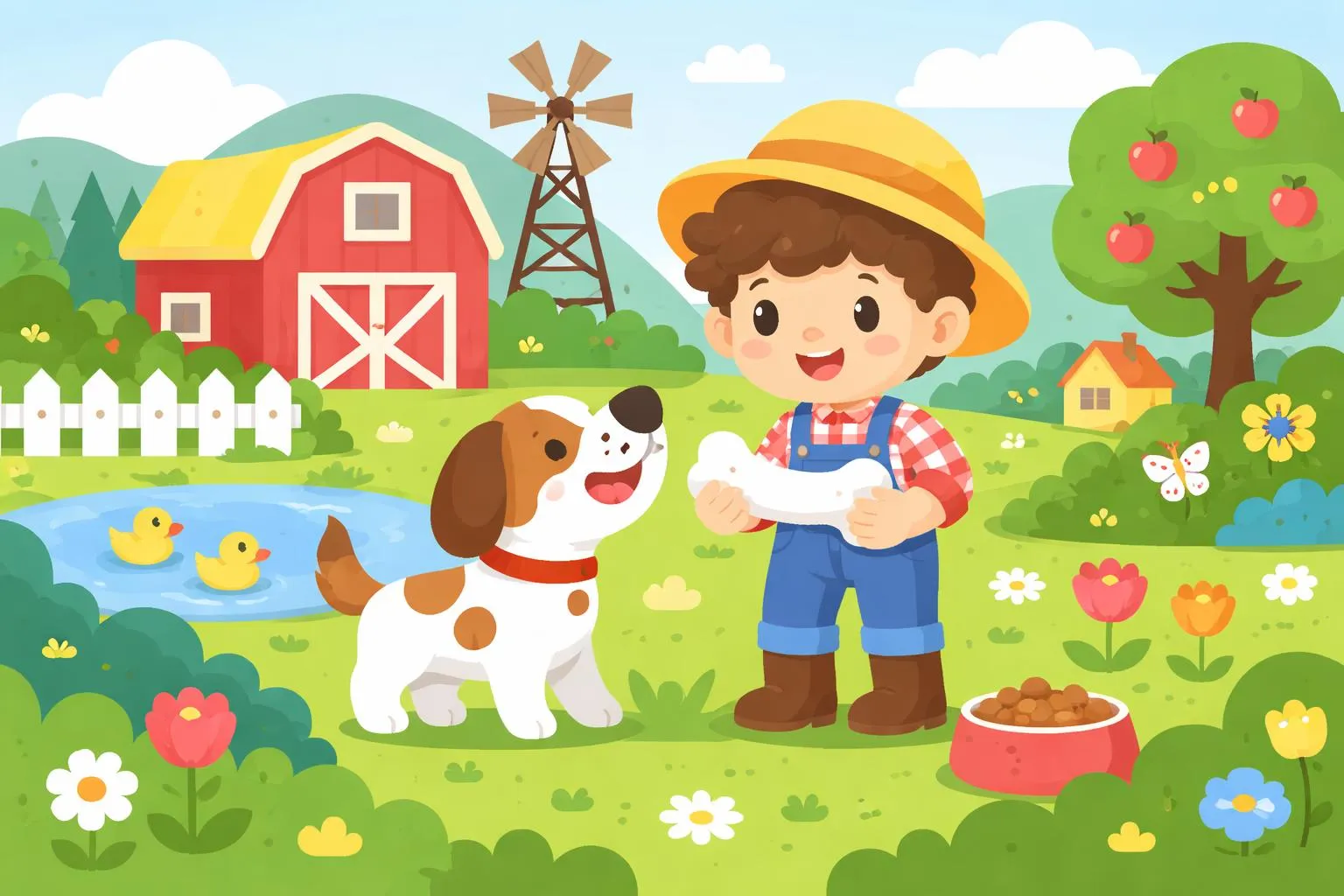
Bow-wow-wow, whose dog art thou? Little Tom Tucker’s dog, bow-wow-wow.
Expansion and Analysis of "Bow-wow-wow, whose dog art thou?"
Introduction and Explanation
The nursery rhyme "Bow-wow-wow, whose dog art thou?" is a short and simple verse that captures a playful interaction between a dog and its owner, Little Tom Tucker. The phrase "bow-wow-wow" imitates the barking sound of a dog, making the rhyme engaging and easy for children to remember.
This rhyme essentially asks a question: Whose dog is this? The answer is given immediately—Little Tom Tucker’s dog—which helps children understand the concept of possession and ownership in a fun and rhythmic way. The repetition of the sound "bow-wow-wow" adds a musical quality that appeals to young listeners and encourages participation.
Meaning and Appreciation
At its core, this rhyme is about recognition and belonging. It teaches children to associate sounds with objects or beings—in this case, the sound of a dog’s bark with the dog itself. It also introduces the idea of identity through ownership, which is a fundamental social concept.
The simplicity of the rhyme makes it an excellent tool for early language development, especially for phonemic awareness—the ability to hear, identify, and manipulate sounds in spoken language. The repetition of the onomatopoeic "bow-wow-wow" helps children connect sounds with meanings, which is crucial for learning to read and speak.
Background and Author
The exact origin of this rhyme is unclear, as it belongs to the traditional English nursery rhyme canon, passed down orally through generations. Nursery rhymes like this one often emerged from folk culture and were used by parents and caregivers to entertain and educate young children.
Little Tom Tucker is a recurring character in English nursery rhymes, often depicted as a young boy with a dog or involved in simple, everyday activities. These rhymes reflect the social environment of the time, focusing on family, animals, and daily life.
Reflection and Personal Response
Reading this rhyme brings a sense of nostalgia and warmth. It reminds us of the simple joys of childhood—playing with pets, learning through repetition, and enjoying the musicality of language. For children today, it remains a charming introduction to poetry and rhythm.
Educational Value and Learning Points
From this rhyme, children can learn several important concepts:
- Sound Recognition: Understanding onomatopoeia (words that imitate sounds).
- Ownership and Possession: The idea that things can belong to someone.
- Vocabulary Building: Simple words related to animals and names.
- Rhythm and Rhyme: Developing an ear for patterns in language.
- Memory Skills: Repetition aids memorization.
Practical Applications in Life and Learning
- Language Development: Teachers and parents can use this rhyme to teach children how sounds relate to objects.
- Social Skills: Discussing ownership helps children understand sharing and respect for others’ belongings.
- Creative Play: Children can act out the rhyme, pretending to be the dog or Little Tom Tucker, encouraging imagination and role play.
- Reading Readiness: Recognizing repetitive patterns in rhymes prepares children for reading fluency.
Reading Comprehension Practice
Questions
- What sound does the dog make in the rhyme?
- Who owns the dog in the rhyme?
- What is the main question asked in the rhyme?
- Why do you think the rhyme repeats the sound "bow-wow-wow"?
- What can children learn from this rhyme?
Answers
- The dog makes the sound "bow-wow-wow".
- The dog belongs to Little Tom Tucker.
- The main question is "Whose dog art thou?" or "Whose dog is this?"
- The sound is repeated to help children hear and remember the dog’s bark, making the rhyme fun and musical.
- Children can learn about sounds, ownership, vocabulary, and rhythm.
This simple nursery rhyme is a timeless piece that continues to educate and entertain children, fostering early language skills and social understanding through its playful and rhythmic structure.