
Original Story:
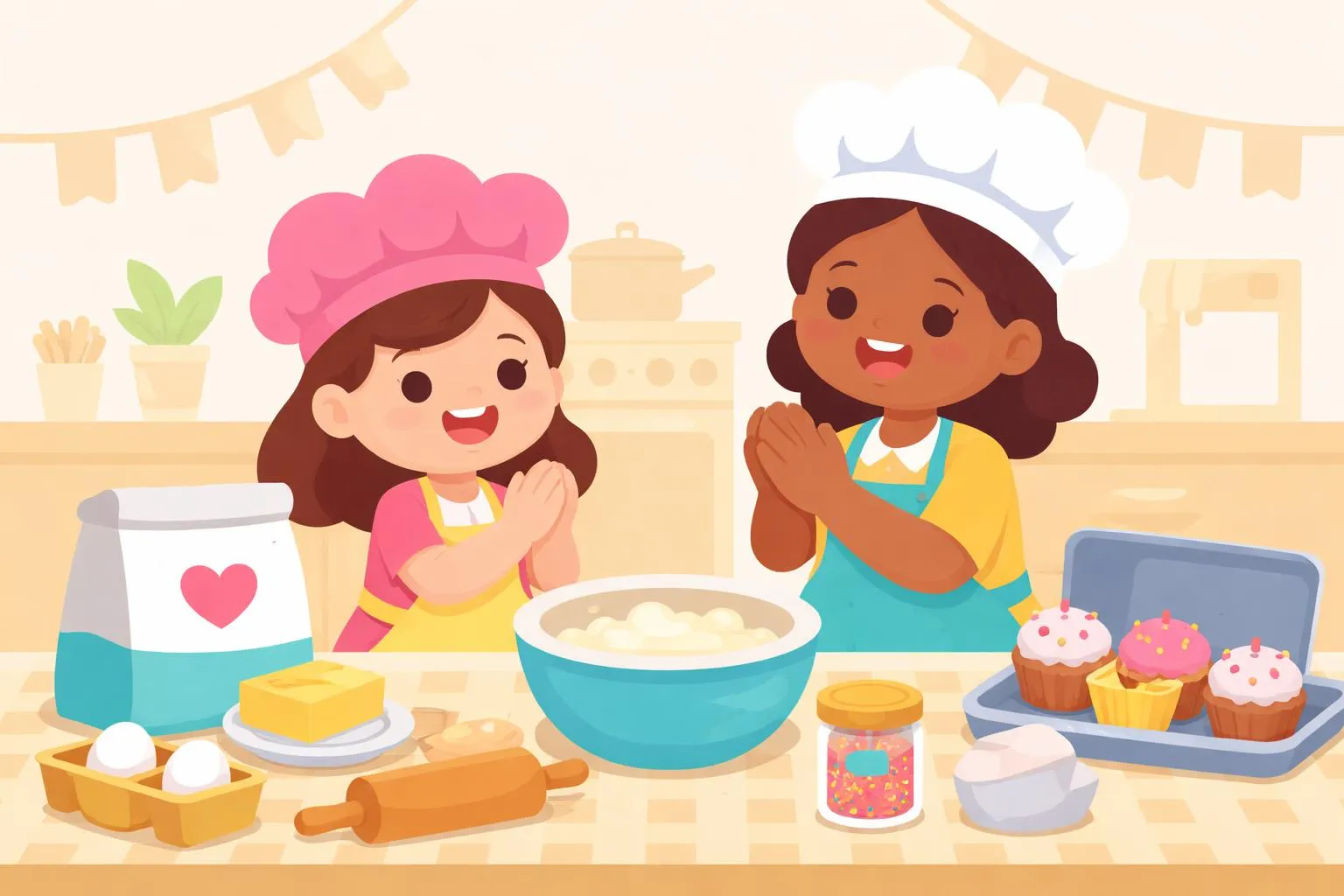
Pat a cake, pat a cake, baker’s man,
Bake me a cake as fast as you can;
Pat it and prick it and mark it with T,
And put in the oven for Tommy and me.
Expansion and Analysis
Introduction and Meaning
The nursery rhyme "Pat a Cake" is a classic children’s rhyme that has been passed down through generations. It is a simple, rhythmic poem often accompanied by hand-clapping games, making it a favorite for young children. The rhyme describes the process of baking a cake, with playful instructions to "pat," "prick," and "mark" the cake, ending with the cake being baked for "Tommy and me."
At its core, this rhyme is about cooperation, creativity, and fun. The repetitive and rhythmic nature helps children develop language skills and motor coordination through the accompanying hand movements. The marking of the cake with the letter "T" personalizes the activity, making it interactive and engaging for kids.
Interpretation and Appreciation
The rhyme’s charm lies in its simplicity and the way it invites children to participate actively. The phrase "pat a cake" mimics the action of patting dough, which helps children connect words with physical actions. The "baker’s man" represents the person responsible for making the cake, adding a storytelling element that sparks imagination.
The use of alliteration and rhyme, such as "pat," "prick," and "put," creates a musical quality that is pleasing to the ear and aids memorization. This nursery rhyme also introduces basic concepts of baking and cooking, fostering curiosity about everyday activities.
Background and Author
The exact origins of "Pat a Cake" are unclear, but it is believed to date back to the 17th century, making it one of the oldest English nursery rhymes. It was first documented in print in the late 1600s and has since become a staple in early childhood education.
The rhyme is part of a broader tradition of nursery rhymes that served as oral storytelling tools before widespread literacy. These rhymes often had simple, repetitive structures to help children learn language and rhythm. The author is unknown, as is common with many traditional nursery rhymes, which were passed down orally through families and communities.
Reflections and Insights
Reading and reciting "Pat a Cake" encourages children to engage with language playfully. It also provides a bonding experience between adults and children through shared activity and song. The rhyme’s focus on baking can inspire interest in cooking and understanding food preparation, which are practical life skills.
Moreover, the rhyme teaches sequencing—understanding the order of steps involved in baking. This cognitive skill is important for following instructions and problem-solving in various contexts.
Educational Value and Learning Points
Children and students can learn several key lessons from "Pat a Cake":
- Language Development: The rhyme introduces new vocabulary and phonetic patterns.
- Motor Skills: The accompanying hand motions improve fine motor coordination.
- Sequencing and Memory: Remembering the steps in the rhyme helps with cognitive development.
- Creativity and Imagination: Imagining the baking process encourages creative thinking.
- Social Skills: Performing the rhyme with others promotes cooperation and social interaction.
Practical Applications and Life Skills
- In the Classroom: Teachers can use this rhyme to teach rhythm, rhyme, and sequencing. It can also be a fun warm-up activity to prepare children for more complex learning.
- At Home: Parents can use it to bond with their children and introduce basic cooking concepts.
- In Social Settings: The rhyme can be part of group games, helping children develop teamwork and communication skills.
Challenges and Focus Areas
- Pronunciation: Some children may find the "prick it" phrase tricky to pronounce.
- Understanding Sequence: Younger children might need guidance to grasp the order of actions.
- Engagement: Keeping children interested may require adding visual or physical elements, like actual baking or using play dough.
Reading Comprehension Exercises
-
What is the main activity described in the rhyme?
a) Making a sandwich
b) Baking a cake
c) Painting a picture
d) Playing a game -
Who is the cake being baked for?
a) Tommy and me
b) The baker’s man
c) The teacher
d) The neighbors -
What does the rhyme suggest you do after patting the cake?
a) Eat it
b) Prick it and mark it
c) Throw it away
d) Freeze it -
Why is the letter "T" marked on the cake?
a) To show it is for Tommy
b) To decorate the cake
c) To burn the cake
d) To cut the cake -
What skills can children develop by reciting this rhyme?
a) Language and motor skills
b) Swimming skills
c) Driving skills
d) None of the above
Answers
- b) Baking a cake
- a) Tommy and me
- b) Prick it and mark it
- a) To show it is for Tommy
- a) Language and motor skills
This nursery rhyme remains a timeless educational tool that combines language learning, physical activity, and imaginative play in a simple and enjoyable way for young learners.