
Original Story:
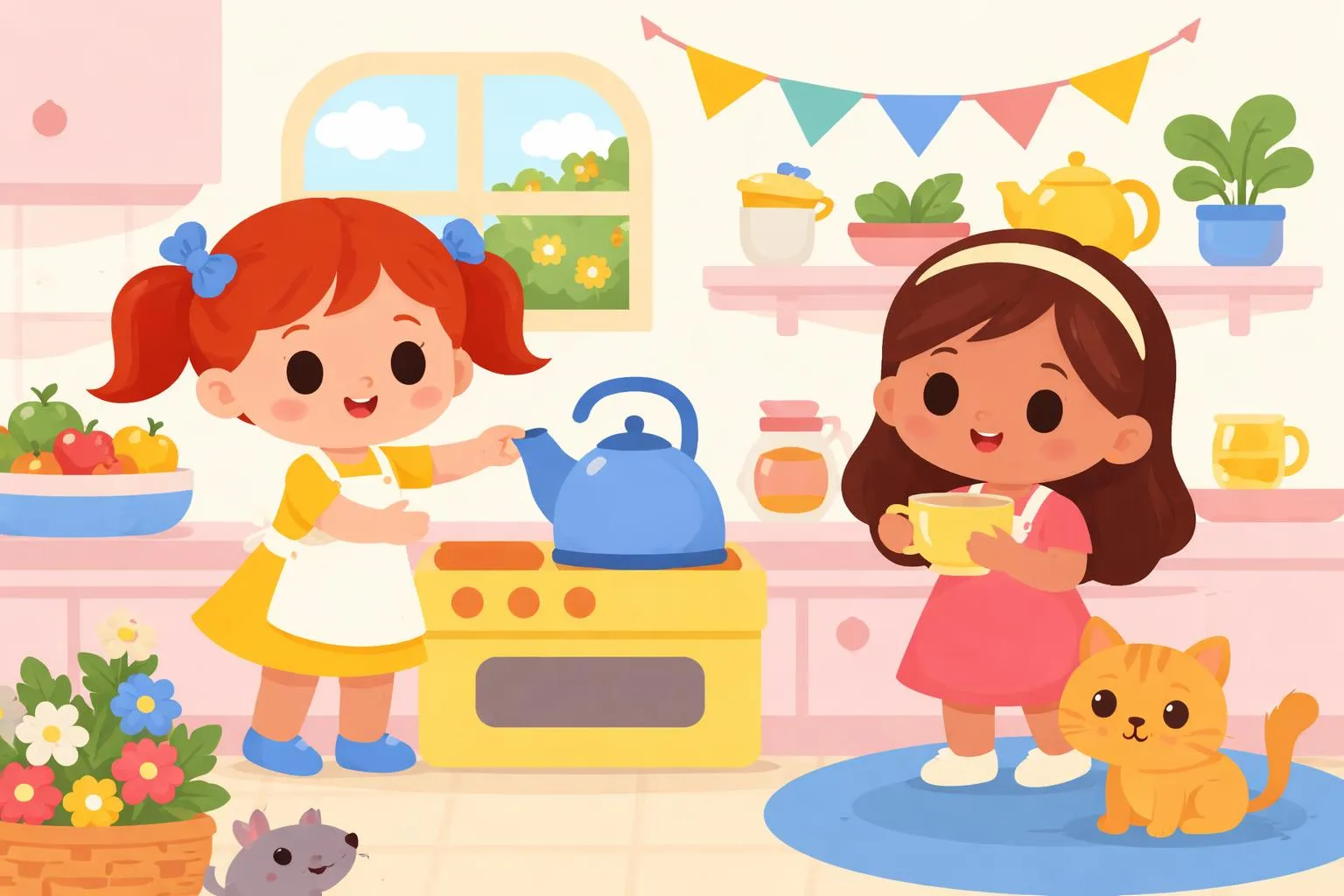
Polly, put the kettle on, Polly, put the kettle on, Polly, put the kettle on,
And let’s drink tea.
Sukey, take it off again, Sukey, take it off again, Sukey, take it off again,
They’re all gone away.
Expansion and Analysis
Summary and Interpretation
This short, repetitive nursery rhyme tells a simple story about preparing tea and then realizing that everyone has left. The first part, "Polly, put the kettle on," suggests the anticipation of a social gathering or a moment to share tea together. The repetition emphasizes the action and builds a rhythmic, musical quality that is easy for children to remember and recite. The second part, "Sukey, take it off again," reveals a twist: the guests have all gone away, so there is no need to keep the kettle on. This contrast between expectation and reality adds a gentle humor and a sense of surprise to the rhyme.
The story captures a common social ritual—making tea, which is a symbol of hospitality and togetherness in many cultures. It also subtly introduces children to the idea of change and the unpredictability of social interactions.
Background and Author Information
This nursery rhyme is a traditional English folk song, often sung by children and passed down orally through generations. Its origins are not attributed to a specific author but rather to the collective cultural heritage of English-speaking communities. Such rhymes were created to entertain, teach language rhythms, and help children develop memory skills.
The use of simple, repetitive language and everyday activities like making tea reflects the daily life of people in historical England, where tea drinking was a common social practice. The characters' names, Polly and Sukey, were popular female names in the 18th and 19th centuries, adding a historical flavor to the rhyme.
Reflection and Personal Response
Reading this rhyme evokes a warm, nostalgic feeling of childhood simplicity and the joy of small rituals. It reminds us how everyday moments, like sharing tea, can be meaningful and memorable. The surprise ending encourages children to think about changes in situations and to expect the unexpected in a lighthearted way.
Educational Value and Learning Points
Children and students can learn several things from this nursery rhyme:
- Language Skills: The repetition helps with phonemic awareness, pronunciation, and rhythm in English. It is excellent for early language learners to practice intonation and fluency.
- Vocabulary: Words like "kettle" and "tea" introduce basic household and food-related vocabulary.
- Social Understanding: The rhyme introduces the concept of social gatherings and hospitality.
- Memory and Sequencing: The repetitive structure aids memory retention and understanding of sequence in storytelling.
- Emotional Intelligence: The twist at the end can be used to discuss feelings about plans changing and how to respond to unexpected situations.
Practical Applications in Life and Learning
- In the Classroom: Teachers can use this rhyme to teach rhythm, rhyme, and vocabulary. It can be acted out as a role-play activity to practice social phrases and manners.
- At Home: Parents can use the rhyme during tea time to make the activity more engaging for children.
- Social Skills Development: Children learn about hospitality and social cues through the story.
- Cultural Awareness: It introduces learners to traditional English customs and language.
Challenges and Focus Areas
- Pronunciation Practice: The repetitive phrases are ideal for practicing clear pronunciation and stress patterns.
- Comprehension: Young learners might need guidance to understand the humor and the change in situation.
- Vocabulary Expansion: Additional related words (e.g., cup, saucer, sugar) can be introduced to broaden the lexical field.
Reading Comprehension Questions
- Who is asked to put the kettle on?
- What does putting the kettle on mean in this story?
- Why does Sukey have to take the kettle off again?
- How do you think Polly and Sukey feel at the end of the rhyme?
- What can this rhyme teach us about social gatherings?
Answers
- Polly is asked to put the kettle on.
- Putting the kettle on means preparing to make tea for everyone.
- Sukey takes the kettle off again because all the guests have gone away.
- They might feel surprised or disappointed because the guests left unexpectedly.
- It teaches us about hospitality, social rituals, and that plans can change unexpectedly.
This simple rhyme, while short, offers rich opportunities for language development, cultural learning, and social understanding, making it a valuable resource for young learners.