
Original Story:
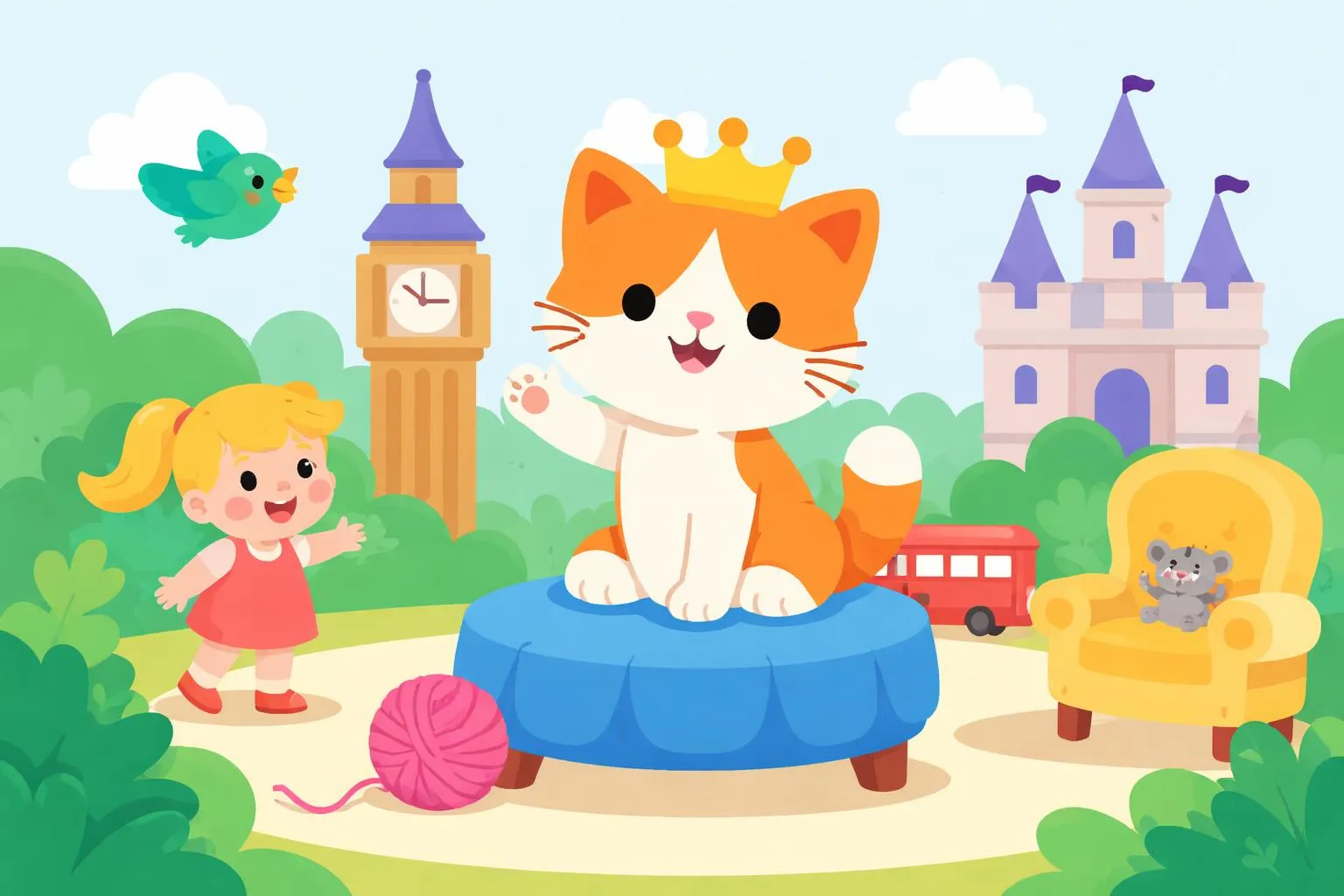
Pussy-cat, Pussy-cat where have you been?
I’ve been to London to look at the Queen.
Pussy-cat, Pussy-cat, what did you there?
I frightened a little mouse under a chair.
Expansion and Analysis of the Story
Summary and Interpretation
This short and simple poem tells a charming little story about a pussy-cat who has been on a journey to London to see the Queen. When asked where it has been, the cat replies that it frightened a little mouse hiding under a chair. The poem uses a question-and-answer format, making it easy for children to follow and remember.
The story’s main theme revolves around curiosity and adventure, combined with a playful tone. The cat’s visit to London symbolizes exploration and the excitement of seeing new places, while the act of frightening the mouse adds a touch of humor and liveliness to the narrative.
Creative Background and Author Introduction
This poem is a traditional English nursery rhyme, often attributed to the 16th or 17th century, though the exact author is unknown. Nursery rhymes like this one were originally passed down orally through generations before being written down. They served as entertainment and educational tools for children, helping them develop language skills, rhythm, and memory.
The rhyme reflects a time when London and the monarchy were central to English culture, and the idea of visiting the Queen would have been fascinating and grand for children. The simplicity of the language and the repetitive structure are characteristic of nursery rhymes, making them accessible and enjoyable for young learners.
Reflection and Personal Thoughts
Reading this poem reminds us of the innocence and wonder of childhood. The cat’s adventurous spirit encourages children to be curious about the world around them. It also gently introduces the concept of cities and important figures like the Queen, sparking interest in history and geography.
The playful tone and rhythmic nature of the poem make it a great tool for early childhood education. It can be used to teach children about animals, places, and social interactions in a fun and engaging way.
Learning Points for Children and Students
From this poem, children can learn:
- Vocabulary: Words like pussy-cat, London, Queen, frightened, and mouse.
- Question and Answer Format: Understanding how to ask and answer questions.
- Rhythm and Rhyme: Developing phonological awareness through rhyming words like been and Queen, there and chair.
- Cultural Knowledge: Introduction to London and the concept of a queen, which can lead to discussions about monarchy, geography, and history.
- Social Interaction: The cat’s journey and actions can be a starting point for conversations about behavior and consequences.
Practical Applications and Learning Challenges
- In Daily Life: Children can practice asking and answering questions politely, just like the poem’s dialogue.
- In Learning Environments: Teachers can use this poem to introduce basic geography (London), animals (cat and mouse), and social studies (the Queen).
- Challenges: Some children might find the concept of "frightening" a mouse unfamiliar or confusing. Educators can explain this gently, focusing on the playful nature of the story rather than fear or harm.
Reading Comprehension Exercises
Questions:
- Where did the pussy-cat go?
- Who did the pussy-cat want to see?
- What did the pussy-cat do in London?
- What kind of animal did the pussy-cat frighten?
- Where was the little mouse hiding?
Answers:
- The pussy-cat went to London.
- The pussy-cat wanted to see the Queen.
- The pussy-cat frightened a little mouse.
- The pussy-cat frightened a mouse.
- The little mouse was hiding under a chair.
This nursery rhyme offers a delightful way to engage children with language, culture, and storytelling. Its simple structure and vivid imagery inspire imagination and learning, making it a timeless piece for early education.