
Original Story:
The man in the wilderness asked me,
How many strawberries grew in the sea;
I answered him, as I thought good,
As many as red herrings grew in the wood.
Expansion and Analysis
Explanation and Interpretation
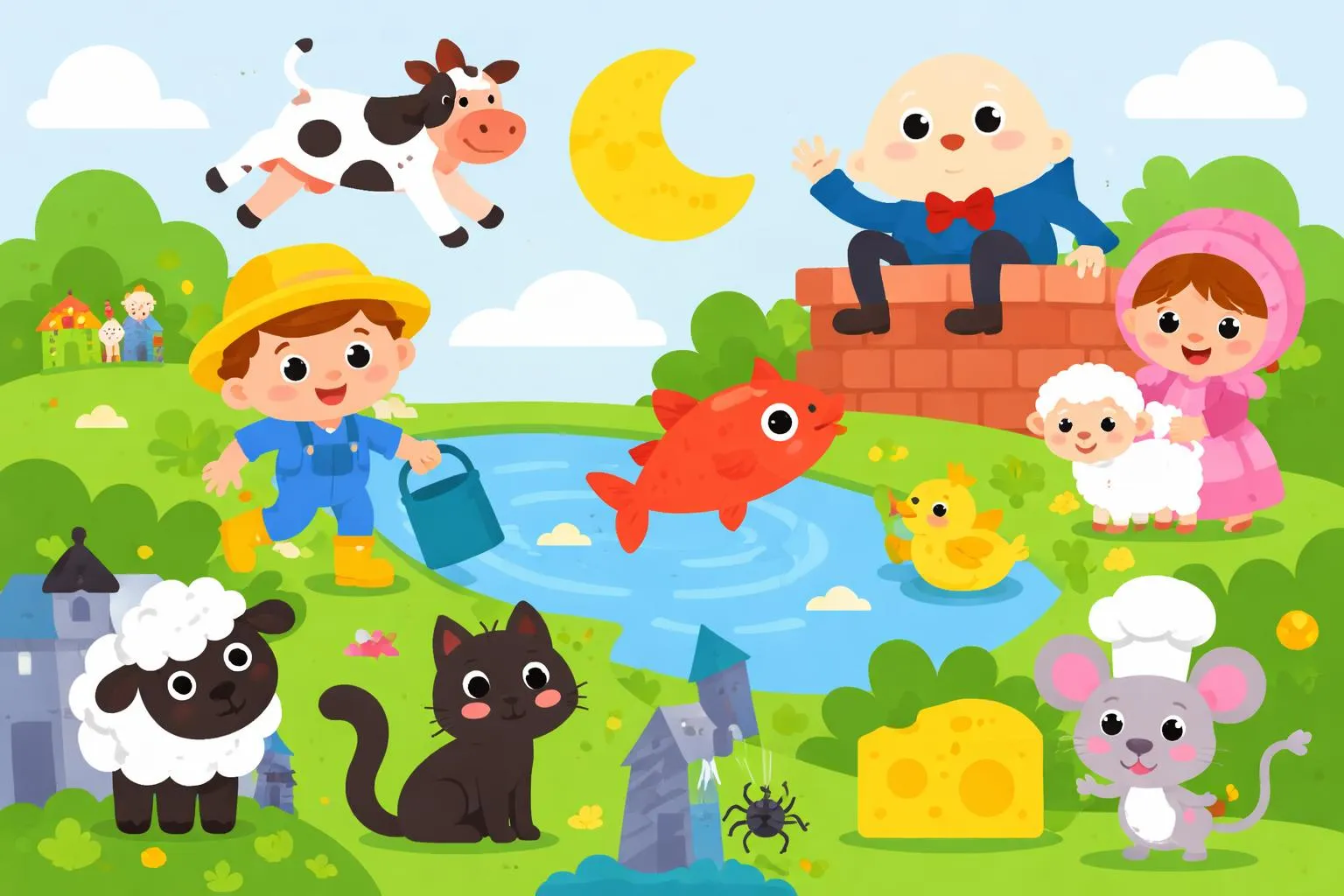
This short poem is a playful example of nonsense verse, a literary style that uses absurd or whimsical imagery to evoke imagination and humor. The man in the wilderness asks a seemingly impossible question: How many strawberries grew in the sea? Since strawberries do not grow in the sea, the question is nonsensical. The speaker responds with an equally absurd answer: As many as red herrings grew in the wood. Red herrings are fish, which do not grow in the woods, so the answer matches the question’s nonsense with nonsense.
The poem uses imagery that contradicts reality to create a whimsical and imaginative effect. It invites readers, especially children, to think creatively and enjoy the playful use of language rather than seek literal meaning.
Background and Author Introduction
This poem is reminiscent of the style popularized by Lewis Carroll, the author of Alice’s Adventures in Wonderland, who often used nonsense verse to delight and challenge readers’ imaginations. Although the exact origin of this particular verse is unclear, it fits within the tradition of English nonsense poetry from the 19th and early 20th centuries.
Nonsense poetry was often written to entertain children, encouraging them to explore language and meaning in a fun, non-literal way. It also serves as a tool for developing linguistic creativity and critical thinking.
Reflection and Personal Response
Reading this poem encourages us to appreciate the joy of language beyond straightforward communication. It reminds us that not all questions have logical answers and that sometimes, the fun lies in the absurdity itself. For children, this can be an early lesson in creative thinking and the flexibility of language.
Educational Value and Learning Points
Children and students can learn several important lessons from this poem:
- Creative Imagination: The poem encourages thinking outside the box and imagining impossible scenarios.
- Understanding Nonsense Literature: Students learn that literature can be playful and does not always have to be logical or realistic.
- Language Play: The poem demonstrates how words and images can be combined in unexpected ways to create humor and interest.
- Critical Thinking: By recognizing the absurdity, students practice distinguishing between literal and figurative language.
Practical Applications and Life Lessons
- In Language Learning: Teachers can use nonsense poems to help students explore vocabulary and syntax creatively.
- In Writing: Students can be encouraged to write their own nonsense verses, fostering creativity and confidence in language use.
- In Critical Thinking: Understanding nonsense helps children learn to question and analyze statements critically.
- In Social Interaction: Appreciating humor and playful language can improve communication skills and social bonding.
Reading Comprehension Questions
- What is the main question asked by the man in the poem?
- Why is the answer given by the speaker considered nonsense?
- What literary style does this poem represent?
- How can nonsense poetry help children in learning?
- Give an example of another nonsense question or answer you can think of.
Answers
- The man asks how many strawberries grow in the sea.
- The answer is nonsense because red herrings do not grow in the wood, just as strawberries do not grow in the sea.
- The poem is an example of nonsense verse or nonsense poetry.
- Nonsense poetry helps children develop imagination, creativity, and an understanding of language play.
- Example answer: How many clouds are made of cotton candy? — As many as fish fly in the sky.
This poem, though brief, opens a window into the world of imaginative language and nonsense literature, making it a valuable resource for children’s education and creative development.