
Original Story:
Ride a cock horse to Banbury Cross
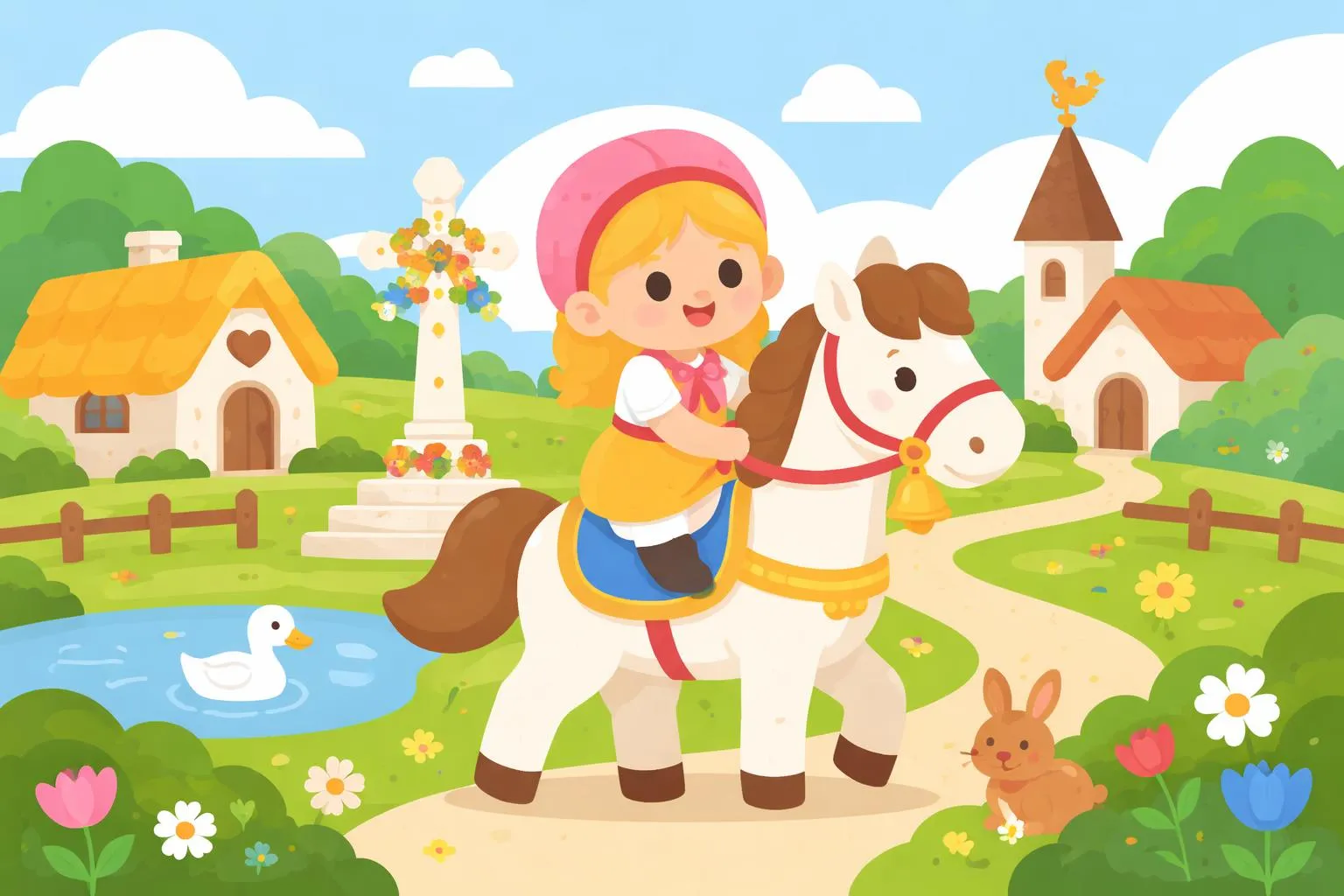
To see a fine lady upon a white horse
With rings on her fingers and bells on her toes
She shall have music wherever she goes.
Expansion and Analysis of the Story
Introduction and Meaning
This short nursery rhyme, "Ride a cock horse to Banbury Cross," is a classic English children’s verse that paints a vivid and charming picture of a lady riding a white horse. The imagery of rings on her fingers and bells on her toes suggests elegance and festivity, while the phrase "She shall have music wherever she goes" evokes a sense of joy and celebration. The rhyme is simple yet rhythmic, making it memorable and enjoyable for children.
Interpretation and Appreciation
At its core, the rhyme celebrates beauty, grace, and merriment. The "cock horse" refers to a spirited or high-spirited horse, often a hobby horse or a real horse used for riding. Banbury Cross is a real location in Oxfordshire, England, known historically for its market and a famous cross monument. The lady on the white horse symbolizes nobility or a figure of admiration, possibly a princess or a lady of high status.
The rings and bells symbolize wealth and festivity, while the music accompanying her journey suggests happiness and a lively atmosphere. The rhyme’s musicality and repetition make it appealing for young children, helping them develop language rhythm and memory skills.
Historical Background and Author
The exact origins of this nursery rhyme are uncertain, but it dates back to at least the 18th century. It is believed to have evolved from older folk traditions and may have been used to entertain children during festivals or fairs. The Banbury Cross itself was a real monument, originally built in the late 16th century but destroyed in the 17th century; the rhyme keeps its memory alive in popular culture.
The author of this rhyme is unknown, as is common with many traditional nursery rhymes passed down orally through generations. Its longevity and popularity highlight its cultural significance in English folklore.
Reflections and Personal Thoughts
Reading this rhyme evokes a sense of nostalgia and wonder. It reminds us of the simple joys of childhood and the power of imagination. The imagery encourages children to visualize scenes of beauty and festivity, fostering creativity. It also introduces them to historical places and cultural heritage in a lighthearted way.
Educational Value and Learning Points
Children and students can learn several things from this nursery rhyme:
- Vocabulary and Language Skills: The rhyme introduces descriptive words like fine, white, rings, and bells, helping children expand their vocabulary.
- Rhythm and Phonetics: The rhythmic pattern helps develop phonemic awareness and memory.
- Cultural Awareness: It introduces a historical location, Banbury Cross, sparking curiosity about English history and geography.
- Imagination and Visualization: The vivid imagery encourages creative thinking.
Practical Applications and Life Lessons
- In Language Learning: Teachers can use this rhyme to teach rhythm, rhyme schemes, and descriptive language.
- In History Lessons: It can serve as a starting point to explore English landmarks and folklore.
- In Art and Music: Children can create drawings or musical compositions inspired by the rhyme.
- In Social Skills: The rhyme’s theme of festivity and joy can be linked to lessons on celebrations and cultural events.
Reading Comprehension Exercises
Questions:
- Where is the lady riding her horse to?
- What color is the horse?
- What does the lady wear on her fingers?
- What is special about her toes?
- What happens wherever the lady goes?
- What do you think the "cock horse" means?
- Why do you think the rhyme mentions music?
- Can you describe what kind of person the lady might be?
- What is Banbury Cross?
- How does this rhyme help children learn?
Answers:
- The lady is riding her horse to Banbury Cross.
- The horse is white.
- The lady has rings on her fingers.
- She has bells on her toes.
- She shall have music wherever she goes.
- The "cock horse" likely means a spirited or special horse used for riding.
- The rhyme mentions music to show joy and celebration accompanying the lady.
- The lady might be a noble or elegant person, perhaps a princess or someone important.
- Banbury Cross is a historical location in England known for its market and a famous cross monument.
- The rhyme helps children learn vocabulary, rhythm, cultural history, and imagination.
This nursery rhyme is a delightful piece of English folklore that combines music, imagery, and history to engage children's minds and hearts. It serves as a valuable educational tool while also being a source of joy and cultural connection.