
Original Story:
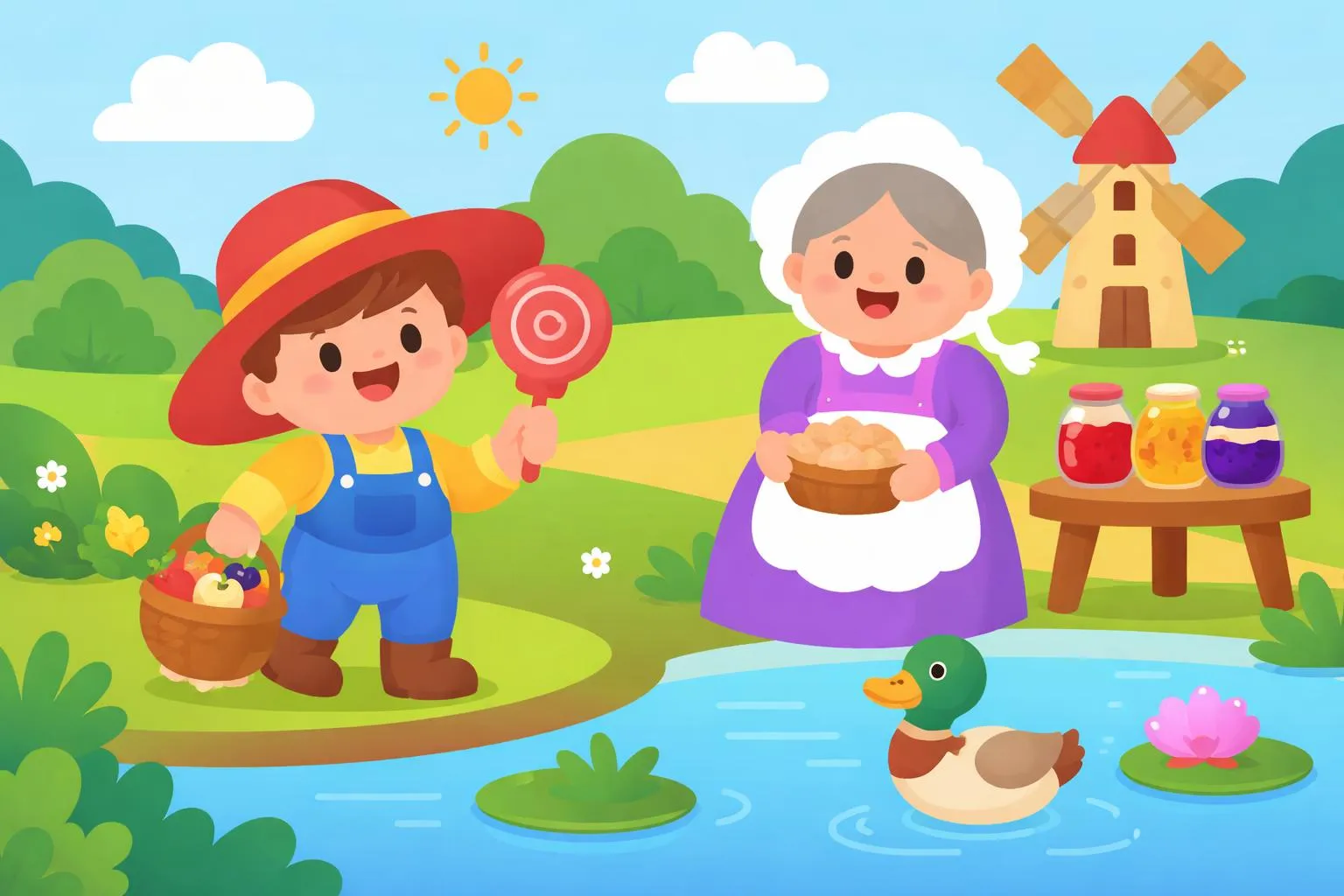
Simple Simon met a pieman,
Going to the fair;
Says Simple Simon to the Pieman,
“Let me taste your ware.”
Says the pieman to Simple Simon,
“Show me first your penny.”
Says Simple Simon to the pieman,
“Indeed, I have not any.”
Expansion and Analysis
Summary and Interpretation
This short and simple nursery rhyme tells the story of Simple Simon, a character known for his naivety and innocence. In the poem, Simon meets a pieman who is going to the fair. Simon asks the pieman if he can taste some of his pies, but the pieman wisely asks Simon to show a penny first, implying that he wants payment before giving any pies. Simon admits that he does not have any money at all.
The story is a humorous and gentle illustration of the concept of exchange and value—you cannot get something without paying for it. Simple Simon’s innocence and lack of understanding about money and trade make the story both amusing and educational for young children.
Background and Author
The character of Simple Simon dates back to the 18th century, appearing in various English nursery rhymes and folk tales. The rhyme itself is believed to have originated in the early 1700s and has been passed down through generations as a classic example of a simple-minded but endearing character.
The author of this particular rhyme is unknown, as is common with many traditional nursery rhymes. These rhymes were often created and spread orally among communities before being written down. Simple Simon’s story has been adapted and expanded in various forms over the centuries, often used to teach children basic moral lessons and social norms.
Reflection and Educational Value
Reading this rhyme encourages children to think about basic economic principles such as the need to pay for goods and services. It also introduces the idea of consequences—Simon cannot get a pie without money, which is a simple but important lesson about responsibility and fairness.
Moreover, Simple Simon’s character helps children understand the value of common sense and practical thinking. While Simon’s innocence is charming, his lack of understanding about money shows why it is important to learn about everyday transactions.
Learning Points for Children and Students
- Understanding Money and Trade: Children learn that buying something requires money, introducing early economic literacy.
- Social Interaction: The dialogue between Simon and the pieman models polite conversation and negotiation.
- Moral Lesson: The rhyme teaches honesty and the importance of preparation (Simon should have brought money if he wanted to buy a pie).
- Language Skills: The rhyme’s simple structure and repetition help young learners develop phonemic awareness and vocabulary.
Practical Applications and Life Lessons
- In Daily Life: Children can relate this story to real-life situations such as buying snacks or toys, understanding the importance of having money and making responsible choices.
- In School: Teachers can use this rhyme to introduce lessons on money management, social skills, and decision-making.
- Critical Thinking: Encourages children to think about cause and effect, and how actions have consequences.
Reading Comprehension Questions
- Who did Simple Simon meet on his way to the fair?
- What did Simple Simon ask the pieman?
- What did the pieman ask Simon before giving him a pie?
- Did Simple Simon have any money?
- What lesson can we learn from this story?
Answers
- Simple Simon met a pieman.
- Simple Simon asked to taste the pieman’s pies.
- The pieman asked Simon to show a penny first.
- No, Simple Simon did not have any money.
- The lesson is that you need to pay for things and be prepared before asking for something.
This classic nursery rhyme remains a valuable resource for teaching young learners simple but important life lessons wrapped in a fun and memorable story.