
Original Story:
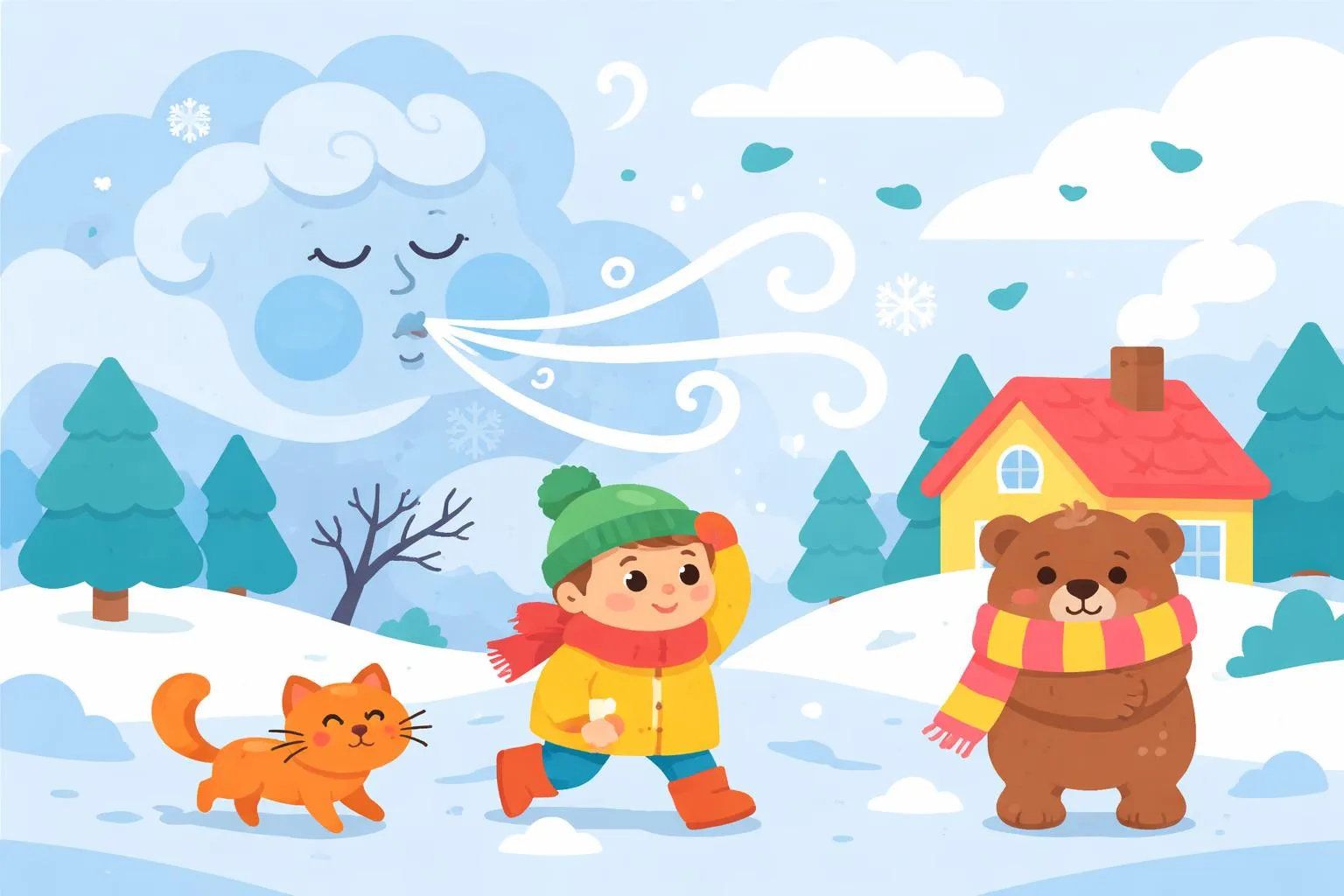
The North Wind doth blow,
And we shall have snow,
And what will poor Robin do then?
He will hop to a barn,
And to keep himself warm
Will hide his head under his wing,
Poor thing.
Explanation and Interpretation
This short poem, often attributed to traditional English nursery rhymes, vividly portrays the harshness of winter and the simple, instinctive behavior of a robin trying to survive the cold. The North Wind symbolizes the arrival of winter weather, bringing snow and cold temperatures. The poem asks a rhetorical question about what the poor robin will do when the cold arrives, and answers it by describing how the bird seeks shelter in a barn and tucks its head under its wing to stay warm.
The imagery is simple yet effective, evoking sympathy for the small bird facing the harsh elements. The poem highlights themes of survival, adaptation, and care in nature. The robin's behavior reflects natural instincts to protect oneself from danger and discomfort, which can be related metaphorically to human responses to challenges.
Background and Author Introduction
This rhyme is part of the rich tradition of English nursery rhymes and folk poetry. Its exact origin is unclear, but it is believed to have been passed down orally through generations, used to teach children about nature and seasons. Nursery rhymes like this one often served multiple purposes: entertainment, education, and cultural transmission.
The robin is a common bird in English folklore, often associated with winter and Christmas. Its presence in this rhyme underscores the close relationship between nature and human cultural expressions. The poem’s simplicity makes it accessible to young children, while its deeper meanings provide material for reflection and learning.
Reflection and Insights
Reading this poem encourages us to think about how animals cope with seasonal changes and how humans can learn from nature’s resilience. The robin’s instinct to find warmth and shelter teaches us about the importance of adaptability and self-care in difficult situations. It also evokes empathy, reminding us to be mindful of vulnerable creatures during harsh times.
For children, this poem can spark curiosity about animals, weather, and the changing seasons. It can also be a gentle introduction to poetic devices such as rhyme, rhythm, and imagery.
Educational Value and Learning Points
From this poem, children and students can learn:
- Vocabulary related to weather and nature: words like North Wind, snow, barn, warm, wing.
- Understanding of seasonal changes: recognizing how animals behave differently in winter.
- Basic poetic structure: rhyme scheme and rhythm.
- Empathy and care for living beings: understanding the needs of animals in winter.
- Observation skills: noticing how creatures adapt to their environment.
Practical Applications
- In science lessons: Discuss animal behavior and survival strategies in winter.
- In language arts: Practice reading aloud with attention to rhyme and rhythm.
- In social-emotional learning: Develop empathy by thinking about how others (including animals) feel in difficult circumstances.
- In art: Draw or paint scenes of winter and animals seeking shelter.
Reading Comprehension Questions
- What does the North Wind bring according to the poem?
- How does the robin try to keep warm?
- Why does the robin hide its head under its wing?
- What season is described in the poem?
- What feelings does the poem evoke about the robin?
Answers
- The North Wind brings snow.
- The robin hops to a barn to keep warm.
- The robin hides its head under its wing to keep warm.
- The poem describes winter.
- The poem evokes feelings of sympathy and concern for the robin.
This simple yet meaningful poem offers a rich opportunity for children to explore language, nature, and emotions, making it a valuable resource for educators and parents alike.