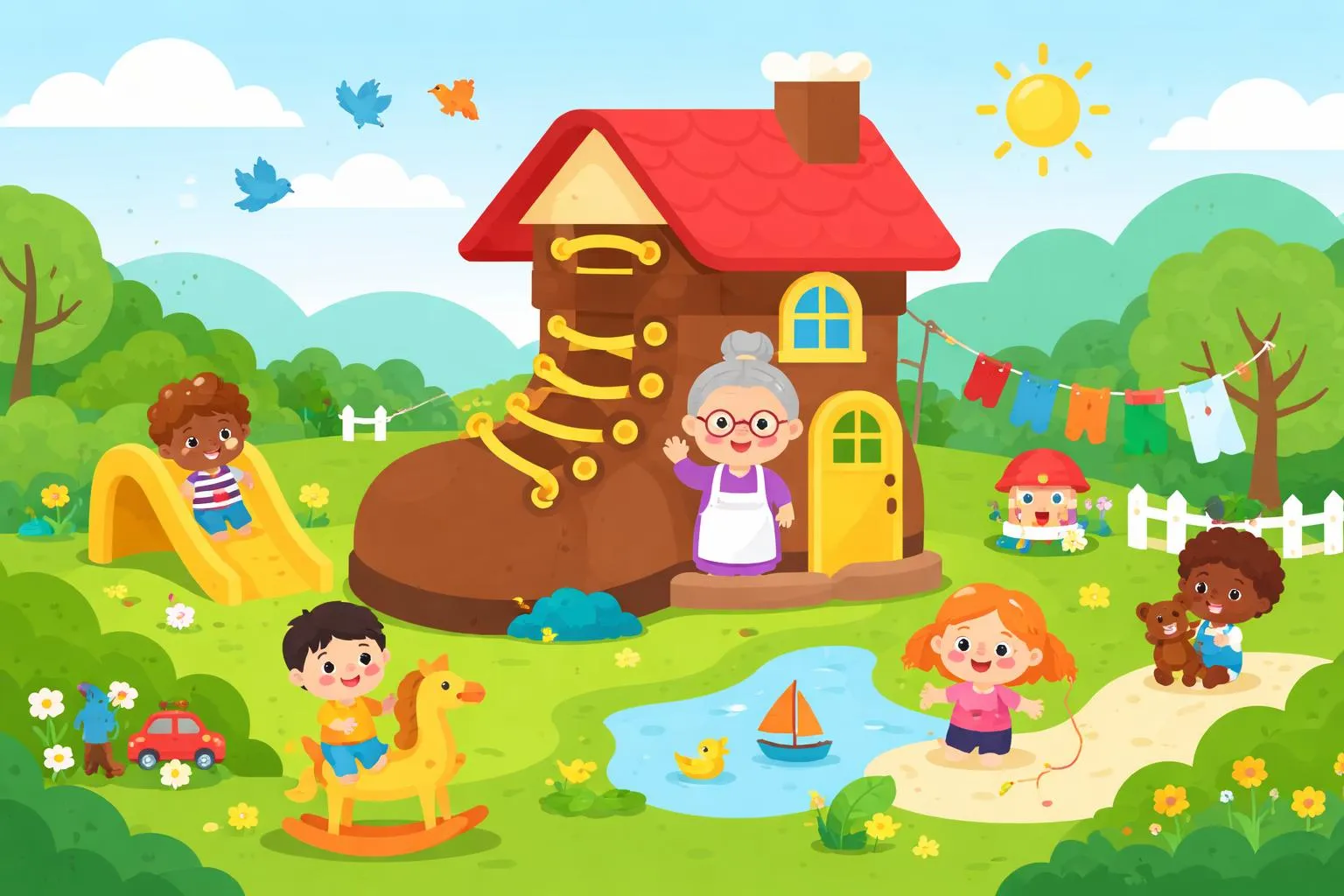

Original Story:
There was an old woman who lived in a shoe;
She had so many children she didn’t know what to do.
She gave them some broth without any bread,
And whipped them all soundly and put them to bed.
Expansion and Analysis of the Story
Summary and Interpretation
This short nursery rhyme tells the story of an old woman who lives in a shoe and has so many children that she struggles to care for them all. The rhyme describes how she gives them broth without bread and disciplines them by whipping before putting them to bed. Despite its brevity, the rhyme reflects themes of poverty, overcrowding, and parental challenge.
The story can be interpreted as a metaphor for the difficulties faced by a caretaker overwhelmed by responsibility. The shoe, an unusual and cramped home, symbolizes limited resources and hardship. The broth without bread suggests a lack of sufficient food, highlighting the struggle to provide for many children. The whipping, though harsh by modern standards, reflects the strict discipline common in past times.
Background and Author
The nursery rhyme "There Was an Old Woman Who Lived in a Shoe" is a traditional English rhyme, first recorded in the late 18th century. Its exact origins and author remain unknown, as is common with many nursery rhymes passed down orally through generations. These rhymes often served as simple stories or moral lessons for children, using vivid and sometimes exaggerated imagery to capture attention.
The rhyme may also have historical or political allegories, as some scholars suggest it could reference social conditions or specific historical figures, though these interpretations are speculative.
Reflection and Personal Response
Reading this nursery rhyme today, one might feel sympathy for the old woman and her children. It reminds us of the challenges faced by families with limited means and the importance of compassion and support. The rhyme also serves as a window into past child-rearing practices and societal attitudes toward discipline and poverty.
Educational Value and Learning Points
Children and students can learn several important lessons from this story:
- Empathy and Understanding: Recognizing the struggles of others, especially those in difficult living conditions.
- Historical Perspective: Understanding how families lived in the past and how social norms and parenting styles have evolved.
- Vocabulary Building: Words like broth, whipped, and soundly can expand children's language skills.
- Moral Discussion: The rhyme can spark conversations about discipline, kindness, and fairness.
Practical Applications and Life Lessons
In daily life and educational settings, this story can be used to:
- Discuss Family Dynamics: Helping children appreciate their own family situations.
- Teach Compassion: Encouraging kindness to those who may be less fortunate.
- Explore History: Linking literature to historical social conditions.
- Develop Critical Thinking: Asking students why the old woman might feel overwhelmed and how communities can support families.
Reading Comprehension Exercises
-
Who lived in the shoe?
A) A young woman
B) An old woman
C) A man
D) A child -
Why did the old woman not know what to do?
A) She was lost
B) She had too many children
C) She had no food
D) She was tired -
What did the old woman give her children to eat?
A) Bread and broth
B) Broth without bread
C) Only bread
D) Milk and cookies -
What did the old woman do after giving the children food?
A) Put them to bed without any discipline
B) Whipped them and put them to bed
C) Took them outside to play
D) Sang them a lullaby -
What is the main theme of the story?
A) Adventure
B) Overcrowding and hardship
C) Magic and fantasy
D) Friendship
Answers
- B) An old woman
- B) She had too many children
- B) Broth without bread
- B) Whipped them and put them to bed
- B) Overcrowding and hardship
This nursery rhyme, while simple, offers rich opportunities for learning about history, language, and social values. It invites readers to reflect on the realities of life in the past and the importance of empathy and care in family life.