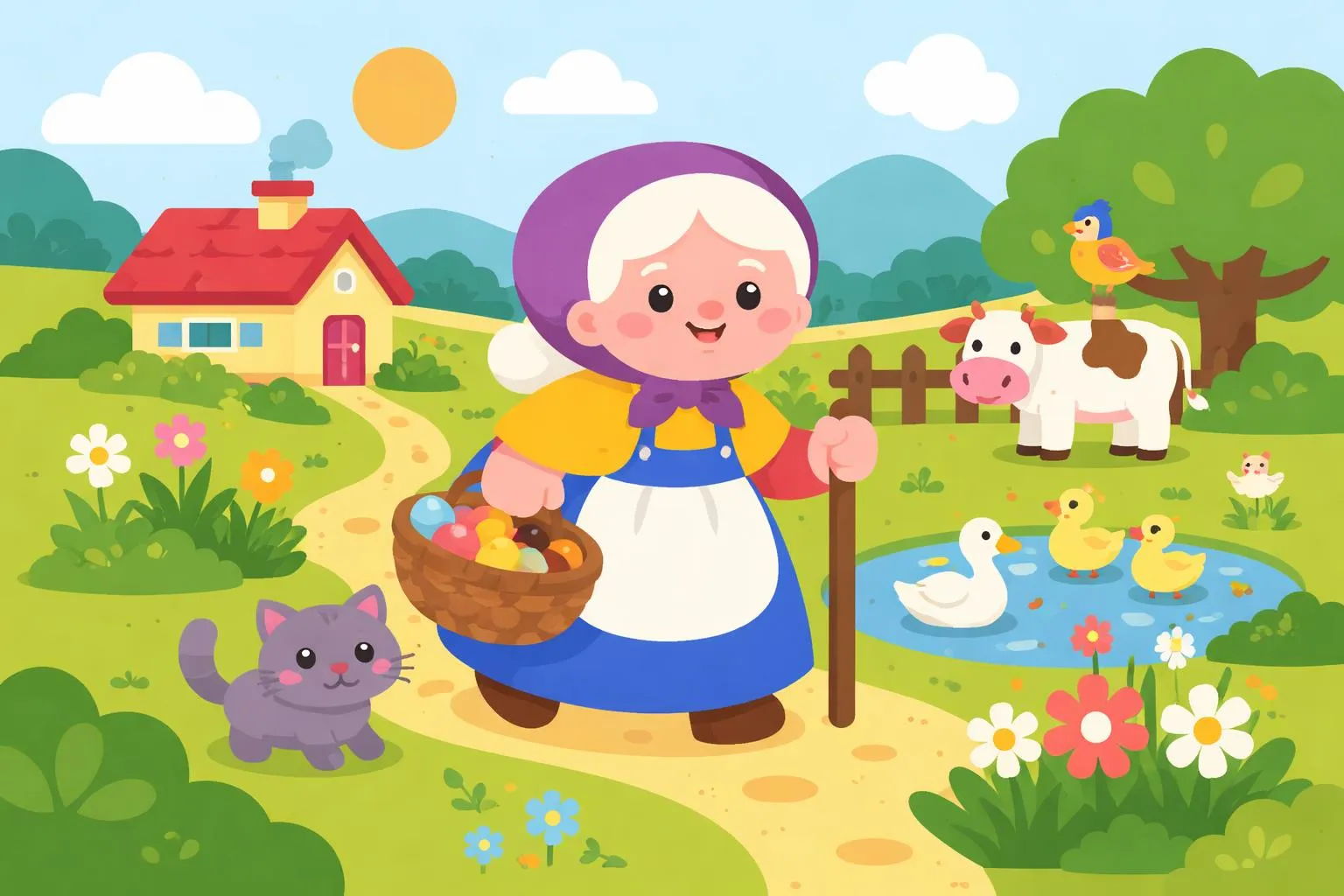

Original Story:
There was an old woman of Leeds;
Who spent all her time in good deeds;
She worked for the poor
Till her fingers were sore,
This pious old woman of Leeds!
Expansion and Analysis
Story Explanation and Interpretation
This short poem tells the story of an old woman from Leeds who dedicates her life to performing good deeds. She is described as pious, meaning she is deeply devoted to doing what is morally right and kind. The poem highlights her selflessness, especially in her efforts to help the poor, working so hard that her fingers become sore. This emphasizes her compassion and tireless dedication to charity and kindness.
The poem’s simple rhyme and rhythm make it easy to remember and recite, which is ideal for children’s literature. It conveys a powerful message about the importance of helping others and the value of kindness, regardless of one’s age.
Creative Background and Author Introduction
This poem is a classic example of a limerick, a form of humorous verse with a specific rhyme scheme (AABBA). Limericks often feature quirky or memorable characters and are popular in English-speaking cultures for their playful tone.
The author of this poem is unknown, but it belongs to a tradition of English nursery rhymes and limericks that have been passed down through generations. These poems often serve as both entertainment and moral lessons for children.
Reflection and Personal Response
Reading this poem encourages us to appreciate the virtue of generosity and the impact one person can have by dedicating themselves to helping others. It reminds us that kindness is an active choice and that even small acts of charity can make a significant difference.
The old woman’s example inspires readers to consider how they can contribute to their communities, showing that age is no barrier to doing good. It also invites reflection on the value of perseverance and self-sacrifice in the service of others.
Lessons and Learning Points for Children and Students
From this poem, children and students can learn several important lessons:
- Compassion and empathy: Understanding and caring for those who are less fortunate.
- Selflessness: Putting others’ needs before one’s own comfort.
- Perseverance: Continuing to work hard even when it is difficult or tiring.
- Moral values: The importance of doing good deeds as part of one’s character.
Practical Applications in Daily Life and Learning
- In school: Students can be encouraged to participate in community service or charity projects, inspired by the old woman’s example.
- At home: Children can learn to help family members or neighbors, fostering a spirit of kindness and cooperation.
- In social settings: Understanding the value of generosity can improve relationships and build stronger communities.
- Personal development: The poem teaches resilience and dedication, qualities useful in academic and personal challenges.
Key Vocabulary
- Pious: Showing deep respect for religious or moral principles.
- Deeds: Actions, especially good or helpful ones.
- Sore: Painful or aching, often from overuse.
- Compassion: Sympathy and concern for the suffering of others.
- Selflessness: Putting others' needs above one’s own.
Reading Comprehension Questions
- Where is the old woman from?
- What did the old woman spend all her time doing?
- Why were the old woman’s fingers sore?
- What does the word "pious" mean in the context of this poem?
- What lesson can we learn from the old woman’s story?
Answers
- The old woman is from Leeds.
- She spent all her time doing good deeds.
- Her fingers were sore because she worked hard helping the poor.
- "Pious" means she was very devoted to doing what is right and kind.
- We can learn the importance of kindness, generosity, and helping others.