
Original Story:
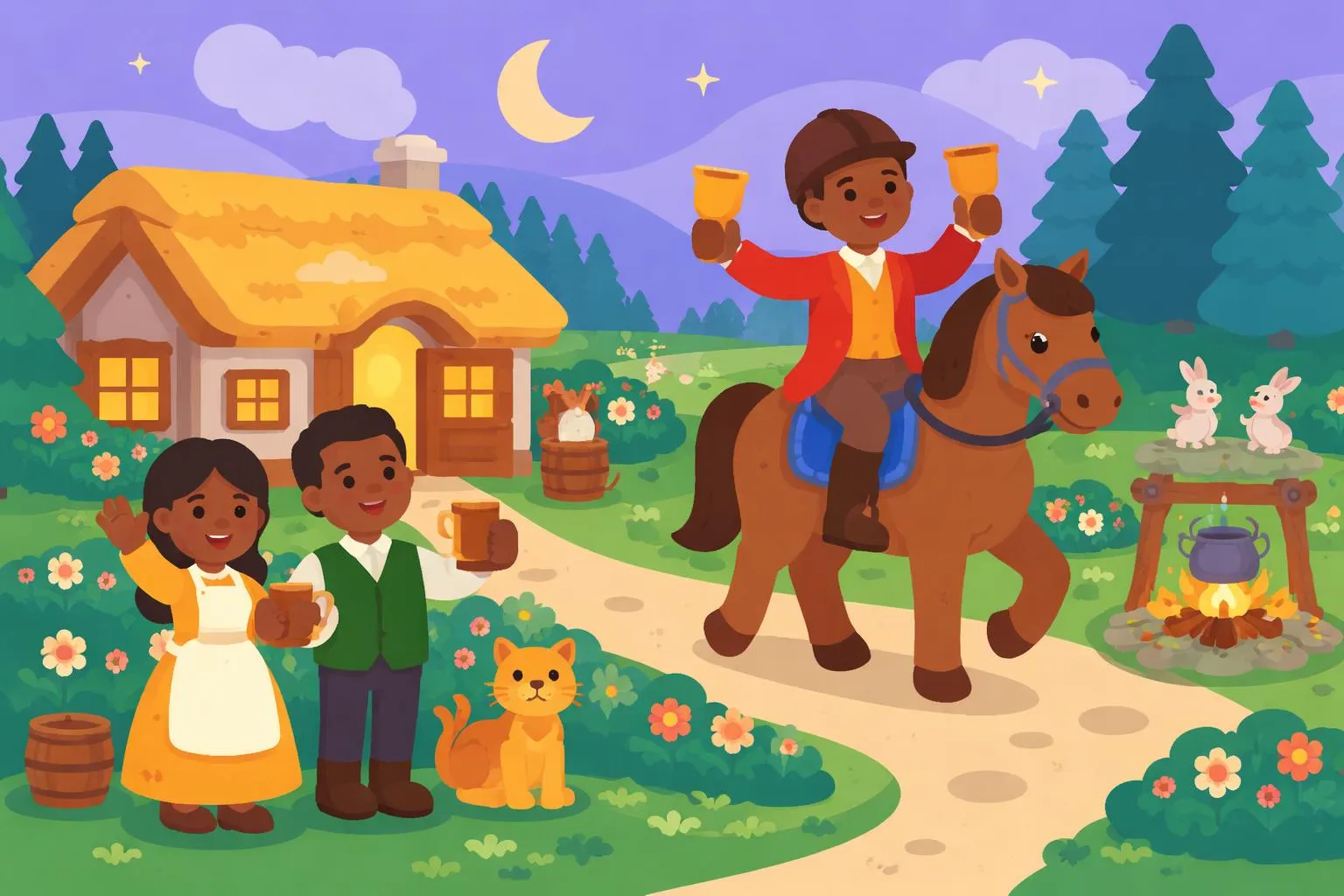
Come, drink a stirrup cup with me,
Before we close our rouse.
You ‘re all aglow with wine, I know:
The master of the house,
Unmindful of our revelry,
Has drowned the carking devil care,
And slumbers in his chair.
Come, drink a cup before we start;
We ‘ve far to ride to–night.
And Death may take the race we make,
And check our gallant flight:
But even he must play his part,
And tho’ the look he wears be grim,
We ‘ll drink a toast to him!
For Death,—a swift old chap is he,
And swift the steed He rides.
He needs no chart o’er main or mart,
For no direction bides.
So, come, a final, cup with me,
And let the soldiers’ chorus swell,—
To hell with care, to hell!
Explanation and Analysis of the Story
This poem invites readers into a vivid scene of camaraderie and courage among soldiers or riders preparing for a journey or battle. The "stirrup cup" is a traditional drink offered to riders just before they depart, symbolizing a last moment of fellowship and celebration before facing the unknown.
The poem’s tone is both lively and somber. It acknowledges the ever-present shadow of Death, personified as a swift rider who cannot be avoided. Despite this grim reality, the characters choose to face life boldly, toasting even to Death itself. This attitude reflects a fearless acceptance of fate and a celebration of life’s fleeting moments.
The master of the house, who has drowned his worries in wine and now sleeps, contrasts with the active riders who prepare to depart. The poem captures the tension between comfort and duty, rest and action, life and death.
Background and Author Introduction
This poem is a traditional piece often attributed to the Scottish or English folk tradition, capturing the spirit of soldiers or travelers in earlier centuries. The "stirrup cup" custom was common in cavalry and equestrian cultures, where a final drink was shared before mounting and riding out.
While the exact author is unknown, the poem reflects themes common in 18th and 19th-century British poetry, where bravery, fatalism, and camaraderie were celebrated. Such works often served as morale boosters and reminders of the nobility of facing danger with courage.
Reflection and Insights
Reading this poem encourages us to reflect on the transience of life and the importance of living boldly despite the inevitability of death. It teaches the value of friendship, courage, and acceptance.
For children and students, this story can be a gateway to understanding historical customs, poetry’s power to express complex emotions, and the universal themes of life and death. It encourages bravery in the face of fear and the importance of cherishing moments with friends.
Learning Points for Children and Students
- Cultural Knowledge: Understanding the tradition of the stirrup cup and its role in historical societies.
- Literary Devices: Identifying personification (Death as a rider), metaphor, and tone.
- Themes: Courage, mortality, friendship, and acceptance.
- Vocabulary: Words like stirrup cup, rouse, carking, gallant, chorus, and bides.
- Moral Lessons: Facing fears bravely, valuing companionship, and appreciating life’s moments.
Practical Applications and Life Lessons
- In School: Students can use this poem to practice reading comprehension, vocabulary building, and literary analysis.
- In Life: The poem inspires resilience and the courage to face challenges, reminding us that while difficulties are inevitable, our attitude toward them shapes our experience.
- In Social Settings: The idea of sharing a "last cup" before a challenge can be adapted as a metaphor for supporting friends before big events like exams or competitions.
Reading Comprehension Questions
- What is a stirrup cup and why is it important in the poem?
- How is Death described in the poem?
- What mood does the poem create before the riders depart?
- Why do the riders toast to Death even though it is grim?
- What does the master of the house do while the others prepare to ride?
- What lesson can we learn about facing difficult situations from this poem?
Answers to the Questions
- A stirrup cup is a drink offered to riders just before they leave, symbolizing a final moment of fellowship and celebration. It is important because it marks the start of their journey and camaraderie.
- Death is described as a swift old chap riding a fast horse, who needs no map and cannot be avoided.
- The mood is a mix of festivity and seriousness—there is celebration but also an awareness of danger.
- They toast to Death to show bravery and acceptance, acknowledging that death is part of life and must be respected.
- The master of the house has drowned his worries in wine and is sleeping, unaware of the riders’ preparations.
- The poem teaches us to face challenges bravely, to accept the inevitability of death, and to cherish moments with friends before difficult times.