
Original Story:
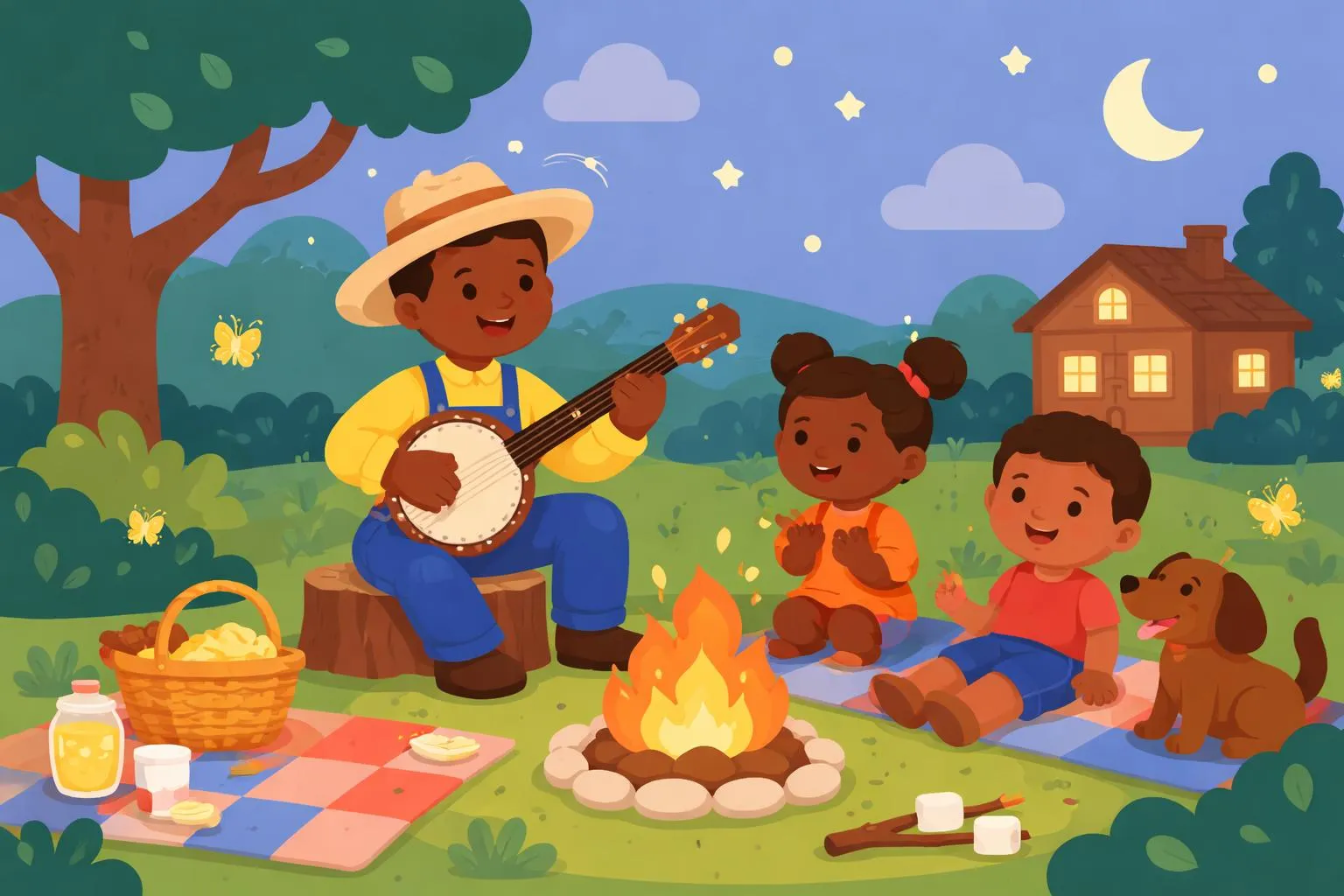
In a small and lonely cabin out of noisy traffic’s way, Sat an old man, bent and feeble, dusk of face, and hair of gray, And beside him on the table, battered, old, and worn as he, Lay a banjo, droning forth this reminiscent melody:
“Night is closing in upon us, friend of mine, but don’t be sad; Let us think of all the pleasures and the joys that we have had. Let us keep a merry visage, and be happy till the last, Let the future still be sweetened with the honey of the past.
“For I speak to you of summer nights upon the yellow sand, When the Southern moon was sailing high and silvering all the land; And if love tales were not sacred, there’s a tale that I could tell Of your many nightly wanderings with a dusk and lovely belle.
“And I speak to you of care–free songs when labour’s hour was o’er, And a woman waiting for your step outside the cabin door, And of something roly–poly that you took upon your lap, While you listened for the stumbling, hesitating words, ‘Pap, pap.’
“I could tell you of a ‘possum hunt across the wooded grounds, I could call to mind the sweetness of the baying of the hounds, You could lift me up and smelling of the timber that ’s in me, Build again a whole green forest with the mem’ry of a tree.
“So the future cannot hurt us while we keep the past in mind, What care I for trembling fingers,—what care you that you are blind? Time may leave us poor and stranded, circumstance may make us bend; But they ‘ll only find us mellower, won’t they, comrade?—in the end.”
Story Explanation and Appreciation
This touching story paints a vivid picture of an old man reflecting on his life in a quiet, isolated cabin. Despite his frailty and the challenges of aging, he finds comfort and joy in memories of the past. The banjo’s melody serves as a symbol of nostalgia, evoking images of summer nights, love, family, and simple pleasures such as hunting and singing. The story emphasizes the importance of cherishing memories and how they can bring sweetness and hope even in difficult times.
The narrative conveys a message of resilience and acceptance. The old man acknowledges the hardships of growing old — trembling fingers, blindness, poverty — but he chooses to focus on the richness of his experiences rather than his limitations. The past, filled with love and joy, becomes a source of strength that softens the blows of the present and future.
Background and Author Introduction
This story is a classic example of reflective poetry or prose from the late 19th or early 20th century, a time when many writers explored themes of aging, memory, and the passage of time. The author uses simple yet evocative language to create a warm, intimate atmosphere. Although the specific author of this piece is not mentioned here, works like this often come from poets or storytellers who valued rural life and the wisdom of the elderly.
The use of the banjo and references to Southern landscapes suggest an American Southern cultural background, where storytelling and music are deeply intertwined with daily life and history.
Reflections and Insights
Reading this story encourages us to value our personal histories and the relationships that have shaped us. It reminds us that even when physical abilities fade, the mind and heart can remain rich with memories that bring joy and meaning. The story invites readers to adopt a positive outlook on aging and to treasure the “honey of the past” as a source of comfort.
For children and students, this story offers lessons on gratitude, resilience, and the power of memory. It teaches that happiness is not only found in the present but also in recalling good times and loved ones. It also highlights the importance of family bonds and simple pleasures in life.
Learning Points and Practical Applications
- Vocabulary and Expression: Words like reminiscent, mellower, baying, and hesitating enrich students’ vocabulary and understanding of descriptive language.
- Themes: Aging, memory, friendship, resilience, and the passage of time.
- Emotional Intelligence: Encourages empathy for the elderly and understanding of life’s cycles.
- Cultural Context: Offers insight into rural Southern life and traditional storytelling.
- Creative Writing: Students can practice writing their own reflective pieces or poems inspired by memories.
- Life Lessons: Teaches acceptance of change and finding joy in past experiences.
In daily life, this story can inspire children to appreciate their family history, to listen to elders’ stories, and to find happiness in small moments. In school, it can be used to discuss themes of time, memory, and emotional growth.
Reading Comprehension Questions
- Where does the old man live, and how is his environment described?
- What instrument is mentioned, and what role does it play in the story?
- What kinds of memories does the old man recall?
- How does the old man feel about his current situation despite his age and difficulties?
- What message does the story convey about the past and the future?
- Why is it important to remember the past, according to the story?
- What are some of the joys the old man remembers from his youth?
- How can this story help children understand aging and memory?
- What emotions does the story evoke in the reader?
- How might this story inspire someone who is feeling lonely or sad?
Answers
- The old man lives in a small and lonely cabin away from noisy traffic, suggesting a quiet and isolated place.
- A banjo is mentioned; it plays a nostalgic melody that brings back memories.
- He recalls summer nights, love stories, carefree songs, family moments, and hunting adventures.
- The old man feels content and hopeful, focusing on happy memories rather than his physical decline.
- The story suggests that the past can sweeten the future and protect us from fear or sadness.
- Remembering the past helps keep joy alive and gives strength to face present challenges.
- Joys include summer nights, love, songs after work, waiting family members, and outdoor hunts.
- It teaches children to appreciate memories and understand that aging is a natural part of life.
- The story evokes feelings of warmth, nostalgia, comfort, and sometimes bittersweet sadness.
- It can inspire hope by showing that memories and love can bring comfort even in loneliness.
This story is a beautiful reminder of the power of memory and the enduring spirit of human joy, making it a valuable piece for children and learners to explore both emotionally and intellectually.