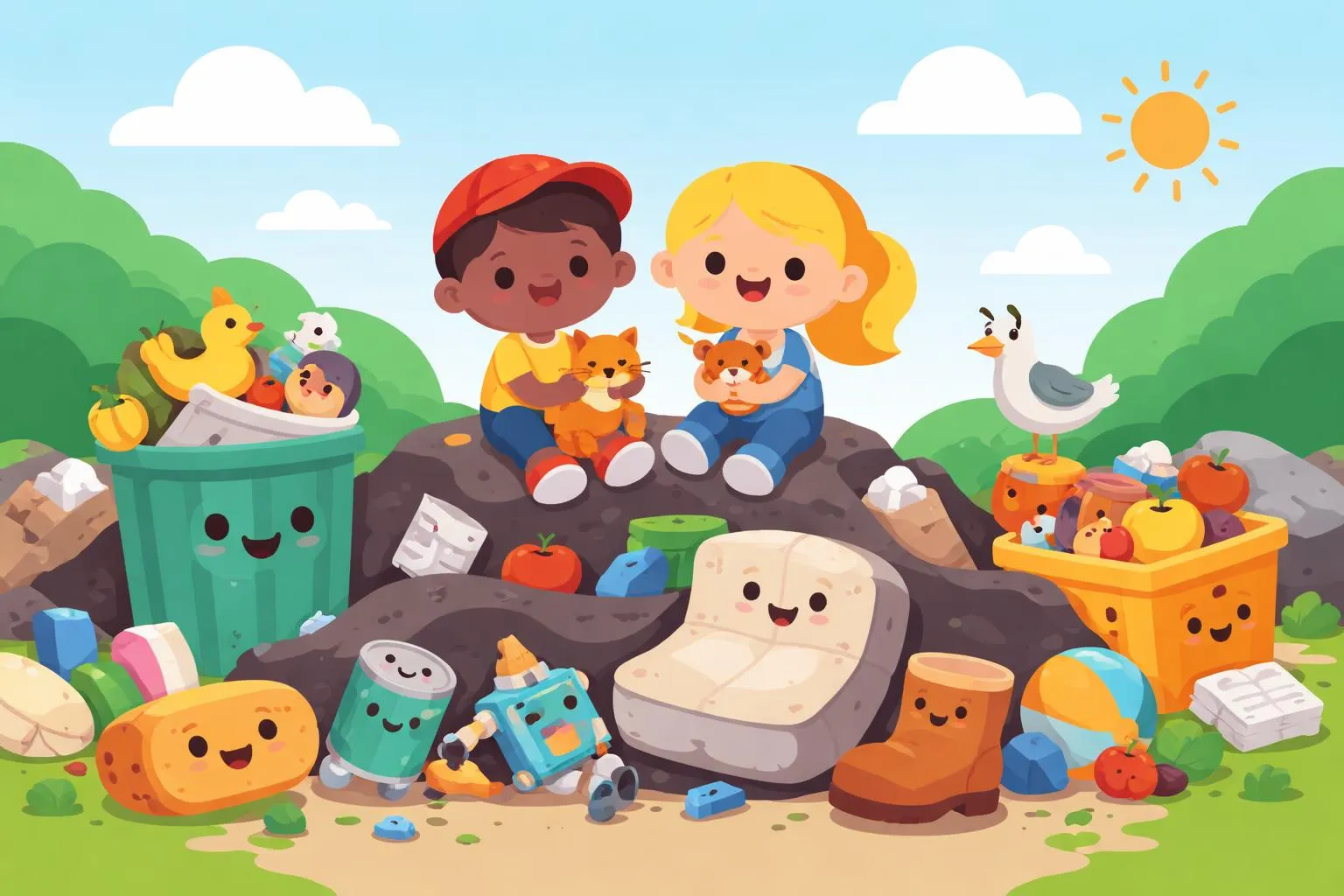

Original Story:
We’re all in the dumps,
For diamonds are trumps;
The kittens are gone to St. Paul’s;
The babies are bit,
The moon’s in a fit,
And the houses are built without walls.
Expansion and Analysis of the Story
Summary and Interpretation
This short, whimsical poem describes a world turned upside down, where everything seems to be going wrong or out of order. The phrase "We’re all in the dumps" suggests a feeling of sadness or disappointment. The line "For diamonds are trumps" implies that diamonds have become the winning or most important cards, possibly symbolizing a shift in value or fortune. The kittens going to St. Paul’s, babies getting bitten, the moon being upset, and houses built without walls all create a surreal, chaotic atmosphere.
The poem uses playful and imaginative imagery to express confusion and disorder. It captures a childlike perspective where the normal rules of life are broken, evoking a sense of wonder mixed with unease.
Background and Author Introduction
This poem is an example of nonsense verse, a genre popularized by authors like Edward Lear and Lewis Carroll in the 19th century. Such poems delight in absurdity and playfulness, often appealing to children’s imagination and sense of humor. The author of this particular poem is unknown, but it fits within the tradition of whimsical children’s poetry that encourages creative thinking.
The poem’s style reflects the Victorian era’s fascination with fantasy and the breaking of conventional norms in literature for children. It invites young readers to explore language and meaning beyond the literal, fostering creativity and critical thinking.
Reflection and Personal Response
Reading this poem, one might feel a mixture of amusement and curiosity. The playful nonsense challenges readers to think about what is normal and what is not. It encourages embracing the unexpected and finding joy even when things seem confusing or difficult. The poem reminds us that sometimes, life doesn’t follow the rules, and that’s okay.
Lessons and Educational Value
Children and students can learn several things from this poem:
- Imagination and Creativity: The poem encourages thinking beyond reality and exploring fantastical ideas.
- Language Play: It demonstrates how words can be used for sound, rhythm, and fun, not just for literal meaning.
- Emotional Expression: The phrase “in the dumps” introduces a way to express feelings of sadness or frustration.
- Critical Thinking: Students can analyze the poem’s meaning and symbolism, developing interpretive skills.
Practical Applications in Life and Learning
- Creative Writing: Students can write their own nonsense poems, practicing rhyme and rhythm.
- Emotional Literacy: Discussing phrases like “in the dumps” helps children articulate their feelings.
- Art Projects: Drawing scenes from the poem can enhance comprehension and engagement.
- Problem Solving: Exploring why the poem’s world is chaotic can lead to discussions about order, rules, and how we manage challenges.
Learning Challenges and Focus Points
- Understanding figurative language and idiomatic expressions such as “in the dumps.”
- Grasping the concept of nonsense literature and its purpose.
- Developing the ability to interpret symbolism and abstract imagery.
- Encouraging students to embrace ambiguity and multiple meanings.
Reading Comprehension Questions
- What does the phrase “We’re all in the dumps” mean in the poem?
- Why do you think the kittens have gone to St. Paul’s?
- What kind of mood does the poem create with its imagery?
- How does the poem use nonsense or absurd ideas to make you think?
- What can you learn about feelings from this poem?
Answers
- It means that everyone is feeling sad or unhappy.
- It is a playful, imaginative idea that adds to the poem’s surreal and whimsical tone. It may symbolize something unexpected or out of place.
- The poem creates a mood of confusion, chaos, and whimsy.
- The nonsense ideas encourage readers to think beyond normal rules and explore creativity and imagination.
- The poem shows that it’s okay to feel sad or upset sometimes, and that expressing those feelings is important.
This poem serves as a wonderful introduction to playful language and imaginative thinking for children, helping them develop both emotional awareness and creative skills.