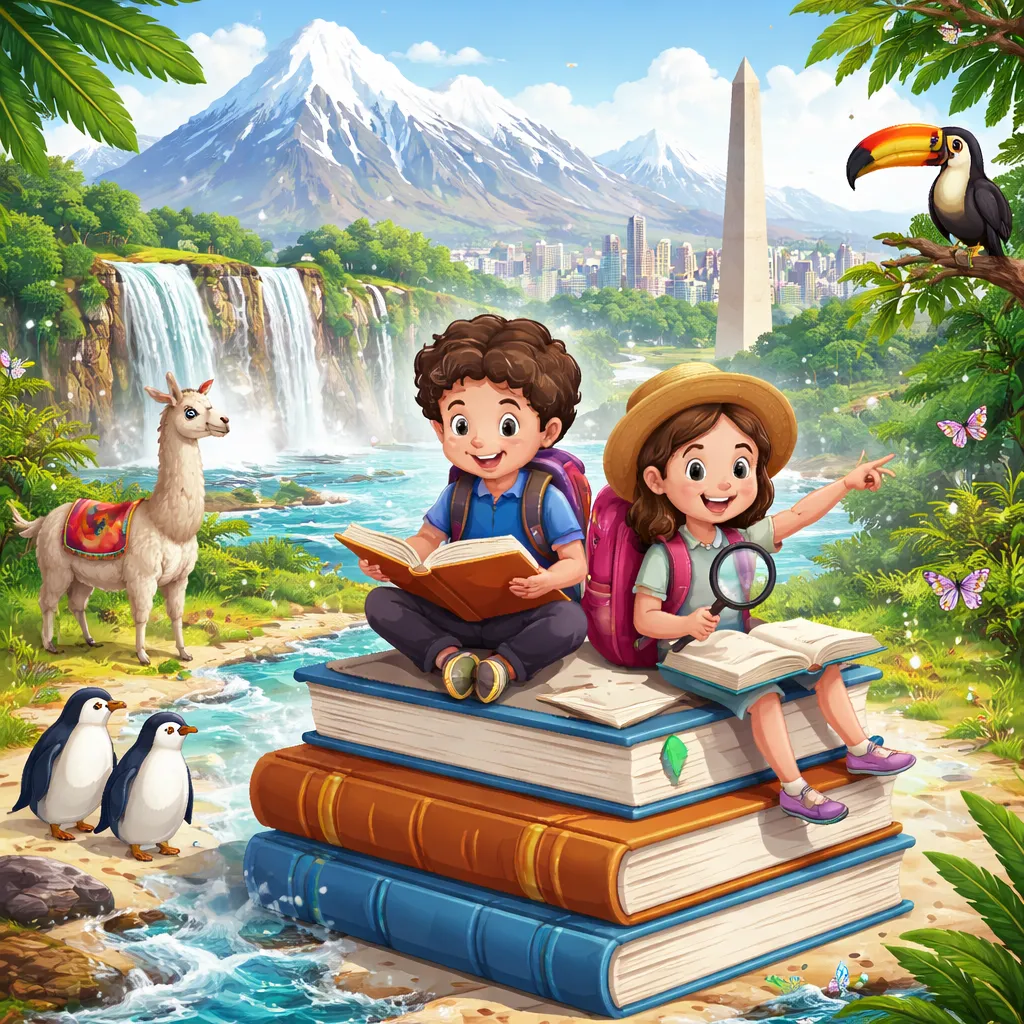

A Friendly Hello and First Impressions
Hola! (OH-lah). This is the friendly "Hello" in Argentina. Gracias! (GRAH-see-ahs). This is a warm "Thank you". People say it with a smile. The people are called Argentines. Learning reading about Argentina starts with these happy words.
Argentina is in the southern part of South America. Its shape looks like a giant wedge. The wide part is at the top. The point is at the very bottom. The country is the second largest in South America. Chile is its long, western neighbor. The Atlantic Ocean is to the east.
People call it the "Land of Silver". The name "Argentina" comes from the Latin word for silver. Early explorers hoped to find silver here. They did not find much silver. But they found a land rich in other treasures. It is a land of vast beauty. Are you ready for an adventure?
Deep Dive into Culture and Stories
Echoes of History
Argentina's most famous historical figure is a woman. Her name was Eva Per車n. Everyone called her "Evita". She was the First Lady in the 1940s and 50s. She came from a poor family. She fought for workers' and women's rights. She started many charities. Millions of poor people loved her. Her story is about compassion and power. It is a key part of learning reading about Argentina.
Another important time was the "Gaucho" era. Gauchos were Argentine cowboys. They rode horses on the vast plains. They herded cattle and lived freely. They wore baggy trousers called "bombachas". They drank a special tea called mate. The gaucho is a symbol of independence. This spirit is still important today.
Argentina gave the world a life-saving discovery. A doctor named Luis Agote invented a way to store blood. He used sodium citrate. This stopped blood from clotting. It allowed safe blood transfusions. This happened in 1914. His work saved millions of lives in hospitals. It was a huge gift to medicine.
A Land of Incredible Extremes
Argentina's geography is amazing. It has a bit of everything. The north has hot rainforests. The center has huge, grassy plains. These plains are called the Pampas. The west has the tall Andes mountains. The south has icy glaciers and cold deserts. The coast has long beaches. It is a country of stunning contrasts.
The climate changes with the landscape. The north is subtropical and warm. The Pampas have four clear seasons. Patagonia in the south is windy and cool. The Andes are cold and snowy. This variety lets people grow many crops. Argentina grows lots of soy, corn, and wheat. It is famous for its delicious beef cattle.
One amazing animal is the rhea. It is like a small ostrich. It cannot fly, but it runs very fast. It lives on the Pampas. The gauchos sometimes hunted it. The national flower is the ceibo. It has bright red, beak-shaped flowers. It blooms in the summer. Its wood is very light and soft. It is a symbol of strength and beauty.
Landmarks of Nature and City
Visit the Iguaz迆 Falls. They are on the border with Brazil. They are one of the world's largest waterfalls. Over 275 separate falls make a giant curtain of water. The most famous fall is called "Garganta del Diablo". This means "Devil's Throat". It is a huge U-shaped cascade. The roar is incredibly loud. A fine mist covers everything. Legend says a god created the falls. He was angry at a warrior. The god carved the river in his rage.
See the Perito Moreno Glacier. It is in Los Glaciares National Park. It is a massive river of ice. It is over 30 kilometers long. The front wall is 70 meters high. Huge chunks of ice crack and fall off. This is called "calving". The sound is like thunder. The ice looks bright blue. It is one of the few glaciers still growing. It is a powerful sight.
In the city, visit the Teatro Col車n in Buenos Aires. It is a world-famous opera house. It opened in 1908. The outside looks grand and European. The inside is breathtaking. The golden hall has perfect acoustics. A story says a ghost haunts the theater. He is a former violinist. He loves music so much, he never left.
Dance, Soccer, and Celebration
Argentina's national dance is the tango. It was born in Buenos Aires. It started in poor city neighborhoods. A man and a woman dance very close. The movements are sharp and passionate. The music is beautiful and sad. Today, people dance tango in milongas. These are special dance halls. Tango is the dance of the heart.
Soccer is the national passion. Argentines love football. The national team has won the World Cup. Legendary players came from here. Diego Maradona and Lionel Messi are gods here. Kids play soccer in every park and street. A big match stops the whole country. The joy is incredible when they win.
A unique holiday is "D赤a de la Tradici車n". It is the Day of Tradition. People celebrate gaucho culture. There are huge parades in the countryside. Gauchos show their riding skills. They wear traditional clothes. There are folk music concerts. People eat asado barbecue. The day honors the old Argentine way of life.
Food and Flavors
The national meal is asado. This is Argentine barbecue. Families and friends gather for it. A "parrillero" cooks the meat on a grill. The grill is called a "parrilla". They cook many cuts of beef. They also cook sausages called "chorizo". The meat is seasoned only with salt. The flavor of the fire is key. It is a social event that lasts hours. It tastes like friendship and celebration.
You must also try empanadas. They are baked or fried pastry turnovers. The fillings are different in each region. In the north, they are spicy with beef. Near the coast, they have fish. Some have cheese and onion. They are perfect for snacks or lunch. A fresh, hot empanada is crispy and juicy. It is like a delicious surprise in your hand.
A Culture of Science and Story
Argentina has a strong scientific tradition. Three Argentines have won Nobel Prizes in Science. Bernardo Houssay won for Medicine. Luis Leloir won for Chemistry. C谷sar Milstein also won for Medicine. Their work helped understand diabetes and antibodies. This shows a deep commitment to learning. It is an inspiration for learning reading about Argentina.
Argentina is also a giant in publishing. It is the biggest Spanish-language book publisher. The Buenos Aires Book Fair is huge. People of all ages love to read. Famous writers like Jorge Luis Borges came from here. Bookstores are important places. One bookstore is in a grand old theater. It is called El Ateneo Grand Splendid. Reading is a popular hobby for everyone.
Tips for Young Explorers
Cultural Manners Matter
Greetings are warm and close. People usually give one kiss on the cheek. This is for both men and women. It is a standard hello between friends. Even new acquaintances do it. Do not be shy. Just touch cheeks and make a kissing sound.
Dinner time is very late. People often eat at 9 or 10 pm. Children may eat earlier. But do not be surprised by late meals. Lunch is the big meal of the day. People might take a siesta after. The daily rhythm is different here.
When drinking mate, remember the rules. Mate is a shared tea. One person is the "cebador". They prepare and pour the tea. They pass the gourd to each person. Drink all the tea in one go. Then pass it back to the cebador. Say "gracias" when you have had enough. Never move the metal straw. It is a sign of friendship.
A Note on Staying Safe
Argentina is generally safe for tourists. In big cities like Buenos Aires, be alert. Keep your backpack in front of you. Do not flash expensive phones or cameras. Use official taxis or ride-sharing apps. Be careful in crowded subways and markets.
If you visit natural parks, follow the rules. Stay on marked trails at Iguaz迆. The rocks near the water are very slippery. On glaciers, always go with a certified guide. Cracks in the ice are deep and dangerous. Never walk on a glacier alone. The beauty is powerful but must be respected.
A Tasty Stop
Look for a "helader赤a". This is an ice cream shop. Argentine ice cream is famous. It is creamy and delicious. Try the "dulce de leche" flavor. It is a sweet, milky caramel. Or try "sambay車n", a creamy eggnog flavor. Get it in a cup or a cone. Eat it while walking in a park. The rich, cold treat is perfect on a warm day.
Healthy and Happy Travels
The sun can be very strong. Use a high SPF sunscreen. Reapply it often. The ozone layer is thin in the south. This means stronger UV rays. Protect your skin. Wear a hat and sunglasses too.
Tap water is safe to drink in most cities. In Buenos Aires, you can drink it. In remote areas, drink bottled water. It is better to be safe. Always wash fruits before you eat them.
Wear comfortable walking shoes. Argentine cities have beautiful cobblestone streets. The stones can be uneven. Good shoes make exploring more fun. You can walk for hours and see amazing things.
Your Invitation to Explore
Start your adventure with dance. Find a video of Argentine tango online. Watch the graceful, sharp movements. Listen to the bandone車n music. Try a few steps in your living room. Or, look up a soccer highlight reel. Watch Lionel Messi score an amazing goal. Feel the energy of the crowd. This is a fun start to learning reading about Argentina.
Visit a local market or grocery store. Look for "yerba mate" tea. You can find it in many stores. Buy a small bag. Make a simple version at home. Put the leaves in a cup. Add hot (not boiling) water. Let it steep for a few minutes. Sip it through a straw. Taste the earthy, herbal flavor.
The world is a giant, open book. Each country is a thrilling chapter. Argentina's chapter is full of passion, plains, and poetry. Turn to it with an open heart. Read about its gauchos and glaciers. Your curiosity is your guide.
Families in Buenos Aires share mate on a balcony. Friends gather for a big Sunday asado. Children kick a soccer ball in the plaza. We all know these feelings. We love sharing food with friends. We enjoy music and sports. We cherish time with our family. Learning about Argentina shows us this. Our global family is wonderfully diverse. Keep exploring, one page, one country, at a time. Your journey is just beginning.