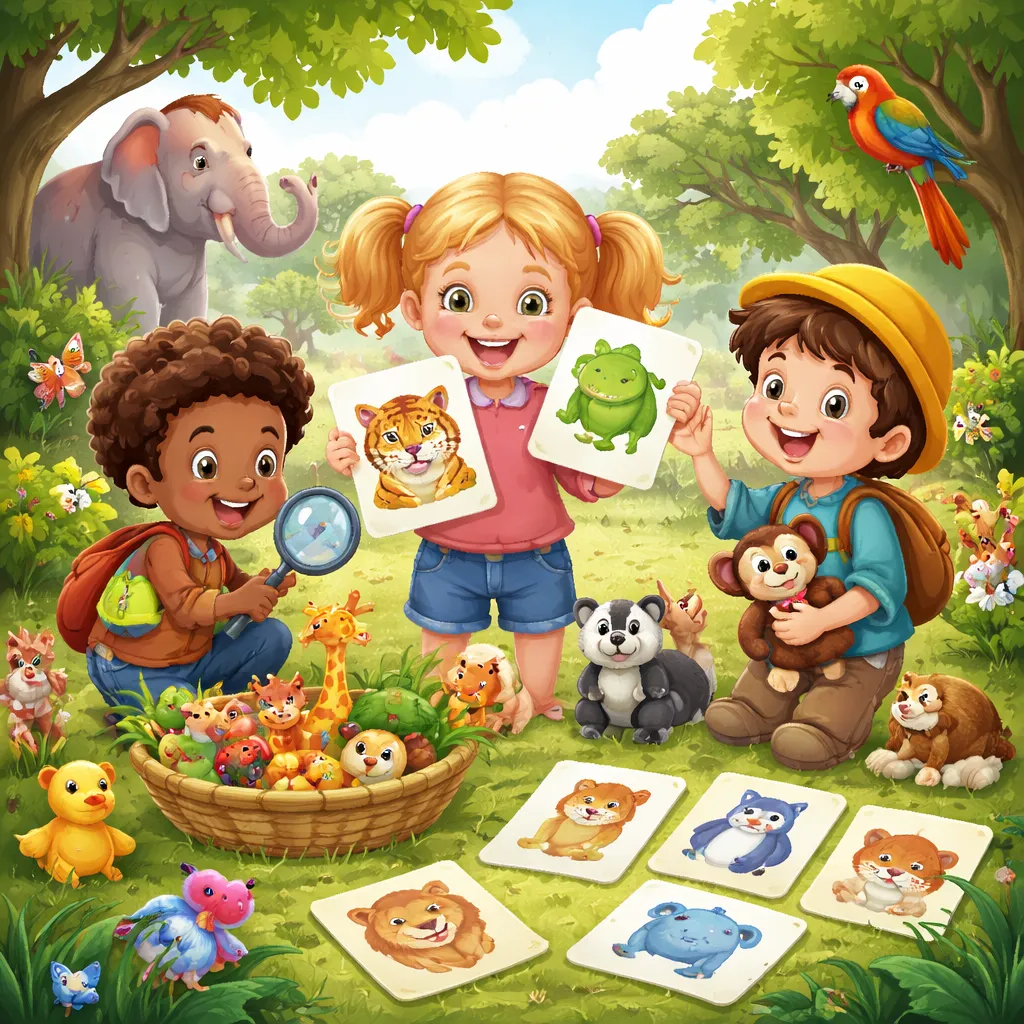

What Is This Situation? Animals are everywhere in a child’s world. They appear in storybooks, on television, at the zoo, and even in the backyard. For a young child, animals are fascinating. They move in interesting ways. They make sounds. They come in all shapes and sizes.
This situation happens when a child points to a dog and wants to know its name. It happens when you read a bedtime story about a lion. It happens during a walk when a bird flies by. These are natural moments of curiosity.
Learning animal names in English fits perfectly into these everyday moments. Children do not need flashcards or lessons. They need to connect the word to the animal they see. This connection happens through play, movement, and shared wonder.
Using English animal names becomes a game. Your child hears a word, sees the animal, and repeats it. The learning is active and joyful. It happens at the zoo, in the living room, or during a walk around the neighborhood.
Key English Phrases for This Situation Start with simple naming phrases. “Look, a dog” points out the animal. “That is a cat” identifies what your child sees. These short sentences give your child the word they need.
Use phrases that invite your child to say the word. “What animal is that?” asks a gentle question. “Can you say elephant?” encourages a try. These phrases turn looking into speaking.
Use phrases that connect animals to their sounds. “The cow says moo” is a classic. “What sound does a monkey make?” invites play. Animal sounds are fun and easy for children to repeat.
Use phrases for movement. “Hop like a frog” combines language with action. “Can you stomp like an elephant?” gets the whole body involved. Physical play makes words stick.
Use phrases for comparing. “Is that a big elephant or a small mouse?” introduces size words. “Which animal has a long neck?” builds thinking skills alongside vocabulary.
Simple Conversations for Kids Dialogue 1: At the Park Child: “Bird!” Parent: “Yes, a bird. What color is the bird?” Child: “Red.” Parent: “A red bird. Can you say ‘red bird’?” Child: “Red bird.”
This conversation starts with the child noticing. The parent adds a color word. The child repeats a two-word phrase. It is short, natural, and successful.
Dialogue 2: Reading a Book Parent: “What is this animal?” Child: “Zebra.” Parent: “Yes, zebra. Where does the zebra live?” Child: “Zoo.” Parent: “The zebra lives at the zoo. Good job.”
Here, the parent asks simple questions. The child gives one-word answers. The parent expands on the answer. The child learns a new fact along with the word.
Dialogue 3: Playing with Toys Child: “My tiger.” Parent: “Your tiger. What sound does the tiger make?” Child: “Roar!” Parent: “A loud roar. Show me how the tiger walks.”
This dialogue turns play into language practice. The child uses a toy. The parent adds questions and actions. The learning feels like play because it is play.
Vocabulary You Should Know Mammal is an animal with fur that feeds milk to its babies. You can say “A dog is a mammal.” This is a category word for older toddlers.
Reptile is an animal with scales that often likes warm places. You can say “A snake is a reptile.” This introduces a science word in a simple way.
Farm animals live on farms and give us food or help with work. You can say “Cows and pigs are farm animals.” This groups words together for easier memory.
Jungle animals live in hot, rainy forests. You can say “Monkeys and parrots live in the jungle.” This creates a story around the words.
Pet is an animal that lives in your home. You can say “Our cat is a pet.” This word connects animals to your child’s own life.
Endangered means there are not many of that animal left. You can say “Some animals are endangered. We help them.” This introduces care for animals.
How to Use These Phrases Naturally Use an excited tone when you see an animal. Your enthusiasm is contagious. If you say “Look, a squirrel!” with joy, your child feels the excitement. They want to know the word.
Say the phrases when your child is already looking. Timing matters. Do not call their attention away. Join them in what they are already noticing. This makes the word feel like their discovery.
Repeat the same animal words often. Children learn through repetition. Say “dog” every time you see a dog. Say “cow” when you read a cow in a book. Consistency builds memory.
Use the words in different contexts. See a dog at the park. Read about a dog in a book. Play with a toy dog. The same word in different places helps your child understand the concept.
Let your child lead. If they point to an animal, name it. If they try to say it, encourage them. Follow their interest. Learning happens faster when the child chooses the focus.
Common Mistakes to Avoid One mistake is using only flashcards. Flashcards are useful but not enough. Children need to see real animals or good pictures. They need to connect the word to the world.
Another mistake is correcting pronunciation sharply. If your child says “el-e-phant” with extra syllables, do not interrupt. Gently say the word correctly later. Let them hear the right sound without pressure.
Some parents forget to use the words themselves. Children learn by hearing. If you do not say animal names often, your child will not hear them. Use the words in your own conversations.
Avoid testing too much. Do not constantly ask “What is this?” This feels like a quiz. Instead, say the name yourself. Let your child repeat if they want. Keep it low pressure.
Tips for Parents and Practice Ideas Make animal names part of your daily walk. Every time you see a bird, name it. Every time you pass a house with a dog, say “dog.” Outdoor time becomes language time.
Visit places with animals. Go to the zoo, a petting farm, or an aquarium. These places are full of animal words. Your child sees the real animal and hears the name together.
Use books with clear animal pictures. Board books with one animal per page work well. Point and name. Let your child point and name. Reading together builds vocabulary.
Sing songs about animals. “Old MacDonald Had a Farm” is perfect. “The Wheels on the Bus” has animal versions. Songs make words easy to remember.
Talk about animals during meals. “This is chicken. Chicken is a bird.” Connect the food on the plate to the animal name. This builds vocabulary in another context.
Fun Practice Activities Play animal charades. You act out an animal. Your child guesses the name. Then switch. Your child acts. You guess. This uses movement and laughter to build memory.
Create an animal sound game. You make a sound. Your child guesses the animal. “Moo” means cow. “Roar” means lion. This connects the animal name to its sound.
Make animal masks from paper plates. Draw a lion, a monkey, or a bird. Wear the masks and say “I am a lion.” Your child wears a mask and says the animal name.
Sort toy animals into groups. Put all the farm animals together. Put all the jungle animals together. As you sort, say the names. This builds categories in your child’s mind.
Go on a backyard safari. Take a magnifying glass. Look for ants, birds, and squirrels. Say the names as you find them. This turns your own yard into an adventure.
Animal names are some of the first words children love to learn. They are fun to say. They are fun to act out. And they connect children to the natural world. When learning feels like play, words come easily. Each new animal name is a small door opening. Behind it is a world of stories, songs, and conversations waiting to happen. With your gentle guidance and a spirit of play, your child will fill their world with animal words—and with the joy of discovery.