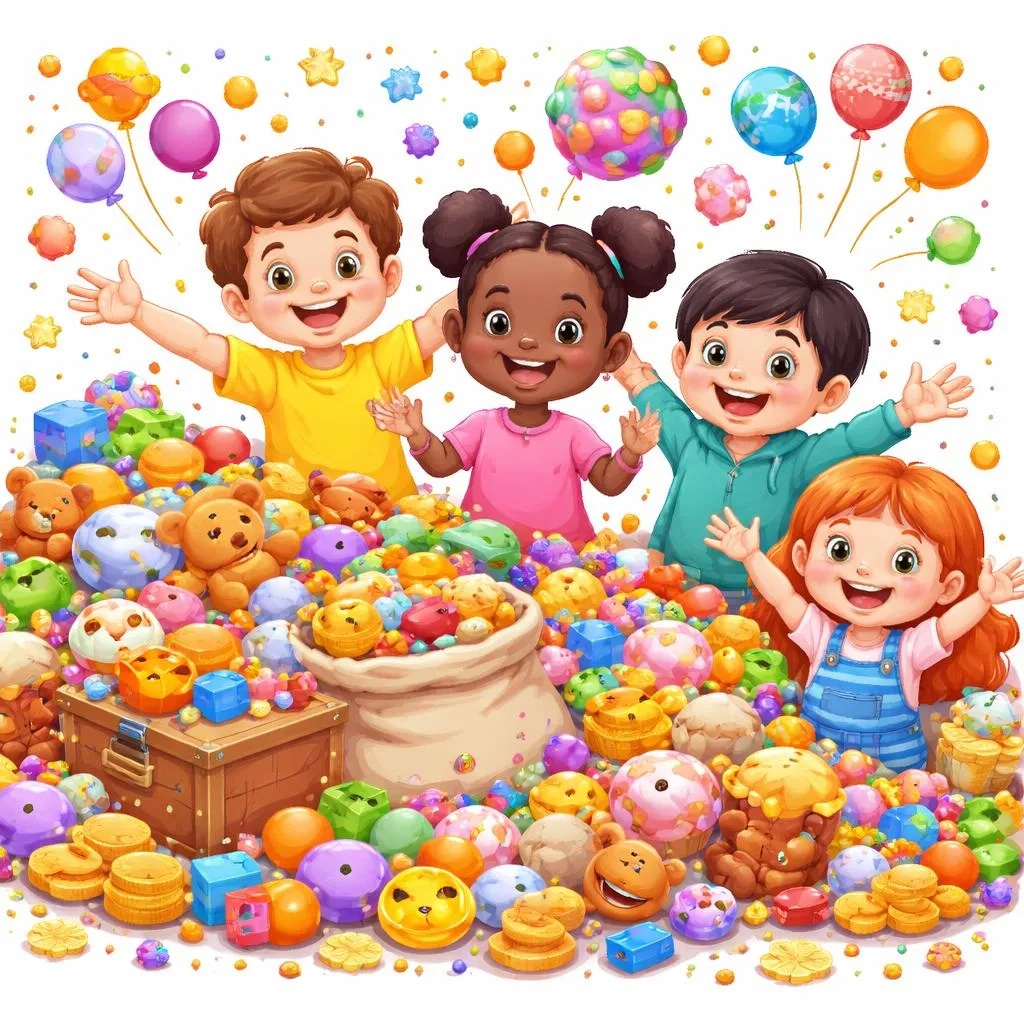

What is another word for lots?
Hello, word explorers. Today, we are going to make our language more colorful and interesting. We are going to look for another word for lots. The word "lots" is a fun and casual word that means a large number or amount. We use it all the time. "I have lots of friends." "We saw lots of animals at the zoo."
But sometimes, we want to say the same idea in a different way. Using different words makes your speaking and writing more exciting. Learning another word for lots gives you more choices. It is like having a bigger toolbox. You can pick the perfect tool for the job. Let's find some great friends for the word "lots."
Meaning and explanation
So, what does "lots" really mean. It is an informal word that means a large amount or number. It is not a specific number like ten or one hundred. It is a way to say "many" or "a large number" in a friendly, easy way. When you have lots of toys, it means you have many toys, more than just a few.
When we look for another word for lots, we are looking for synonyms. A synonym is a different word that has almost the same meaning. Some synonyms are very close, like "many" or "a lot." Some are a little more formal, like "numerous." The best word to use depends on what you are talking about and who you are talking to. Learning these choices helps you become a better and more creative speaker.
Categories or lists
Let's look at some of the best synonyms for "lots." We can think of them in groups from very casual to a little more formal.
Common and Casual Synonyms: These are perfect for everyday talking with friends and family. They are easy and friendly. Many: This is a very common and useful word. "I have many books" means the same as "I have lots of books."
A lot: This is probably the closest synonym. "A lot" (two words) is a bit more standard than the informal "lots." "Thanks a lot!"
A bunch: This is a fun, casual word. "I have a bunch of stickers." It suggests a group or collection.
A ton / Tons: This is a playful, exaggerated way to say lots. "I have a ton of homework!" It means a very large amount.
Synonyms for a Slightly Bigger or More Formal Group: These words are great for school or when you want to sound a bit more precise. Numerous: This sounds a little more formal. "There were numerous stars in the sky." It is a good word for writing.
Plenty: This word means more than enough. "We have plenty of snacks for the party."
Various: This synonym adds the idea of different kinds. "We saw various animals" means we saw lots of different types of animals.
Synonyms that are Phrases: These are little phrases that mean the same as lots. A large number of: This is clear and descriptive. "A large number of people came to the concert."
A great deal of: Often used for things you can't count, like help or time. "She has a great deal of patience."
Daily life examples
You can practice using another word for lots all the time. Let's imagine three scenes.
At a Birthday Party: You are at a friend's party. There are many balloons and presents. You could say, "There are lots of balloons!" or "There are many balloons!" or "There are a ton of balloons!" They all work. When the cake comes out, you might say, "There are plenty of slices for everyone!" Using different words makes your descriptions more fun.
At the Library: Your mom says, "You can check out some books." You find more than one or two. You bring a stack to the counter. The librarian might say, "You found numerous good books!" or "You have quite a few books there!" You are hearing and seeing synonyms in action. You can reply, "Yes, I found a bunch I like!"
Playing with Building Blocks: You and a friend are building. You need more red blocks. You say, "We need lots of red blocks." Your friend passes you a container. You could also say, "We need many red blocks" or "We need a lot of red blocks." This natural play is the best way to make these new words your own.
Printable flashcards
Printable flashcards are a super tool for learning synonyms. Let's make a "Synonym Match" game.
Create cards in pairs. One card in a pair has the word "LOTS" in a bright color. The matching card has a synonym like "MANY" or "A LOT." Make pairs for other synonyms too. Kids can play a memory game, flipping cards to find the matching synonym pairs. This builds a strong visual and mental connection.
Another fun idea is a "Synonym Ladder." Print a worksheet with a ladder. The bottom rung says "LOTS." On each rung going up, the child writes a different synonym: "many," "a lot," "a bunch," "a ton," "numerous." They can color the ladder. This creates a personal reference chart that shows how words can climb from casual to more formal.
You can also create "Fill-in-the-Story" cards. Write a very short, silly story with blanks. "Sam had ____ of pet rocks. He collected them for ____ of years." Provide a sheet of synonym stickers or have them write in a word. The goal is to choose the best another word for lots to make the story sound good. This practices using the words in context.
Learning activities or games
Let's play "Synonym Swap." Gather a pile of small toys, blocks, or crayons—about 10 or more. Hold them up. Say, "I have LOTS of blocks." Pass them to a child and say, "Now you say it with a different word!" The child must take the blocks and say, "I have MANY blocks," or "I have A TON of blocks." Pass them to the next child for another synonym. This connects the word directly to a real, large amount.
Try "Synonym Bingo." Create bingo cards with the synonyms in the squares: "many," "a lot," "a bunch," "numerous," "plenty," etc. The caller has cards with simple sentences that use "lots." "I have lots of stickers." The players must find a synonym for "lots" on their card that could replace it. If they have "many," they can mark it. The first to get a line wins.
Create a "Synonym Story Circle." Sit in a circle. Start a story. "One day, I found lots of shiny coins." The next person continues the story but must replace "lots" with a synonym. "I picked up many of the coins." The next person continues, using another synonym. "I had a whole bunch of coins in my pocket." The story gets silly, and everyone practices rotating through the different words. This is a fantastic way to build fluency and creativity with synonyms, making the search for another word for lots a fun, shared adventure.