
Opening Introduction
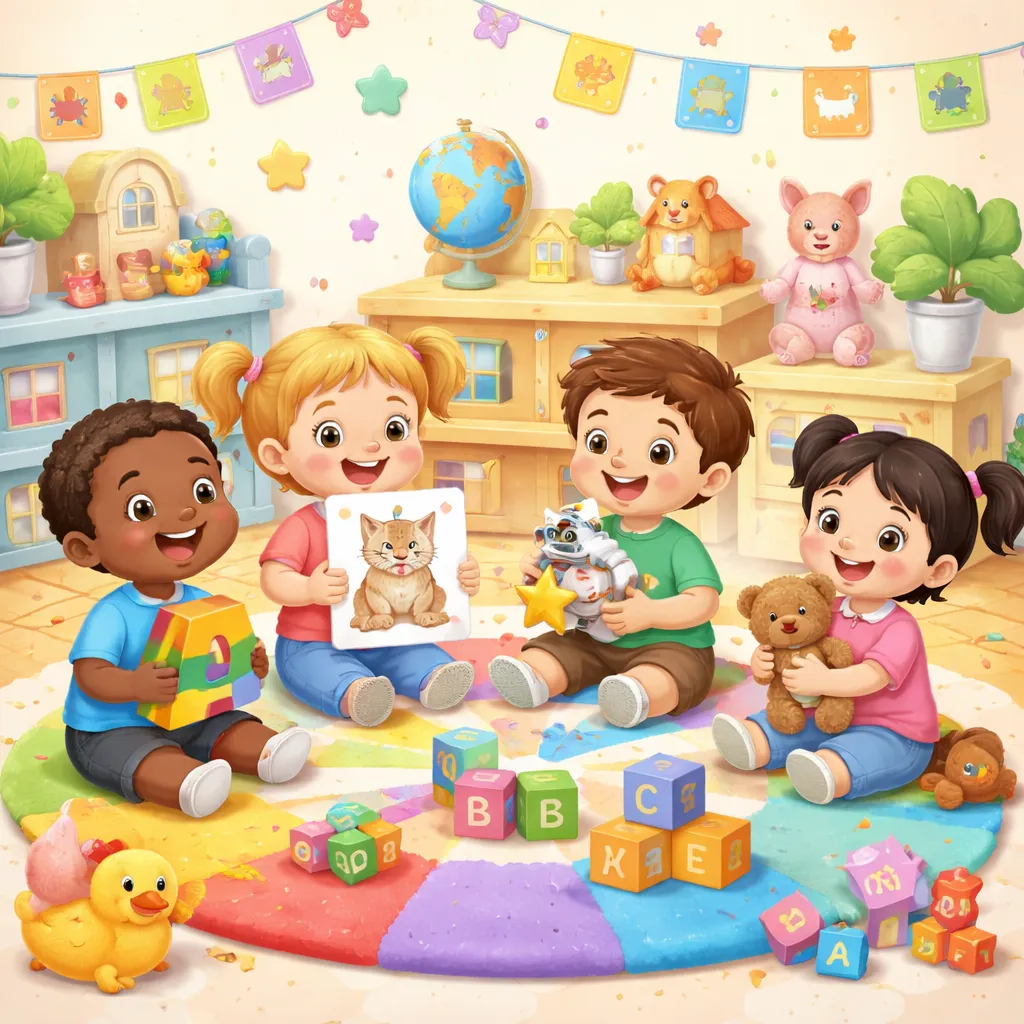
Leo is playing with his little cousin, Ana. She is four years old. She points to a red ball and says, "Red ball!" Leo is happy. He remembers when Ana was two. She only said "ball". Now she says two words together. Leo wonders, "What else will Ana learn? What are the steps for little kids learning English?" He asks his mom. Mom says, "There are special steps, like markers on a path. They are called milestones. Let's look at the English learning milestones for preschoolers. They show us what to expect and how to help." Leo wants to be a good helper. Let's learn about these milestones together.
Core Knowledge Explanation
What is a milestone? A milestone is a marker on a road. It tells you how far you have traveled. In learning, a milestone is a skill that shows progress. The English learning milestones for preschoolers are the skills that most children learn between ages three and five. Every child is different. Some learn faster. Some learn slower. That is okay. These milestones are a guide, not a race. They help parents and teachers know if a child is on the right path. They also help us know how to play and talk with preschoolers to help them learn.
Let's look at the milestones. We can group them into listening, speaking, and pre-reading. First, listening milestones. By age three, a child can follow simple two-step directions. "Pick up the toy and put it in the box." They understand common words for objects, actions, and people. They enjoy listening to short stories and songs. By age four, they can follow longer directions. They understand questions like "who", "what", and "where". They can listen to a longer story and remember parts of it. By age five, they can follow multi-step directions. They understand stories without pictures. They can answer questions about a story they heard. Listening is the foundation. You must understand before you can speak.
Second, speaking milestones. By age three, a child says their name. They use two or three words together. "My big truck." They ask simple questions. "Where dog?" They use many nouns and verbs. By age four, they speak in sentences of four or more words. "I want the blue car, please." They ask many questions. "Why is the sky blue?" They talk about what happened during the day. They use pronouns like "I", "you", "me". They use some plurals and past tense, but with mistakes. "I goed to the park." That is normal. By age five, they speak clearly. They use long, complex sentences. They tell a simple story in order. They use future tense. "I will go to school tomorrow." They can have a conversation. Their grammar is getting better, but they still make some mistakes. These speaking milestones show how a child's voice grows.
Third, pre-reading milestones. This is not reading yet. It is getting ready to read. By age three, a child likes books. They turn pages one at a time. They pretend to read. They know that books have stories. By age four, they recognize some letters, especially in their name. They know that letters make words. They enjoy rhyming games. "Cat, hat, mat." They can tell you the first sound in a word. "Ball starts with /b/." By age five, they know most letter names and sounds. They might write some letters or their name. They can match spoken words with written words in a book. They predict what will happen in a story. They know that we read from left to right and top to bottom. These are the English learning milestones for preschoolers for pre-reading. They are building the skills to become readers.
These milestones are like a map. They show the path of language growth. When you know the milestones, you can celebrate each step. You can also see if a child needs extra help. The most important thing is to make learning fun. Use play, songs, and stories. Do not pressure. Let the child learn at their own speed. Love and encouragement are the best teachers.
Fun Interactive Learning
You are a big kid. You can help a preschooler reach their milestones. Let's play some milestone games. First, the "Listening Detective" game. Give a two-step direction to a preschooler. "First, touch your nose, then jump two times." See if they can do it. This practices listening milestones. You can make it silly. "First, hug your teddy bear, then spin around." This is fun and builds listening skills.
Second, the "Story Builder" game. Sit with a preschooler and a picture book. Ask questions about the pictures. "What is the dog doing?" "How does the girl feel?" This helps with speaking milestones. Encourage them to use sentences. You can also start a story and let them finish it. "Once upon a time, a little cat wanted to..." Let them say the next part. This builds storytelling skills.
Third, the "Sound Hunt" game. This is for pre-reading milestones. Say, "I am thinking of something that starts with the /m/ sound. It is white and we drink it." The child guesses "milk". Then, it is their turn. This teaches beginning sounds. You can also play a rhyming matching game. Make cards with pictures: cat, hat, bat, sun, run, fun. Mix them up. Help the child find the rhyming pairs. This is a key pre-reading skill.
Another fun activity is "Milestone Celebration Chart". Make a chart with pictures for different milestones: a ear for listening, a mouth for speaking, a book for pre-reading. When you see the preschooler do something new, put a sticker on the chart. "You used a four-word sentence! Sticker!" This makes the child proud and shows progress. You are helping them achieve their English learning milestones for preschoolers in a joyful way.
Expanded Learning
Milestones are used all over the world. Doctors and teachers use them to check a child's development. In different countries, the milestones are similar, but the language is different. A preschooler in Japan has milestones for Japanese. A preschooler in France has milestones for French. The English learning milestones for preschoolers are part of a global understanding of child development.
Long ago, people did not have formal milestones. They just knew that children learned to talk by listening and copying. Today, we have research that shows us the typical order of skills. This helps us support children better. It also helps identify if a child might need extra help early. Early help can make a big difference. But remember, milestones are averages. Some children walk early, some talk early. The range is wide. The most important thing is progress.
Let's sing a milestone song. Sing this to the tune of "The Farmer in the Dell".
First we learn to listen, first we learn to listen! Hi-ho the derry-o, first we learn to listen! Then we learn to speak, then we learn to speak! Hi-ho the derry-o, then we learn to speak! Then we get ready to read, then we get ready to read! Hi-ho the derry-o, then we get ready to read! These are the milestones, these are the milestones! Hi-ho the derry-o, for preschoolers indeed!
Singing about the milestones makes them easy to remember.
What You Will Learn
You are learning about how little children grow. You are learning new words: milestone, progress, foundation, pronouns, complex, pre-reading, rhyming, development, average. You are learning about the areas of language: listening, speaking, pre-reading.
You are learning helpful sentences. You can say, "A four-year-old can usually speak in four-word sentences." You can explain, "Pre-reading milestones include knowing letter sounds." You can ask, "What milestone is my sister reaching?" You are using English to talk about child development. This is advanced and kind.
You are building important skills. You are building observation skills. You watch for new abilities in young children. You are building empathy. You understand the challenges of learning. You are building teaching skills. You know how to play games that help. You are building patience. You know that learning takes time.
You are forming a supportive habit. The habit of noticing and celebrating growth in others. You cheer for small steps. This habit makes you a great friend, sibling, and helper. Understanding the English learning milestones for preschoolers helps you be a guide on the learning journey.
Using What You Learned in Life
Use this knowledge at home. If you have a preschool sibling, you can be their milestone buddy. Play the listening and sound games. Read books with them. Celebrate when they say a new long sentence. You are making a difference. At school, you can tell your teacher about milestones. Your teacher might let you help with the preschool class. You can read a book to them and ask questions.
In the park, you can play language games with younger children. "I spy something green." This is fun and practices vocabulary. When you are with your family, talk about the milestones you reached when you were little. Look at your old books and drawings. This helps you see your own growth. You are now a big kid who can help little ones. That is a special role.
Remember, the goal is not to push. The goal is to provide a rich, loving environment where language can grow. When you know the English learning milestones for preschoolers, you can be part of that environment. You can be the sunshine and water for a young learner's growth.
Closing Encouragement
You are an amazing milestone watcher. You are a patient teacher. You are a kind and knowledgeable friend. I am so proud of you. Learning about these milestones shows you care about the growth of others.
Keep this knowledge in your heart. Use it to encourage every little learner you meet. Celebrate every new word, every new sentence, every new sound. You are helping build confident communicators.
Remember, every expert was once a beginner. You passed these milestones too. Now you can help others on the path. Keep learning, keep helping, keep shining. Great work, my wonderful milestone guide.