
Opening Introduction
The first day of winter break is here. Leo looks out the window. Snow is falling. It is beautiful. He is excited for two weeks of no school. But then he thinks, "What will I do every day? I do not want to forget my English." His sister Mia has an idea. She brings a big piece of paper and some markers. "Let's make a plan," she says. "Let's create a Winter break English activities list. It will be a list of fun things to do in English every day. It will be our adventure map for the holiday." Leo loves this idea. A list of fun, not work. Let's help them make the most amazing list.
Core Knowledge Explanation
What is a list? A list is a group of items. A shopping list has milk, bread, and apples. A to-do list has tasks. Our special list is for fun and learning. A Winter break English activities list is a collection of ideas. These ideas are games, projects, and adventures you can do during the winter holiday. They all help you use English in happy ways. Why do we need a list? Because sometimes we feel bored. We do not know what to do. A list gives us choices. It reminds us of all the fun things we can try. It makes sure we use our English time in a good way.
The best list has variety. Variety means many different kinds of things. Some activities are for inside, some for outside. Some are quiet, some are loud. Some are for you alone, some are for the whole family. This way, every day is different. You will not get bored. Your list can have categories. Categories are groups. Let's think of some categories for your Winter break English activities list.
First, the "Cozy Inside" category. These are activities for when it is cold and you want to stay warm. Reading a winter storybook in English. Writing a letter to Santa or a relative in English. Doing a winter puzzle or playing an English board game. Watching a short English cartoon about winter. These activities are calm and perfect for a snowy afternoon.
Second, the "Creative Craft" category. These activities use your hands and your English. Making paper snowflakes and describing their shapes. "My snowflake has six points. It is delicate." Building a model of a winter scene with blocks and labeling it. "This is the igloo. This is the sled." Drawing a comic strip about a snowman's adventure. You write the speech bubbles in English. This category is about making and talking.
Third, the "Kitchen Fun" category. Winter is for warm treats. Following a simple English recipe for cookies or hot chocolate. Reading the instructions out loud. "Add one cup of milk. Stir slowly." Setting the table and naming everything in English. "Spoon, plate, napkin, cup." This category is yummy and teaches you practical words.
Fourth, the "Active Outside" category. If you can go outside, do it. Building a snowman and giving it a name and a story. "This is Frosty. He loves to dance." Going on a winter nature walk. Point out things in English. "I see a bare tree. I see a red berry. I see a frozen puddle." Having a simple snowball target game. Call out the targets in English. "Aim for the blue sled!" This category gets you moving and using action words.
Fifth, the "Learning Adventure" category. This is for curious minds. Learning five new winter words each day. "Blizzard, icicle, hibernate, fireplace, mittens." Using a tablet or computer to explore a kid-friendly website about winter in another country. Watching a short documentary about penguins or polar bears in English. This category expands your mind and your vocabulary.
Your Winter break English activities list can have 20 ideas or 50 ideas. You choose. The goal is to have so much fun that you forget you are practicing English. You are just living a wonderful winter holiday, in English.
Fun Interactive Learning
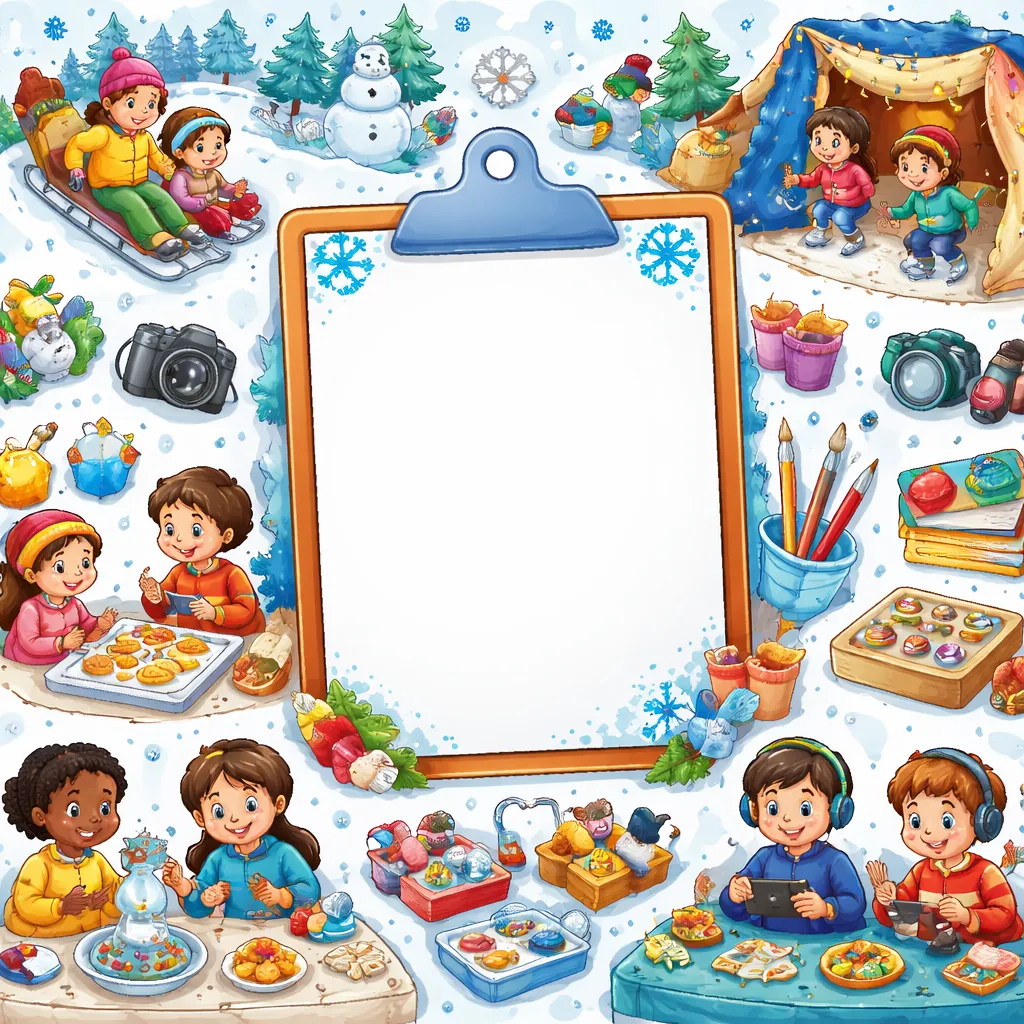
Let's make your list right now. Get a long piece of paper. Write "My Winter Break English Adventure List" at the top. Decorate the edges with snowflakes and stars. Now, let's brainstorm. Ask your family for ideas. Write every idea down. Do not worry about order. Just write. Here are some to start:
- Read 'The Snowy Day' by Ezra Jack Keats.
- Write and mail a postcard to a friend in English.
- Have a 'Winter Animals' drawing hour.
- Sing 'Frosty the Snowman' ten times.
- Build a blanket fort and read inside it.
- Play 'I Spy' looking out the window at winter things.
- Make a weather chart for the break. Record 'sunny', 'cloudy', or 'snowy'.
- Put on a puppet show with winter animal puppets.
- Listen to an English audiobook while building with LEGO.
- Have a 'No-Screen' afternoon and only speak English.
Now, cut your list into strips. Each strip has one activity. Put the strips in a jar or a hat. This is your "Idea Jar". Every morning, or when you are bored, pull out one strip. That is your activity. It is a surprise. This makes your Winter break English activities list into a game.
You can also make a "Winter Break Bingo" card. Draw a grid of five squares by five squares. In each square, write an activity. "Read a book", "Sing a song", "Do a craft", "Play outside", "Learn a new word". When you do an activity, color the square. Try to get five in a row. This is a fun way to see your progress. You are completing your Winter break English activities list with joy and a sense of achievement.
Expanded Learning
Winter holidays are celebrated differently around the world. In Australia, December is summer. They have Christmas at the beach. In Sweden, they have a festival of light called St. Lucia's Day. Your Winter break English activities list can include learning about these traditions. Read a book or watch a video about winter in another country. This teaches you that the world is big and full of different ways to celebrate the season.
Long ago, before electricity, winter was a time for storytelling by the fire. Families would stay inside and share tales. Your list continues this tradition. When you read a winter story aloud, you are a storyteller. When you write a story, you are a writer. You are part of a long chain of people sharing tales during the dark, cold months. This makes your English practice a historical and cultural activity too.
Let's make a winter break chant. Chants are fun and energetic. Say this with a clapping rhythm.
Winter break is here, time for fun, no fear! We've got our list, we will persist, in English loud and clear! We'll read and write, with all our might, from morning until night! We'll play and sing, of winter's thing, and make our learning bright!
You can say this chant when you start your daily activity. It gets you in the mood.
What You Will Learn
You are learning about planning and having fun with language. You are learning new words: variety, categories, cozy, creative, practical, documentary, tradition, historical, cultural. You are learning winter-specific vocabulary and activity verbs.
You are learning useful sentences for planning and doing. You can say, "Let's choose an activity from our list." You can ask, "What category should we do today?" You can explain, "This activity helps me learn new words." You are using English to organize your free time, which is a very grown-up skill.
You are building wonderful abilities. You are building initiative. You decide what to do and do it. You are building creativity. You come up with and execute fun ideas. You are building consistency. You practice English daily in a relaxed way. You are building family bonding skills. You involve others in your activities. You are building a love for seasonal traditions and global awareness.
You are forming a positive habit. The habit of using leisure time productively and joyfully. You learn that breaks are not just for doing nothing. They are for doing different, fun things that also help you grow. Following a Winter break English activities list teaches you to be the director of your own fun and learning, a skill that will make every holiday and weekend richer.
Using What You Learned in Life
Use your list every day of the break. When you wake up, pull an idea from the jar. Do that activity. Talk about it with your family at dinner. "Today, I built a snow fort and I called it 'Ice Palace'." This shares your learning. If you have friends over, show them your list and let them choose an activity. You are the activity leader.
After the break, save your list. You can use it next year. You can add new ideas. It becomes a family tradition. You can also share your list with your teacher when school starts. Your teacher will be so impressed with all the English you used. You can even make lists for other breaks. A "Spring break English activities list" with gardening and rain poems. You have learned a system for lifelong fun learning.
Remember, the goal is connection and joy. If an activity is not fun, it is okay to stop and choose another. The list is your servant, not your boss. The most important thing is that you are talking, reading, writing, and listening in English because you want to, not because you have to. Your Winter break English activities list is a tool for creating a holiday filled with warmth, laughter, and words.
Closing Encouragement
You have created something amazing. You are a holiday planner. You are a fun architect. You are a joyful English user. I am so proud of you. Making and using a winter break activities list shows you are smart and proactive about your learning and your fun.
Keep your list. Enjoy every activity. Savor the cozy moments and the active adventures. You are making memories and building your English brain at the same time.
Remember, the best learning happens when we are happy. Your list is a recipe for a happy, English-filled holiday. You are creative, capable, and full of wonderful ideas. Great work, my fantastic winter break director. Have the most wonderful holiday.