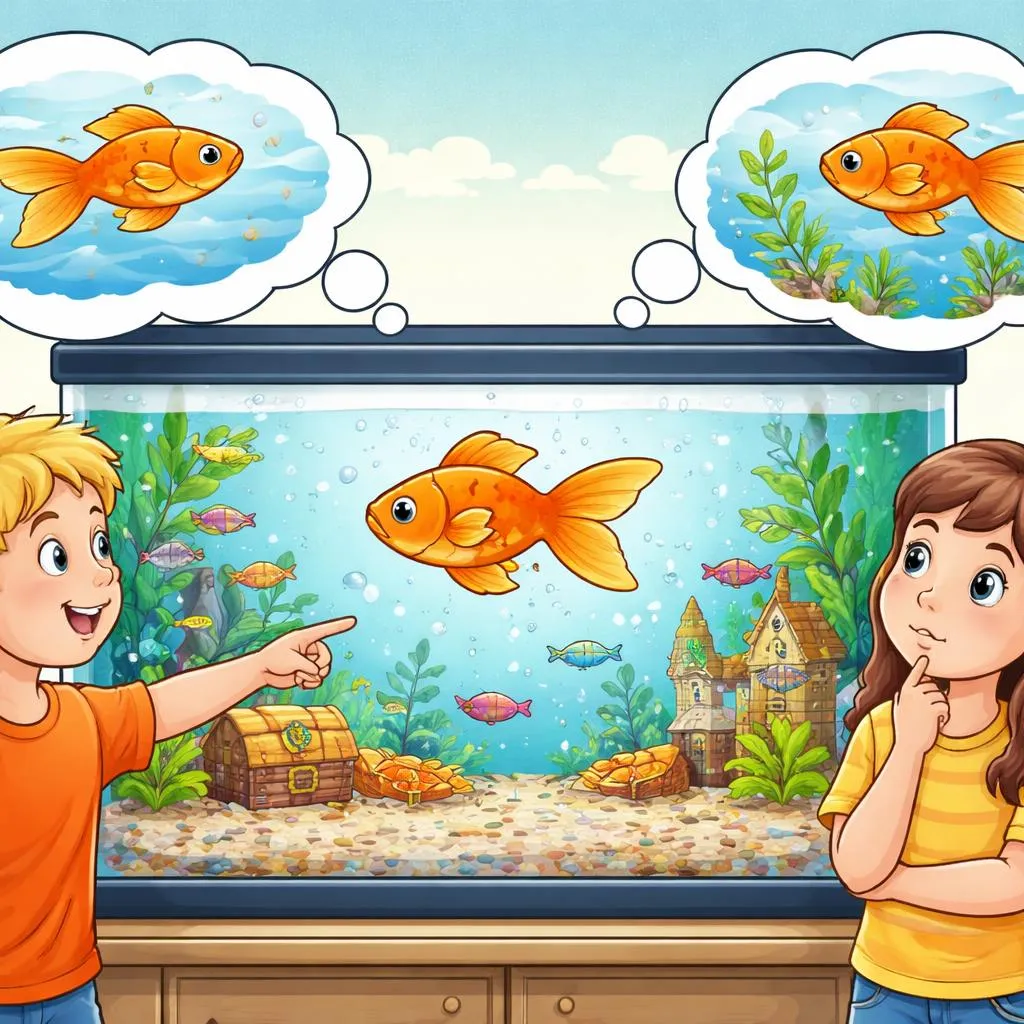

What Do These Expressions Mean? “It's swimming” and “it's in the water” both describe something that is in a body of water. They tell someone that a creature or object is surrounded by water and moving or staying. Children say these words about fish, ducks, boats, or toys in a bath. Both describe aquatics.
“It's swimming” means the creature is moving through the water using its body. A child says it when a fish darts across the tank. It focuses on the action.
“It's in the water” means the object is located in water, whether moving or still. A child says it when a rubber duck floats. It focuses on location.
These expressions seem similar. Both say “in the water.” Both describe aquatics. But one is about movement while one is about position.
What's the Difference? One is about active movement. One is about location. “It's swimming” means the creature is using its fins, legs, or body to propel itself through water. A fish, a duck, a child doing laps. It implies action.
“It's in the water” means the creature or object is simply located in the water. It could be still, floating, or just present. A boat, a leaf, a piece of ice. It is about location.
Think of a fish moving fast. “It's swimming” is right. A rubber duck floating still. “It's in the water” fits better. One is for action. One is for position.
One is for creatures that swim. The other is for any object in water. “Swimming” for a fish. “In the water” for a toy boat. Use the first for action. Use the second for location.
Also, “swimming” can be used for people. “In the water” is neutral.
When Do We Use Each One? Use “it's swimming” for active movement in water. Use it for fish, frogs, ducks, or people swimming. Use it when the creature is propelling itself. It fits action talk.
Examples at home: “Look, the fish is swimming fast.” “The duck is swimming in the pond.” “I am swimming in the pool.”
Use “it's in the water” for any object or creature located in water. Use it for boats, toys, floaties, or still creatures. Use it for location. It fits position talk.
Examples for location: “The toy boat is in the water.” “There is a leaf in the water.” “The frog is in the water, not moving.”
Children can use both. “Swimming” for action. “In the water” for location. Both describe the water world.
Example Sentences for Kids It's swimming: “It's swimming away from me.” “The fish is swimming in circles.” “Look! The turtle is swimming.”
It's in the water: “The ball is in the water.” “There’s a stick in the water.” “The boat is in the water, floating.”
Notice “swimming” is for active movement. “In the water” is for location. Children learn both. One for action. One for place.
Parents can use both. A fish: “it's swimming.” A floating stick: “it's in the water.” Children learn different water descriptions.
Common Mistakes to Avoid Some children say “swimming” for a floating, still boat. A boat is not swimming; it is floating. Say “floating” or “in the water.” Save “swimming” for living things that move themselves.
Wrong: “The boat is swimming.” Better: “The boat is in the water.”
Another mistake: saying “in the water” for a fish that is clearly moving. That is correct, but “swimming” is more precise. If it is swimming, say “swimming.” If it is still, say “in the water.”
Wrong: “The fish is in the water.” (true but vague) Better: “The fish is swimming.”
Some learners forget that “swimming” can be used for people. You do not say “the person is in the water” when they are doing laps. Say “they are swimming.” Use the action word for action.
Also avoid saying “in the water” when you mean “in the pool.” Be specific if needed. “The toy is in the water” is fine, but “in the pool” is clearer.
Easy Memory Tips Think of “swimming” as fins moving. Fish tail swishes. Action. For movement.
Think of “in the water” as a floating toy. Still. Location. For position.
Another trick: remember the life form. “Swimming” = living creature moving. “In the water” = anything located there. Living moving gets “swimming.” Anything located gets “in the water.”
Parents can say: “Swim for fins. Water for spans.”
Practice at home. Fish: “it's swimming.” Floating cork: “it's in the water.”
Quick Practice Time Let us try a small exercise. Choose the better phrase for each situation.
A child watches a frog kicking its legs across a pond. a) “It's in the water.” b) “It's swimming.”
A child sees a leaf floating still on top of a puddle. a) “It's swimming.” b) “It's in the water.”
Answers: 1 – b. A frog moving its legs actively fits the action “swimming.” 2 – b. A still leaf on a puddle fits the location “in the water.”
Fill in the blank: “When I see a dolphin moving through the ocean, I say ______.” (“It's swimming” is the action-focused, active-movement choice.)
One more: “When I see a piece of ice floating in my drink, I say it's ______.” (“In the water” fits the location-focused, still-or-floating description.)
Water is full of life and things. “It's swimming” celebrates movement. “It's in the water” notes location. Teach your child both. A child who learns both sees the underwater world with clarity.
Wrap-up “It's swimming” describes active, self-propelled movement through water, like a fish, frog, or swimmer. “It's in the water” describes the location of any object or creature surrounded by water, whether moving or still. Use “it's swimming” for fish, ducks, and people doing laps. Use “it's in the water” for boats, toys, leaves, and ice. Both phrases describe things in the water. A child who learns both can tell you if something is swimming or simply soaking.