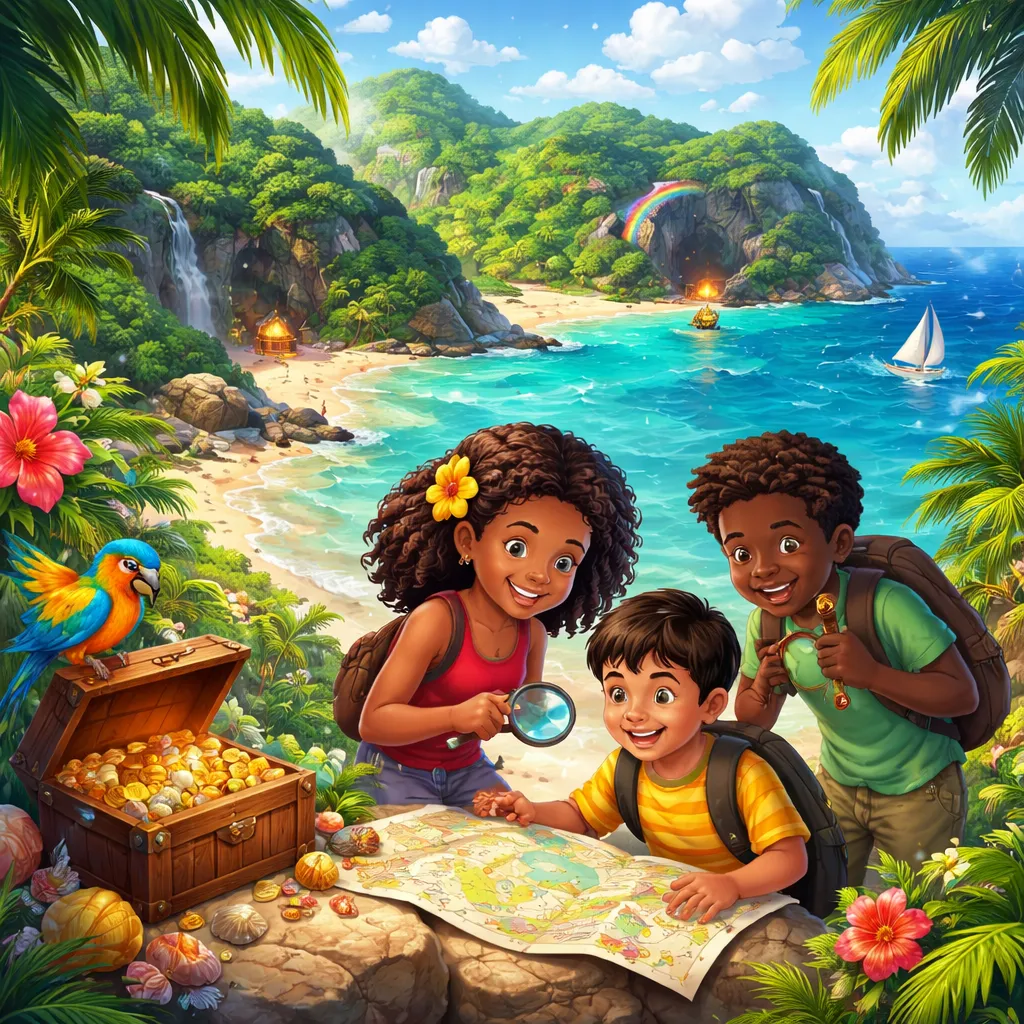

Introduction to Saint Vincent and the Grenadines Saint Vincent and the Grenadines is a country made of many islands. One big island gives the country its first name. Thirty-two small islands give the country its second name. Children there learn English in school and at home. They also hear a special language called Vincentian Creole. Learning reading: Saint Vincent and the Grenadines offers a rich mix of words and sounds. Kids on these islands read about ships and pirates. They also tell stories about black sand beaches and sea turtles. Reading about this country feels like finding hidden treasure. Your child can explore this island nation from your living room. Every new word becomes a shiny coin. Let us begin our treasure hunt.
Where Is Saint Vincent and the Grenadines? Saint Vincent and the Grenadines sits in the Caribbean Sea. It lies north of Grenada. It lies south of Saint Lucia. The Atlantic Ocean touches the east side. The Caribbean Sea touches the west side. The capital city is Kingstown. Kingstown sits on the main island called Saint Vincent. The whole country covers only 389 square kilometers. That is very small. But the country has many islands. Only nine of the thirty-two islands have people living on them. The other islands remain empty. You can only reach them by boat. Learning reading: Saint Vincent and the Grenadines becomes clear when you look at a map. First find the chain of small islands in the Caribbean. Then look for a big island with tiny dots around it. The big island is Saint Vincent. The dots are the Grenadines. Point to the big island. Point to a tiny dot. Say the names together. “Saint Vin-cent.” “Gren-a-dines.” You just found the treasure map.
Interesting Facts About Saint Vincent and the Grenadines This country has wonderful facts. First, the main island has an active volcano. It is called La Soufrière. The volcano last erupted in 2021. Second, the country grows arrowroot. Arrowroot is a plant. People use it to make cookies and pudding. Third, the beaches have black sand. The volcano made the sand black. Fourth, the Grenadines include a famous island called Mustique. Rich people build houses there. Fifth, sea turtles lay eggs on the beaches. You can watch baby turtles run to the sea. Sixth, the country has a botanical garden. It is the oldest botanical garden in the Western Hemisphere. People planted it in 1765. Learning reading: Saint Vincent and the Grenadines teaches words like “volcano,” “arrowroot,” and “turtle.” Each fact gives your child a new image. Imagine black sand between your toes. Imagine a turtle digging a hole for her eggs. Imagine a garden that is over 250 years old. These images help words stay in your memory. Parents can ask: “Would you climb an active volcano?” “What color is the sand?” Your child will love thinking about baby turtles running to the ocean.
Key Vocabulary About Saint Vincent and the Grenadines Let us learn six important words.
First is “volcano.” A volcano is a mountain that can erupt hot ash. La Soufrière is an active volcano.
Second is “arrowroot.” Arrowroot is a plant with a starchy root. People make food from it.
Third is “black sand.” Black sand comes from volcanic rock. The beaches have black sand.
Fourth is “turtle.” A turtle is a slow animal with a hard shell. Sea turtles visit the beaches.
Fifth is “botanical garden.” A botanical garden is a place where people grow many plants for display.
Sixth is “island.” An island is land with water all around. The Grenadines are small islands.
Learning reading: Saint Vincent and the Grenadines gives you these words. Make a sound for each word. For volcano, make a rumbling sound. “Rumble rumble pop!” For arrowroot, pretend to dig in the ground. For black sand, rub your hands together to make a soft sound. For turtle, move your hands slowly like flippers. For botanical garden, take a deep breath like you smell flowers. For island, make a circle with your arms. Say each word while you make the sound or motion. Your child will remember the word because their body helps their brain. Play this game at the dinner table. Play it in the car. Soon these words will feel natural and fun.
The Famous People About Saint Vincent and the Grenadines Several famous people come from this island nation. One is Ralph Gonsalves. He became the prime minister and served for many years. People call him “Comrade Ralph.” Another famous person is Shontelle Layne. She sings pop music. Her song “Impossible” played on radios all over the world. There is also a writer named H. Nigel Thomas. He writes books about life in the Caribbean. Another important person is Ezra D’Costa. He makes paintings and sculptures. His art hangs in museums. These people show that small islands can produce big talent. Learning reading: Saint Vincent and the Grenadines becomes inspiring through these names. Say each name. “Ralph Gon-sal-ves.” “Shon-telle Layne.” “H. Ni-gel Thom-as.” “Ez-ra D’Cos-ta.” Talk about what each person did. “What does Shontelle do?” “She sings songs.” “What does Ezra make?” “He makes art.” “What does Ralph do?” “He leads the country.” Your child can imagine becoming a singer or a leader or an artist. These famous people prove that anyone can achieve great things.
Simple Sentences for Reading Practice Here are easy sentences about Saint Vincent and the Grenadines. Read each one aloud.
Saint Vincent and the Grenadines has one big island and many small ones.
The capital city Kingstown sits on the island of Saint Vincent.
La Soufrière is an active volcano that can erupt hot ash.
Farmers grow arrowroot plants for food and medicine.
The beaches have black sand from old volcanic eruptions.
Sea turtles come to the shores to lay their eggs.
The botanical garden in Kingstown is very old and beautiful.
Mustique is a small island where famous people visit.
Shontelle Layne sings pop music for listeners around the world.
People speak English and Vincentian Creole on the islands.
Learning reading: Saint Vincent and the Grenadines makes these sentences fun to practice. Read a sentence. Then ask your child to close their eyes and see it. For sentence three, see a mountain with smoke. For sentence five, see black sand between your toes. For sentence six, see a tiny turtle running. After the picture is clear, read the sentence again. You can also turn the sentences into a game. Write each sentence on a separate piece of paper. Fold the papers. Put them in a bowl. Take turns picking a paper and reading the sentence. If you read it without mistakes, you keep the paper. The person with more papers wins. But everyone wins because everyone reads.
Short Reading Passage About Saint Vincent and the Grenadines Read this passage together. It uses all the words we learned.
Saint Vincent and the Grenadines is a country of many islands. One large island gives the country its first name. Thirty-two small islands give the country its second name. Only nine of those small islands have people. The capital Kingstown sits on the big island. A tall volcano named La Soufrière rises above the city. It last erupted in 2021. People watched the dark ash fill the sky. Farmers grow arrowroot in the rich soil. They sell it to make cookies and pudding. The beaches have black sand. The sand feels soft and warm. Sea turtles swim from far away to lay eggs on these black beaches. Baby turtles hatch and run to the water. The botanical garden grows many flowers and trees. It opened in 1765. That was before the United States became a country. Small islands like Mustique have white sand beaches. Famous singers and artists visit them. People from Saint Vincent and the Grenadines become famous too. Shontelle Layne sings pop songs. Ralph Gonsalves leads the country. Learning reading: Saint Vincent and the Grenadines invites you to explore. You can see a volcano, black sand, and baby turtles. You can taste arrowroot cookies. You can walk through a very old garden. Now imagine you are on a boat. You sail from the big island to a tiny empty island. What do you see on the shore? What do you hear?
This passage has 190 words. Read it slowly. Stop after each sentence. Ask your child to draw one thing they heard. Maybe they draw La Soufrière with smoke. Maybe they draw a baby turtle. Maybe they draw a boat. After the drawing, read the passage again. This time, your child points to their drawing when they hear that word. This connects the written word to the picture. It builds strong reading skills. Do not rush. Take three days to enjoy this passage. Read it once each day. On the third day, your child will know some sentences by heart. That is a wonderful feeling.
Fun Questions About Saint Vincent and the Grenadines Use these questions to talk about the islands.
Would you rather live on the big island or a tiny empty island? Why?
What would you pack for a trip to an island with black sand?
Would you climb an active volcano like La Soufrière? Why or why not?
Have you ever eaten arrowroot cookies? What did they taste like?
How does black sand feel different from yellow sand?
What would you name a baby sea turtle?
Why do you think the botanical garden has survived for over 250 years?
If you visited Mustique, what famous person would you hope to see?
Can you make a song like Shontelle Layne? Sing one line now.
What animal would you want to protect on these islands? Turtles? Birds? Fish?
Learning reading: Saint Vincent and the Grenadines turns every question into a game. Parents answer first. “I would pack a hat and a camera to remember the black sand.” Then your child answers. Let them be silly. If they say “I would pack a pet dinosaur,” say “That dinosaur would love the warm beach!” The goal is to keep talking. Keep using words. Keep laughing. You can also act out the answers. Pretend to climb a volcano. Pretend to swim with a sea turtle. Pretend to plant a flower in the botanical garden. These actions make the words real. Ask one question each night before bed. Your child will fall asleep thinking about black sand and baby turtles. That is a good dream.
Tips for Learning English with This Topic Now let us bring Saint Vincent and the Grenadines into your home. First, make black sand for a craft. Mix salt with a little black paint. Let it dry. Put it in a small box. Say “black sand” as you touch it. Second, cook something with arrowroot. Look for arrowroot cookies at the store. Or add arrowroot powder to pudding. Say “arrowroot” when you eat it. Third, make a volcano with paper mache. Paint it brown. Add red tissue paper for lava. Say “erupt” when you show it. Fourth, draw a sea turtle. Give it a name. Write the name on your drawing. “My turtle is named LUCKY.” Fifth, pretend your backyard is a botanical garden. Take a walk. Name three plants you see. Say “botanical garden” when you finish. Sixth, listen to Shontelle’s song “Impossible.” Sing the chorus together. Say “singer” and “song” as you listen. Learning reading: Saint Vincent and the Grenadines gives you these six tips. Do one tip each day. Do not worry about doing them perfectly. Just try. If you cannot find arrowroot, use cornstarch. If you cannot make black sand, use brown sugar. The point is not the craft. The point is the words. The point is the time together. Learning English works best when it feels like play. So play.
Your child will remember Saint Vincent and the Grenadines. They will remember the volcano and the black sand and the baby turtles. But most of all, they will remember reading with you. That shared time builds more than language. It builds a bond. So keep this article on your phone. Keep it on your table. Read one sentence today. Ask one question tomorrow. Try one tip this weekend. Saint Vincent and the Grenadines is not a faraway place. It is right here every time you say a new word. Say one now. “Volcano.” Good job. Say another. “Turtle.” Wonderful. You are already on your treasure hunt. Keep going.