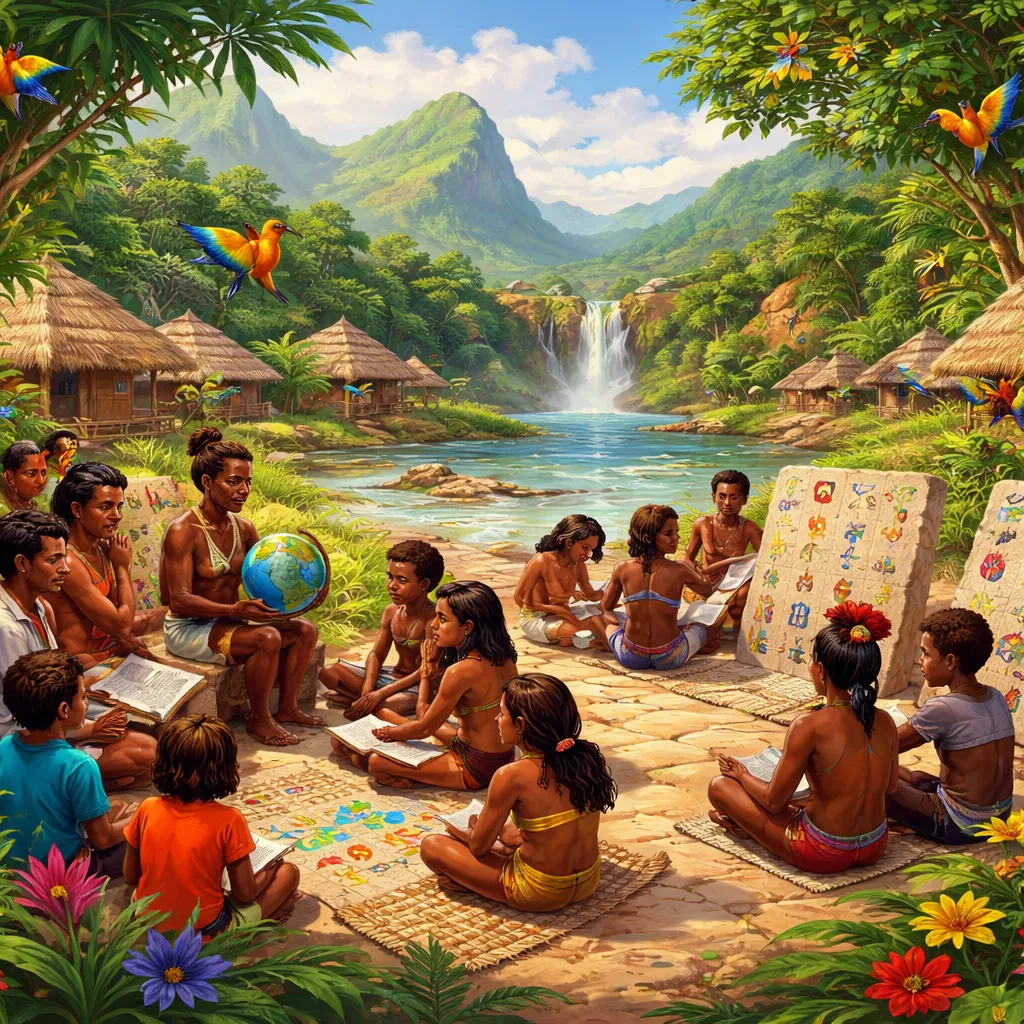

Introduction to Papua New Guinea
Language learning transports us to one of the most linguistically diverse places on Earth. Today we explore a country where over eight hundred languages are spoken. This nation occupies the eastern half of the world's second largest island. Children will discover birds with feathers so beautiful they seem to come from another world. They will learn about cultures that have lived in the highlands for thousands of years. Exploring Papua New Guinea builds reading skills while revealing a land of extraordinary diversity. Every fact uncovers a new language. Every word invites young readers to imagine this Pacific nation.
Where Is Papua New Guinea?
Papua New Guinea lies in the southwestern Pacific Ocean. It occupies the eastern half of the island of New Guinea. The country shares the island with Indonesia to the west. The country includes over six hundred smaller islands. The capital city is Port Moresby. Port Moresby sits on the southern coast. The country covers over one hundred seventy-eight thousand square miles. It ranks as the third largest island country in the world. The island rises from coastal plains to high mountains. The central highlands run the length of the island. Finding Papua New Guinea on a map shows a large island north of Australia. Its rugged terrain created the isolation that led to so many languages.
Interesting Facts About Papua New Guinea
Papua New Guinea offers countless remarkable facts for young learners. It holds the highest linguistic diversity of any country. Over eight hundred languages are spoken here. That accounts for about twelve percent of all languages in the world. Another interesting fact involves the Bird of Paradise. This family of birds lives only in New Guinea and surrounding islands. Males grow elaborate feathers in bright colors. They perform intricate dances to attract mates.
Papua New Guinea also has unique traditions. Some highland tribes practiced ceremonial body painting. They used clay, charcoal, and plant pigments to create elaborate designs. Another fun fact involves the island's geography. The central highlands rise over fifteen thousand feet. Some peaks hold small glaciers near the equator. The country also has active volcanoes. The Rabaul volcano erupted dramatically in 1994, burying the town in ash.
The country also has a unique animal. The tree kangaroo lives in the rainforests. Unlike their ground-dwelling relatives, these kangaroos climb trees. Another interesting fact involves coffee. Papua New Guinea produces high-quality coffee beans. Small farmers grow coffee in the highlands. The country also has a unique shell money tradition. In some areas, people still use shells as currency. These facts show children a country of incredible diversity in languages, cultures, and wildlife.
Key Vocabulary About Papua New Guinea
Let us build vocabulary for this Pacific nation. These words help children describe what they learn.
Indigenous: native to a particular place.
Bird of Paradise: a bird known for its colorful feathers.
Highlands: mountainous areas with high elevation.
Tribal: relating to a group of people with shared culture.
Rainforest: a dense forest with high rainfall.
Shell Money: shells used as currency.
Volcano: a mountain that erupts with lava and ash. Introduce these words with pictures and stories. Show a Bird of Paradise with its elaborate feathers. Show traditional body painting designs. Let children say each word aloud. These vocabulary words give children the language to explore Papua New Guinea's cultures and wildlife.
Simple Sentences for Reading Practice
Short sentences help new readers build confidence. Use these sentences about Papua New Guinea for practice.
Papua New Guinea is a country in the Pacific Ocean.
The capital city is Port Moresby.
Over eight hundred languages are spoken here.
Birds of Paradise live only in this region.
The central highlands have tall mountains.
Some tribes practice traditional body painting.
Tree kangaroos climb in the rainforest. Read each sentence together. Let children point to the words. Encourage them to repeat after you. Use pictures to show each fact. These simple sentences prepare young readers for longer passages.
Short Reading Passage About Papua New Guinea
Here is a short passage for children to read together.
“Papua New Guinea occupies the eastern half of the island of New Guinea. Rugged mountains run through the center. Rainforests cover the slopes. Over eight hundred languages echo through these valleys. Each language connects to a different culture. In the highlands, tribes perform ceremonies with body paint. Men decorate themselves with clay and feathers. They sing and dance to honor their ancestors. In the forests, Birds of Paradise display their feathers. Males puff out their chests. They shake their golden plumes to attract a mate. Tree kangaroos move slowly through the branches. They use their strong tails for balance. The capital, Port Moresby, sits on the southern coast. From the city, ships sail to islands with active volcanoes. Papua New Guinea shows how nature and culture create endless variety.”
Read this passage slowly together. Pause to talk about each idea. Ask children to find vocabulary words in the text. This activity builds reading fluency and deepens understanding.
Fun Questions About Papua New Guinea
Questions make reading interactive and engaging. Use these to start conversations with young learners.
What is the capital city of Papua New Guinea?
How many languages are spoken in Papua New Guinea?
What bird is known for its colorful feathers?
What animal climbs trees in the rainforest?
What are the highlands?
What do some tribes use for ceremonial decoration? Let children answer in complete sentences. Encourage them to use new vocabulary. Ask them to imagine seeing a Bird of Paradise dance. What colors would they see? Creative questions make the topic personal and exciting.
Tips for Learning English with This Topic
Use Papua New Guinea to create rich English learning experiences. Start with a map activity. Let children find Papua New Guinea north of Australia. Point out the rugged mountains and the many islands. Discuss how geography created such language diversity.
Next, introduce the vocabulary through a hands-on activity. Create a simple Bird of Paradise using colorful feathers, paper, and craft materials. Let children design their own birds with bright colors. For body painting, use face paint or markers to create patterns on paper. Talk about how different tribes use patterns to tell stories. Use the words "Bird of Paradise," "tribal," and "highlands" during the activity.
Read the passage aloud with wonder and respect for the diversity. Let your voice reflect the many languages and the beauty of the birds. After reading, let children draw a scene from Papua New Guinea. One child might draw a Bird of Paradise displaying its feathers. Another might draw a traditional ceremony with body paint and dancing. Let them label their drawings with vocabulary words. Add green for the rainforest and bright colors for the feathers.
Incorporate a language and culture connection. Talk about why so many languages developed in one place. Discuss how mountains and isolation created separate language groups. Ask children about languages spoken in their own family or community.
Use music and movement to enhance the experience. Listen to traditional music from Papua New Guinea with drums and bamboo instruments. Let children move like Birds of Paradise dancing. Pretend to climb trees like tree kangaroos. Physical activity reinforces learning in joyful ways.
Encourage children to share their knowledge. Let them tell a family member about the eight hundred languages of Papua New Guinea. They can describe the Birds of Paradise. Teaching others builds confidence and deepens understanding.
Connect Papua New Guinea to your child's world. Ask, “How many languages do we hear in our community?” Compare to Papua New Guinea's diversity. Ask about birds in your area. Compare them to Birds of Paradise. These connections help children see that language learning reading is about understanding incredible diversity. By exploring Papua New Guinea together, you give children a rich experience. They learn new words, discover a land of many languages, and grow their love for reading. This Pacific nation becomes a meaningful part of their learning journey.