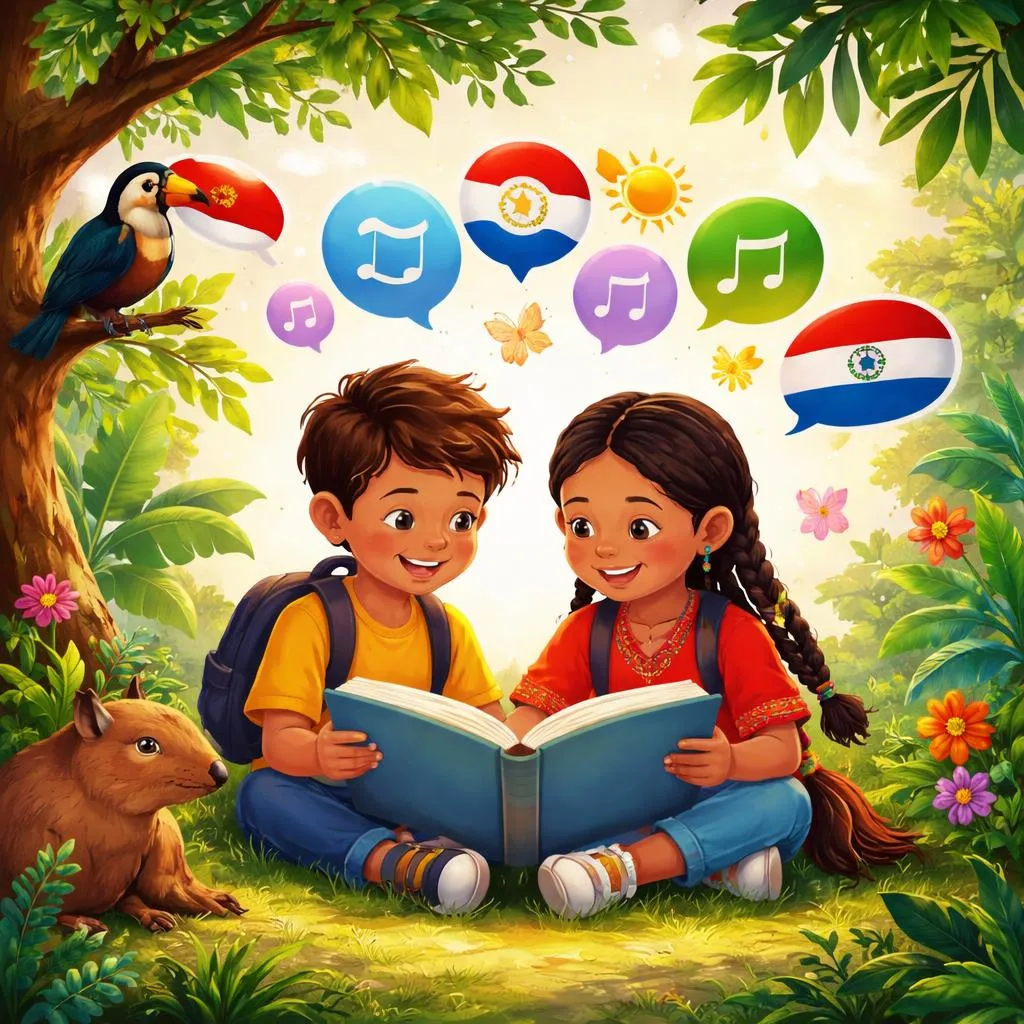

Introduction to Paraguay
Language learning transports us to a landlocked country in the heart of South America. Today we explore a nation where two languages live side by side. This country holds one of the world's largest hydroelectric dams. Children will discover a unique language spoken by most people here. They will learn about a traditional drink shared among friends and family. Exploring Paraguay builds reading skills while revealing a country of cultural pride and natural power. Every fact uncovers something unique. Every word invites young readers to imagine this South American heartland.
Where Is Paraguay?
Paraguay lies in south-central South America. It sits landlocked, with no coastline. The country shares borders with Argentina to the south and southwest, Brazil to the east and northeast, and Bolivia to the northwest. The capital city is Asunción. Asunción sits on the eastern bank of the Paraguay River. The country covers over one hundred fifty-seven thousand square miles. The Paraguay River divides the country into two regions. The eastern region holds rolling hills and forests. The western region, called the Chaco, holds dry forests and grasslands. Finding Paraguay on a map shows a country at the heart of South America. Its rivers provide access to the Atlantic Ocean through the Paraná River.
Interesting Facts About Paraguay
Paraguay offers many remarkable facts for young learners. It is one of only two countries in South America where an indigenous language, Guaraní, is an official language alongside Spanish. Most Paraguayans speak both languages fluently. Another interesting fact involves yerba mate. Paraguayans drink tereré, a cold version of mate. People share the drink from a gourd passed among friends. It represents friendship and community.
Paraguay also holds the Itaipu Dam, one of the largest hydroelectric dams in the world. The dam sits on the Paraná River at the border with Brazil. It supplies electricity to both countries. Another fun fact involves the Jesuit Missions. In the 1600s and 1700s, Jesuit priests established missions in Paraguay. These missions became self-sufficient communities with churches, schools, and workshops. Ruins of these missions still stand today.
The country also has a unique musical tradition. Paraguayan harp music features intricate melodies. The harp serves as the national instrument. Another interesting fact involves the Chaco region. This vast area covers about sixty percent of Paraguay but holds only two percent of the population. It shelters jaguars, giant anteaters, and hundreds of bird species. Paraguay also has a unique national flower. The blue jasmine, or mburucuyá, blooms with delicate blue and white petals. These facts show children a country of language pride, shared traditions, and natural power.
Key Vocabulary About Paraguay
Let us build vocabulary for this South American nation. These words help children describe what they learn.
Guaraní: an indigenous language spoken widely in Paraguay.
Yerba Mate: a plant whose leaves are used to make a traditional drink.
Tereré: a cold yerba mate drink shared among friends.
Hydroelectric: relating to electricity generated by water power.
Jesuit: a member of a Catholic religious order.
Chaco: a vast region of forests and grasslands in western Paraguay.
Harp: a stringed musical instrument. Introduce these words with pictures and stories. Show a gourd and bombilla used for tereré. Show the Itaipu Dam with its massive structure. Let children say each word aloud. These vocabulary words give children the language to explore Paraguay's culture and achievements.
Simple Sentences for Reading Practice
Short sentences help new readers build confidence. Use these sentences about Paraguay for practice.
Paraguay is a landlocked country in South America.
The capital city is Asunción.
Paraguay has two official languages: Spanish and Guaraní.
People drink tereré from a gourd shared with friends.
The Itaipu Dam is one of the largest in the world.
Jesuit missions built churches and communities long ago.
The harp is the national instrument. Read each sentence together. Let children point to the words. Encourage them to repeat after you. Use pictures to show each fact. These simple sentences prepare young readers for longer passages.
Short Reading Passage About Paraguay
Here is a short passage for children to read together.
“Paraguay sits at the heart of South America. The Paraguay River flows through the center of the country. The capital, Asunción, spreads along its eastern bank. People here speak two languages. They speak Spanish and Guaraní. Many families mix both languages in daily conversation. In the afternoons, friends gather to share tereré. They fill a gourd with yerba mate leaves and pour cold water. The gourd passes from hand to hand. Sharing tereré builds friendship. In the east, the Paraná River forms a border with Brazil. The Itaipu Dam stretches across the river. This massive structure generates electricity for millions of people. In the western Chaco, jaguars roam through dry forests. Giant anteaters dig for ants. In the south, the ruins of Jesuit missions stand in quiet fields. Stone churches with carved columns rise above the grass. Paraguay holds language, friendship, and power in its land.”
Read this passage slowly together. Pause to talk about each idea. Ask children to find vocabulary words in the text. This activity builds reading fluency and deepens understanding.
Fun Questions About Paraguay
Questions make reading interactive and engaging. Use these to start conversations with young learners.
What is the capital city of Paraguay?
What two languages are official in Paraguay?
What drink do friends share from a gourd?
What is one of the largest hydroelectric dams in the world?
What region covers much of western Paraguay?
What is the national instrument of Paraguay? Let children answer in complete sentences. Encourage them to use new vocabulary. Ask them to imagine sharing tereré with friends. What would they talk about? Creative questions make the topic personal and exciting.
Tips for Learning English with This Topic
Use Paraguay to create rich English learning experiences. Start with a map activity. Let children find Paraguay in South America. Point out its landlocked location and the Paraguay and Paraná Rivers. Discuss how rivers provide access to the ocean.
Next, introduce the vocabulary through a hands-on activity. Create a simple tereré sharing activity using cups or small gourds. Let children practice passing the gourd and sharing conversation. For the Itaipu Dam, build a model using blocks or clay to show how water generates electricity. Use the words "tereré," "Guaraní," and "hydroelectric" during the activity.
Read the passage aloud with warmth and pride. Let your voice reflect the friendship of sharing tereré and the power of the dam. After reading, let children draw a scene from Paraguay. One child might draw friends sharing tereré in a garden. Another might draw the Itaipu Dam with water flowing through. Let them label their drawings with vocabulary words. Add green for the land and blue for the rivers.
Incorporate a language and culture connection. Talk about why a country might have two official languages. Discuss how sharing food and drink builds community. Ask children about traditions in their own family.
Use music and movement to enhance the experience. Listen to Paraguayan harp music with its flowing melodies. Let children pretend to play the harp. Pretend to pass a gourd of tereré among friends. Physical activity reinforces learning in joyful ways.
Encourage children to share their knowledge. Let them tell a family member about the two languages of Paraguay. They can explain what tereré is and how it is shared. Teaching others builds confidence and deepens understanding.
Connect Paraguay to your child's world. Ask, “What languages do we hear in our community?” Compare to Spanish and Guaraní. Ask about drinks your family shares. Compare to tereré. These connections help children see that language learning reading is about understanding different traditions. By exploring Paraguay together, you give children a rich experience. They learn new words, discover a land of two languages, and grow their love for reading. This South American nation becomes a meaningful part of their learning journey.