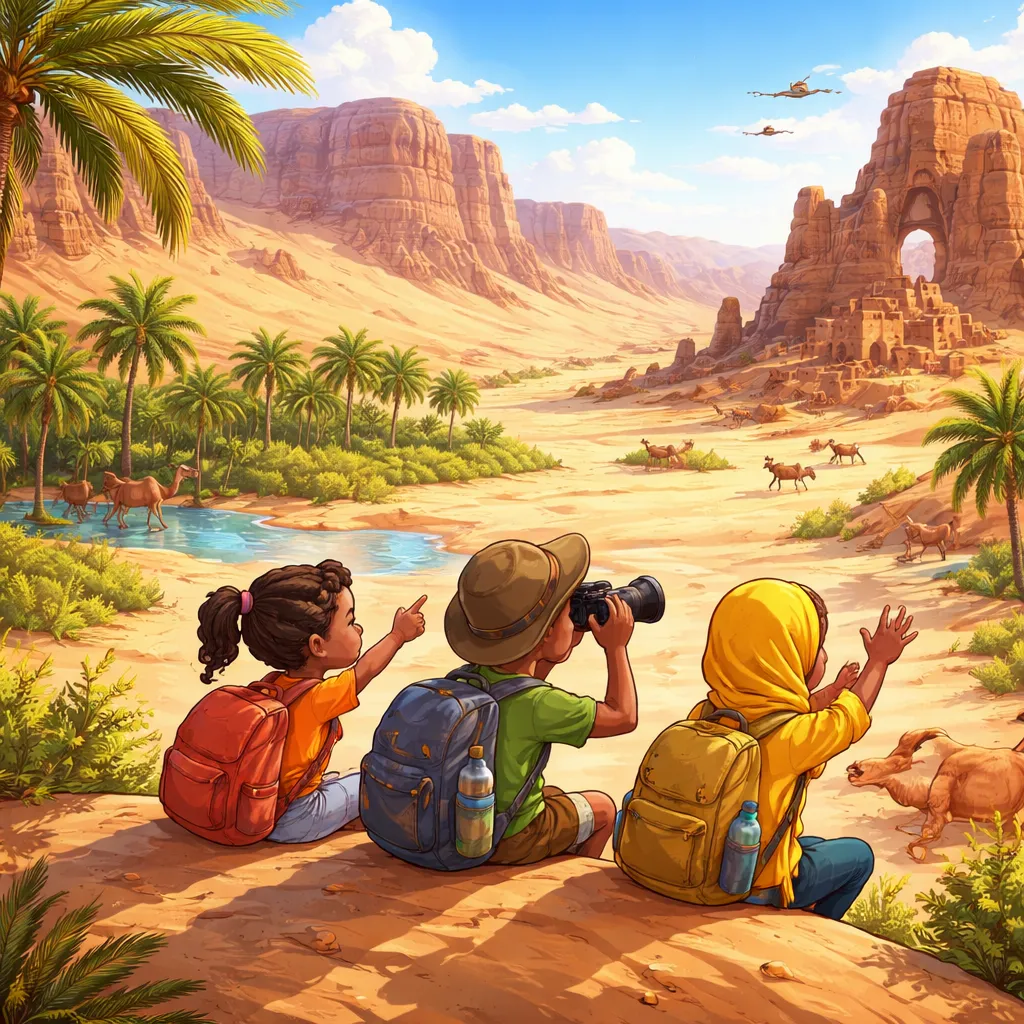

Introduction to Niger
Language learning transports us to one of the hottest countries on Earth. Today we explore a vast nation where the Sahara Desert stretches across most of the land. This country takes its name from a great river that flows through its southwest corner. Children will discover a land where people have adapted to life in extreme heat. They will learn about nomadic herders who move with their animals across the desert. Exploring Niger builds reading skills while revealing a country of resilience and natural beauty. Every fact uncovers a new challenge. Every word invites young readers to imagine this desert nation.
Where Is Niger?
Niger lies in West Africa, far from the coast. It sits landlocked, surrounded by seven other countries. Libya borders Niger to the northeast. Chad borders the east. Nigeria and Benin border the south. Burkina Faso borders the southwest. Mali borders the west. Algeria borders the northwest. The capital city is Niamey. Niamey sits on the Niger River in the southwest. The country covers over four hundred eighty thousand square miles. It ranks as one of the largest countries in West Africa. Most of the land lies within the Sahara Desert. The Niger River flows through the southern edge, creating a green ribbon of life. Finding Niger on a map shows a vast country in the heart of West Africa. Its location makes it one of the hottest and driest nations on Earth.
Interesting Facts About Niger
Niger offers many remarkable facts for young learners. It ranks as one of the hottest countries in the world. Temperatures often exceed one hundred degrees. The Sahara Desert covers over eighty percent of the country. Another interesting fact involves the country's name. Niger takes its name from the Niger River. The river flows for over two thousand five hundred miles through West Africa. Its final section runs through Niger before reaching Nigeria.
Niger also has unique wildlife. The last wild population of West African giraffes lives here. These giraffes have lighter coloring than their southern relatives. Another fun fact involves the Air Mountains. This mountain range rises from the desert like an island. Ancient rock art decorates the cliffs. People carved images of elephants and giraffes when the climate was wetter thousands of years ago.
The country also has a unique dinosaur discovery. Paleontologists found fossils of a new dinosaur species in Niger. They named it Nigersaurus. This dinosaur had a wide mouth for eating plants close to the ground. Another interesting fact involves the W National Park. This park lies along the Niger River. It protects elephants, lions, and hippos in a landscape of savanna and river forests. These facts show children a country of desert extremes and hidden oases of life.
Key Vocabulary About Niger
Let us build vocabulary for this desert nation. These words help children describe what they learn.
Nomad: a person who moves from place to place with no permanent home.
Oasis: a place in the desert with water and plants.
Savanna: a grassy plain with scattered trees.
Giraffe: a tall African mammal with a long neck.
Fossil: the preserved remains of an ancient plant or animal.
Camel: a large desert animal with a hump for storing water.
Drought: a long period with little or no rain. Introduce these words with pictures and stories. Show a camel crossing desert sands. Show the West African giraffe with its light coloring. Let children say each word aloud. These vocabulary words give children the language to explore Niger's desert environment.
Simple Sentences for Reading Practice
Short sentences help new readers build confidence. Use these sentences about Niger for practice.
Niger is a country in West Africa.
Seven countries border Niger.
The capital city is Niamey.
The Sahara Desert covers most of the land.
The Niger River flows through the southwest.
West African giraffes live in Niger.
Nomads move with their animals across the desert. Read each sentence together. Let children point to the words. Encourage them to repeat after you. Use pictures to show each fact. These simple sentences prepare young readers for longer passages.
Short Reading Passage About Niger
Here is a short passage for children to read together.
“Niger stretches across West Africa, deep in the Sahara Desert. The land lies hot and dry for most of the year. The Niger River cuts through the southwest. Its waters create a green corridor in the desert. The capital, Niamey, sits along this river. People fish, farm, and trade along its banks. North of the river, the desert takes over. Sand dunes roll across the landscape. Nomadic herders move with their camels and goats. They travel to find water and grass for their animals. In the Air Mountains, ancient rock art tells of a time when the desert was greener. Elephants and giraffes once roamed here. Today, West African giraffes still live in the wild. They walk through the savanna with their long necks reaching for leaves. The W National Park protects hippos, elephants, and lions along the river. Life in Niger flows around the water that gives the country its name.”
Read this passage slowly together. Pause to talk about each idea. Ask children to find vocabulary words in the text. This activity builds reading fluency and deepens understanding.
Fun Questions About Niger
Questions make reading interactive and engaging. Use these to start conversations with young learners.
What river flows through the southwest of Niger?
What is the capital city of Niger?
What covers most of Niger's land?
What animal has its last wild population in Niger?
What dinosaur was discovered in Niger?
What do nomadic herders travel with? Let children answer in complete sentences. Encourage them to use new vocabulary. Ask them to imagine crossing the desert with a camel. What would they need to survive? Creative questions make the topic personal and exciting.
Tips for Learning English with This Topic
Use Niger to create rich English learning experiences. Start with a map activity. Let children find Niger in West Africa. Point out the seven neighboring countries. Discuss how being landlocked and in the Sahara affects daily life. This connects geography to the concept of adaptation.
Next, introduce the vocabulary through a hands-on activity. Create a desert scene using sand in a shallow tray. Add a small water container to represent the Niger River. Place toy camels and giraffes in the sand. Talk about how nomads move with their animals to find water. Use the words "nomad," "oasis," and "drought" during the activity.
Read the passage aloud with a steady, respectful tone. Let your voice reflect the harshness of the desert and the relief of the river. After reading, let children draw a scene from Niger. One child might draw the Niger River with boats and green trees. Another might draw nomads with camels crossing sand dunes. Let them label their drawings with vocabulary words. Add blue for the river and yellow for the desert.
Incorporate a science and history connection. Talk about how the Sahara was once a greener place with more animals. Discuss how climate change affected the region. Show pictures of rock art. This shows children that language learning reading connects to climate history and paleontology.
Use music and movement to enhance the experience. Listen to West African music with drums and strings. Let children move like camels walking across sand. Pretend to cross the desert looking for water. Physical activity reinforces learning in joyful ways.
Encourage children to share their knowledge. Let them tell a family member about the West African giraffes. They can explain why Niger is so hot and dry. Teaching others builds confidence and deepens understanding.
Connect Niger to your child's world. Ask, “What animals live in dry places near us?” Compare them to camels and giraffes. Ask about rivers or lakes you have visited. Compare to the Niger River. These connections help children see that language learning reading is about understanding different environments. By exploring Niger together, you give children a rich experience. They learn new words, discover a land of desert and river, and grow their love for reading. This West African nation becomes a meaningful part of their learning journey.