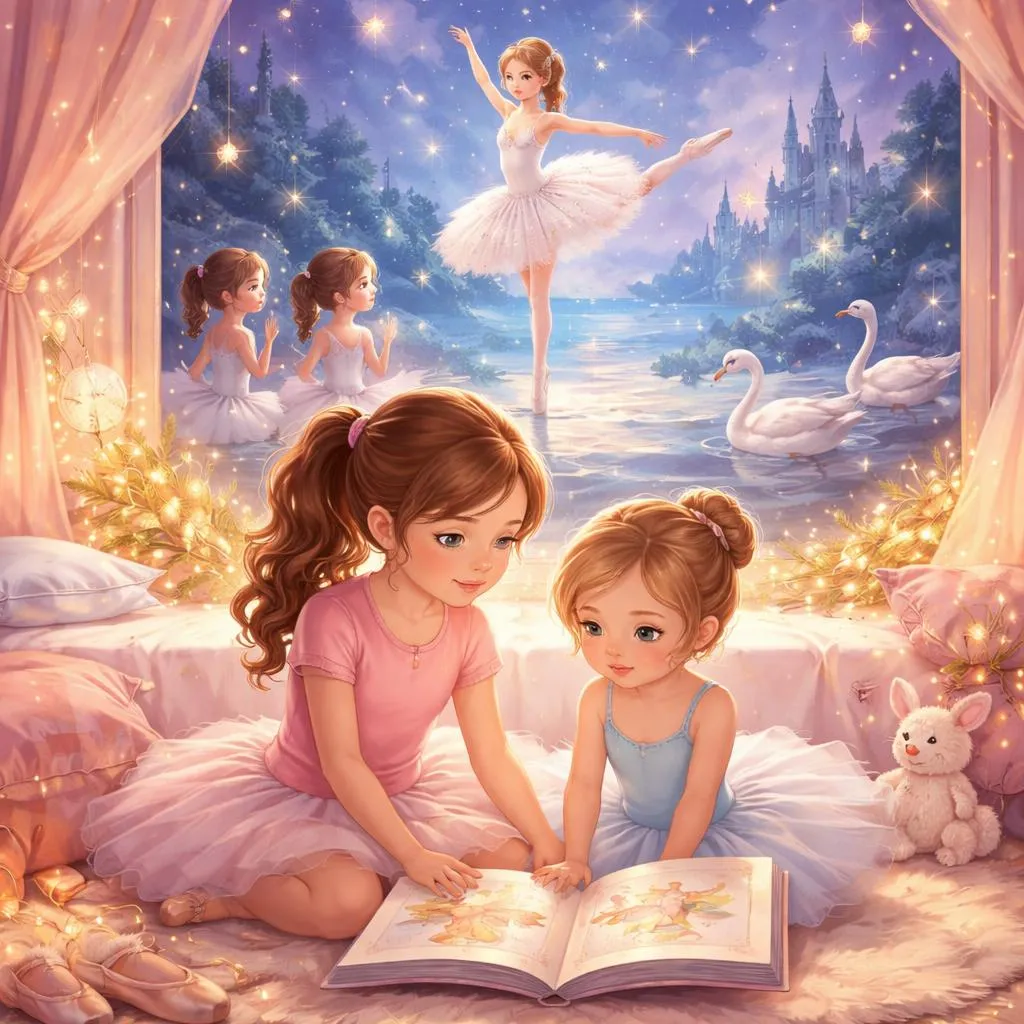

Soft music begins to play. A dancer in a white tutu appears on stage. She moves like a swan, like a dream, like something not quite human. Children watching feel something stir inside. They want to move too. They want to tell stories without words. This magic lives at the heart of children's ballet stories.
These tales combine two wonderful things. They offer narratives that capture imagination. They introduce the beauty of dance and music. Let us explore together how ballet stories can enrich your child's world.
<h2>What is the story?</h2> Many children's ballet stories come from famous ballets performed on stages worldwide. One of the most beloved is The Nutcracker. A girl named Clara receives a special gift on Christmas Eve. Her godfather gives her a nutcracker shaped like a little man.That night, magical things happen. The Christmas tree grows huge. Mice attack, led by a fierce Mouse King. Clara's Nutcracker comes to life and leads toy soldiers into battle. When Clara helps him defeat the Mouse King, he transforms into a handsome prince.
He takes Clara on a journey through the Land of Snow and the Kingdom of Sweets. They meet the Sugar Plum Fairy and watch dances from around the world. Spanish chocolate, Arabian coffee, Chinese tea, and Russian candy canes all dance for them. Finally, Clara wakes up under the Christmas tree, wondering if it was all a dream.
Children's books retell this story with beautiful illustrations. Some include CDs with music from the ballet. Others offer simple text perfect for young readers.
<h2>The message of the story</h2> Children's ballet stories carry messages about courage, imagination, and believing in magic. In The Nutcracker, Clara faces the scary Mouse King with bravery. She protects her Nutcracker even when danger threatens.The story also celebrates the power of imagination. Clara's ordinary living room becomes a magical kingdom. Her simple toys become soldiers and dancers. This shows children that their own imaginations can transform everyday life.
Many ballet stories feature young heroes and heroines who face challenges. In Coppélia, a girl named Swanilda discovers that a beautiful doll has stolen her boyfriend's attention. She proves herself smarter and more alive than any doll. In Cinderella, kindness wins over cruelty, and dreams come true.
We can ask our children, What would you imagine if your toys came to life tonight? Where would they take you? These questions connect the story to their own creative lives.
<h2>Vocabulary learning</h2> Children's ballet stories introduce special words from the world of dance. Children learn about tutus, which are the fluffy skirts dancers wear. They discover pointe shoes, which let dancers balance on their toes.The stories include character names from different cultures. Clara, Drosselmeyer, and the Sugar Plum Fairy come from The Nutcracker. Odette and Odile appear in Swan Lake. Children learn to pronounce these names and remember who each character is.
Ballet stories also teach about settings. Children visit the Land of Snow, where snowflakes dance. They explore the Kingdom of Sweets, where treats come to life. These imaginative places add new words to children's vocabularies.
After reading, we can use these words naturally. Look at your pretty skirt, it looks a little like a tutu. Would you like to try walking on your tiptoes like a ballerina? This connects story words to real life.
<h2>Phonics points</h2> The special names in children's ballet stories give us wonderful phonics practice. Many come from other languages, especially French and Russian.Nutcracker starts with N. Nnn-nutcracker. Can you feel your tongue on the roof of your mouth? What other N words can you think of? Nut, night, nice.
Ballerina has a soft B at the beginning. Bbb-ballerina. Then it has two L sounds in the middle. Bal-ler-i-na. Clapping the syllables helps children hear each part. Bal-ler-i-na. Four claps!
Sugar Plum Fairy offers wonderful sound combinations. Sugar starts with SH, not S. Shhh-ugar. Plum has the PL blend. Puh-luh-plum. Practice pushing those sounds together.
We can play with these sounds by finding other words with the same patterns. What else starts with SH like sugar? Shell, shout, shoe. What other words have the PL blend? Play, please, plant.
<h2>Grammar patterns</h2> Children's ballet stories use language that paints pictures in words. Authors describe movement and music with careful sentence structures.We see lots of action words. Clara danced through the forest of snowflakes. The Sugar Plum Fairy twirled and spun. These vivid verbs show children the many ways we can describe movement.
Descriptive sentences build pictures. The stage glowed with soft blue light. Snowflakes in white tutus floated like feathers. Children learn how adjectives and adverbs work together to create images.
Some stories include commands from ballet class. Plie, said the teacher. Stretch your arms like swans. Children learn that commands use the base form of verbs without he or she.
After reading, we can notice these patterns. The story said the snowflakes floated. If we wanted them to move faster, what word could we use? Swirled? Whirled? This builds vocabulary and grammar awareness.
<h2>Learning activities</h2> Children's ballet stories inspire wonderful movement activities. These help children connect stories to their own bodies.Put on music from a ballet like The Nutcracker or Swan Lake. Encourage your child to move like the characters. Can you float like a snowflake? Can you pounce like the Mouse King? Can you spin like the Sugar Plum Fairy? No right or wrong exists, only creative movement.
Create simple costumes using items from home. Scarves become magic veils. Old dresses become tutus. A paper crown makes anyone a prince or princess. Dress up and act out scenes from the story.
Practice simple ballet positions together. First position has heels together and toes apart. Second position has feet wider apart. Arms make a circle in front. These positions connect to what dancers do in the stories.
Draw while listening to ballet music. Ask your child what pictures the music paints in their mind. Does this sound like flowers dancing or soldiers marching? Drawing to music builds creative connections.
<h2>Printable materials</h2> Many wonderful printable materials exist for children's ballet stories. These enrich your family reading and dancing time.Look for coloring pages featuring scenes from famous ballets. Clara and her Nutcracker. The Snow Queen and her subjects. The Sugar Plum Fairy. Children can color while listening to the music.
Find printable paper dolls of ballet characters. These often include different costumes for different scenes. Children can dress their dolls for the Land of Snow or the Kingdom of Sweets.
Some websites offer simple ballet position charts. These show pictures of feet and arms in basic positions. Your child can try to copy them while you talk about the story.
You might also find printable masks for characters. A mouse mask for the Mouse King. A swan mask for Odette. Wear them while acting out scenes together.
<h2>Educational games</h2> Games based on ballet stories make learning active and fun. These work well for family time or playdates with friends who love dance.Play freeze dance with ballet music. When the music stops, freeze in a ballet pose. Can you hold your position like a real dancer? This builds balance and body control.
Create a ballet matching game. Print pictures of different ballet characters and their names. Match Clara to her picture. Match the Sugar Plum Fairy to hers. This builds reading and memory skills.
Play a game of story charades. Act out a scene from a ballet without words. Others guess which story and which part you are showing. The Mouse King battle works well for this. So does Clara waking up.
For younger children, play a simple listening game. Play short clips of different ballet music. Can your child guess which story the music belongs to? The sweet music of the Sugar Plum Fairy sounds different from the dramatic music of Swan Lake.
These games show that ballet stories offer endless opportunities for creative learning. Children absorb the tales while moving, playing, and having fun together.
Children's ballet stories open doors to worlds of beauty and imagination. They introduce children to art forms that might otherwise seem distant. A child who reads about Clara and the Nutcracker wants to see the ballet. A child who sees the ballet wants to move like the dancers. A child who moves like the dancers wants to dance themselves.
The stories also teach that art tells stories without words. Dancers communicate joy and sadness, fear and courage, through movement alone. Children learn that our bodies can speak too. They learn to express feelings through gesture and motion.
When we share ballet stories with our children, we give them gifts beyond the narratives. We give them music that will stay in their hearts. We give them characters who dance through their imaginations. We give them permission to move, to dream, to express themselves.
So find a beautiful book of The Nutcracker or another ballet tale. Put on Tchaikovsky's music. Let the words and sounds fill your home. Then stand up and dance together. No steps need to be perfect. No positions need to be precise. Just move and imagine and enjoy. The magic of ballet stories lives in moments like these.