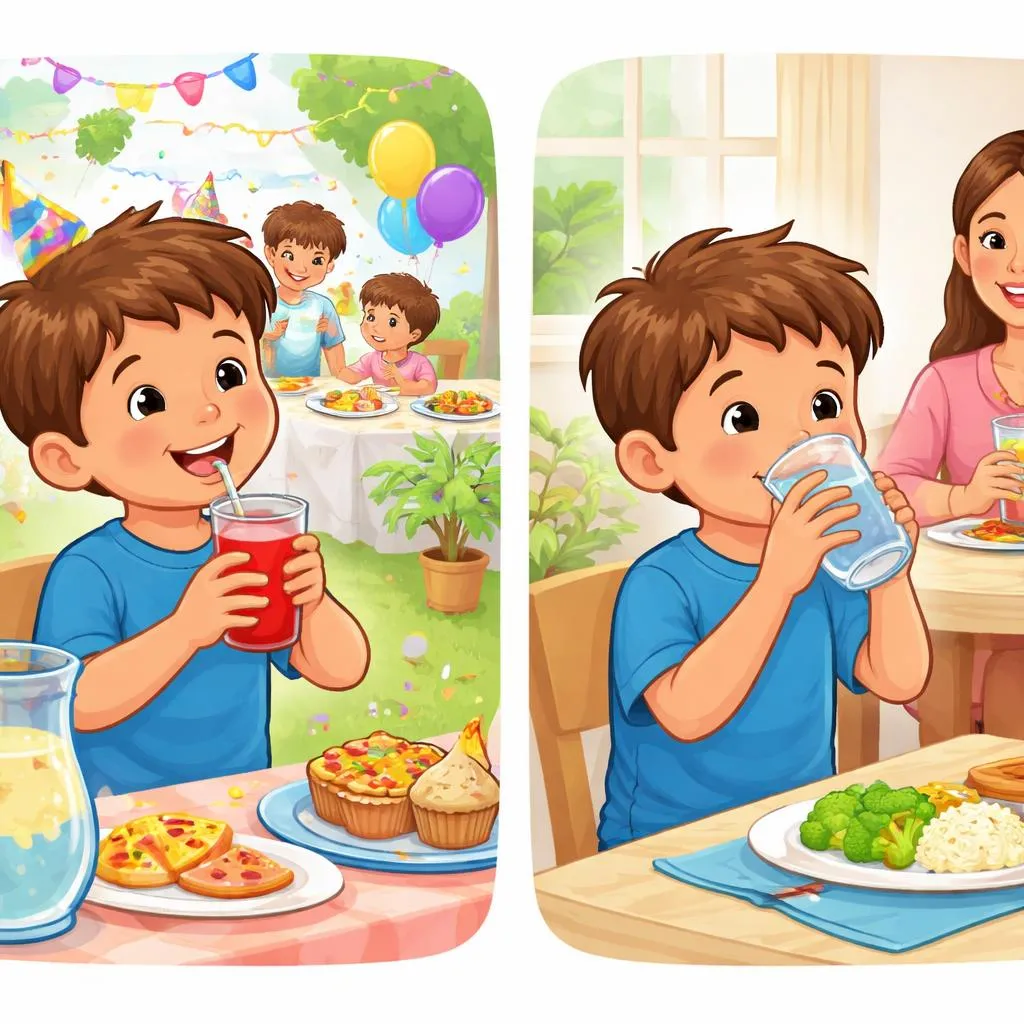

What Do These Expressions Mean? “It's drinking” and “it's having water” both mean that a living creature is taking in liquid. They tell someone that the animal or person is consuming water or another beverage. Children say these words about pets at a bowl, siblings with a cup, or birds at a fountain. Both describe hydration.
“It's drinking” means the creature is actively swallowing liquid. A child says it when a cat laps milk. It is direct and specific.
“It's having water” means the creature is in the process of drinking water as an event. A child says it when a friend takes a sip from a bottle. It is softer and more about the occasion.
These expressions seem similar. Both mean “taking in liquid.” Both describe hydration. But one is action-focused while one is event-focused.
What's the Difference? One is about the physical action of swallowing liquid. One is about the event of drinking. “It's drinking” focuses on the mouth and throat movement. The tongue laps. The throat swallows. It is specific.
“It's having water” focuses on the activity or occasion. It is broader and less physical. A person “having water” might be holding a cup or just finished. It includes the whole act.
Think of a dog at a bowl. “It's drinking” is right. A family sitting down with glasses of water. “We are having water” describes the event. One is for action. One is for occasion.
One is for the moment of swallowing. The other is for the drink period. “Drinking” = the action. “Having water” = the activity of hydrating. Use “drinking” for the act. Use “having water” for the occasion.
Also, “having water” is often used for health. “I am having water instead of soda.” “Drinking” is more neutral.
When Do We Use Each One? Use “it's drinking” for the physical action of taking in liquid. Use it for animals, people, or pets actively swallowing. Use it for close-up observation. It fits action talk.
Examples at home: “The cat is drinking milk from the bowl.” “Look, the horse is drinking from the trough.” “Stop talking while you are drinking.”
Use “it's having water” for the hydration event. Use it for meals, medicine taking, or health choices. Use it when you want to be softer. It fits occasion talk.
Examples for events: “The baby is having water from a sippy cup.” “We are having water with our dinner.” “After the run, I am having water.”
Children can use both. “Drinking” for the action. “Having water” for the event. Both are correct.
Example Sentences for Kids It's drinking: “It's drinking from the fountain.” “The dog is drinking really fast.” “Don’t spill while you are drinking.”
It's having water: “The birds are having water from the birdbath.” “We are having water before bed.” “I am having water because I’m thirsty.”
Notice “drinking” is the physical action. “Having water” is the hydrating event. Children learn both. One for mouth. One for occasion.
Parents can use both. A pet: “it's drinking.” Family dinner: “we are having water.” Children learn different hydration words.
Common Mistakes to Avoid Some children say “having water” for a quick sip. A swallow of juice is drinking. “Having water” sounds like a longer event. Use “drinking” for quick sips.
Wrong: “The bird is having water.” (fine but less precise) Better: “The bird is drinking.”
Another mistake: saying “drinking” for taking medicine with liquid. You are drinking the liquid, not the medicine. “I am having water with my pill” is clearer.
Wrong: “I am drinking my pill.” Right: “I am having water with my pill.”
Some learners think “having water” is only for people. Animals have water too. “The cat is having water” is fine, but “drinking” is simpler. Use “drinking” for animals.
Also avoid saying “it's drinking” for a dry mouth. If no liquid is going in, say “it's thirsty.” Be accurate.
Easy Memory Tips Think of “drinking” as a swallowing throat. Gulp. Sip. Action. For the physical act.
Think of “having water” as a water bottle on a table. Hydration event. For the occasion.
Another trick: remember the focus. “Drinking” = mouth and throat. “Having water” = activity. Mouth gets “drinking.” Activity gets “having water.”
Parents can say: “Drink for a sip. Have for a hydration trip.”
Practice at home. Dog at bowl: “it's drinking.” Family at dinner: “we are having water.”
Quick Practice Time Let us try a small exercise. Choose the better phrase for each situation.
A child watches a cow lower its head to a pond and swallow water. a) “It's having water.” b) “It's drinking.”
A child sees a family sitting at a picnic table with glasses of water. a) “They are drinking.” b) “They are having water.”
Answers: 1 – b. A cow actively swallowing fits the action “drinking.” 2 – a or b. Both work. “Having water” fits the picnic event.
Fill in the blank: “When I see my cat lapping milk from a bowl, I say it’s ______.” (“Drinking” is the action-focused, swallowing, direct choice.)
One more: “When we sit down for lunch and pour glasses of water, we are ______.” (“Having water” fits the event-focused, mealtime, activity description.)
Staying hydrated is important. “It's drinking” watches the action. “It's having water” marks the event. Teach your child both. A child who learns both can talk about drinking and hydration with ease.