

Mai and the Camera of the Body
 Sluvk
SluvkJoin Mai on an engaging journey as she explores the intricate wonders of the human eye, learning about its different parts and how they work together, much like a sophisticated camera. This story educates young readers on the science of sight, eye care, and the amazing capabilities of our vision.
 6 - 8 let
Hello! This is Mai. Today, Mai is looking into a mirror. She sees two beautiful circles in her face that help her see the colors of the rainbow and the faces of her friends. Today, she is exploring the Human Eye, the most amazing camera ever made!
First, Mai learns about the Cornea. This is the clear "window" at the very front of your eye. It is tough and see-through, acting like a shield to protect your eye while letting light pass inside. It also helps to bend the light so you can see clearly.
Next is the Iris. This is the colorful part of the eye! Mai’s eyes are brown, but some people have blue, green, or hazel eyes. The iris is actually a muscle that controls how much light gets in, just like the shutter on a fancy camera.
In the center of the iris is a black hole called the Pupil. When Mai is in a dark room, her pupil gets very big to let in more light. When she steps into the bright sun, the pupil shrinks to a tiny dot to protect her eye from too much brightness.
Behind the pupil sits the Lens. The lens is clear and flexible. It changes its shape to help Mai focus on things that are very close, like a book, or things that are very far away, like a mountain. This is called Accommodation.
At the very back of the eye is the Retina. This is like a movie screen! It is covered in millions of tiny light-sensitive cells called Rods and Cones. Cones help Mai see colors and sharp details, while Rods help her see in the dark.
Mai is surprised to learn that the eye actually sees everything Upside Down! The lens bends the light so much that the image on the retina is flipped. But don't worry—the brain is very smart and flips it back the right way for us.
How does the picture get to the brain? It travels through the Optic Nerve. This is like a high-speed data cable that carries electrical signals from the retina straight to the back of the brain. The brain then tells Mai, "Look! That's a red apple!"
Mai learns about Blinking. We blink about 15 to 20 times every minute! Each blink spreads a thin layer of "tears" across the eye to keep it moist and wash away tiny bits of dust or dirt. It’s like a tiny windshield wiper!
Why do we have Two Eyes? Having two eyes helps Mai with Depth Perception. Because her eyes are a few inches apart, they see two slightly different pictures. The brain combines them so Mai can tell how far away a ball is when she tries to catch it.
Mai notices her Eyebrows and Eyelashes. These aren't just for looks! Eyebrows keep sweat from dripping into her eyes, and eyelashes act like tiny sensors that tell her eyes to close quickly if something is about to fly into them.
To keep her eyes healthy, Mai wears Sunglasses on bright days and makes sure to take breaks from looking at screens. She also eats carrots and leafy greens, which contain "Vitamin A" to help her eyes stay strong and see well.
Mai’s journey into the light is finished. She realizes that her eyes are a precious gift that let her explore all the beauty of the world. She blinks once, twice, and smiles.
If you could have the eyes of any animal, would you choose the sharp eyes of an eagle or the night-vision of a cat?
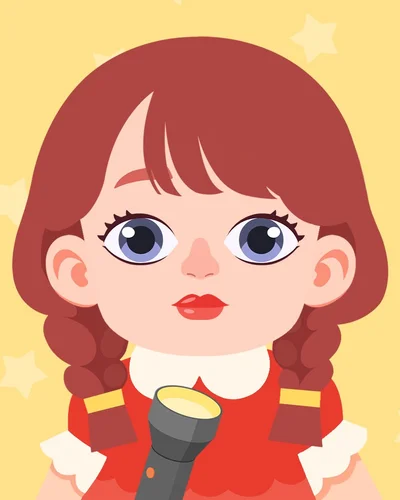 Ella's Torch Game
 My Tiny Toes
 Max Uses His Senses
 Max Has a Body
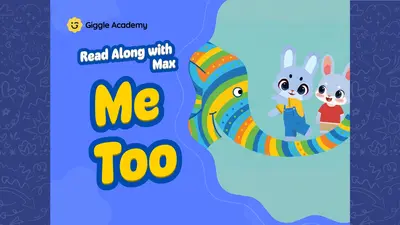 Me Too
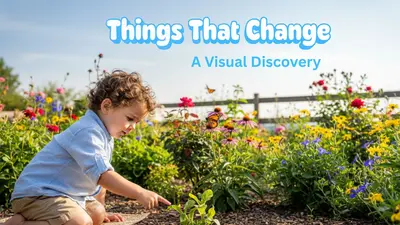 Things That Change
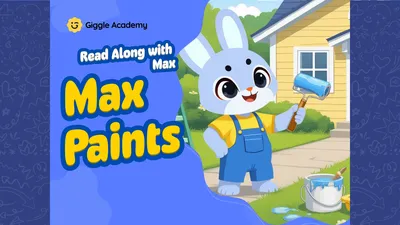 Max Paints the House
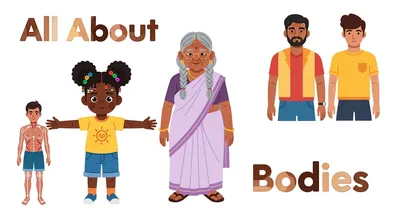 All About Bodies for Beginning Readers
 Why Does Light Bend?
 There is a lamp in my heart
 My Body
 U - U - Up
Ella found a torch in her room. She explores different parts of her face. Read with us to see what happened.
A simple and interactive story for very young children, following Max as he identifies and says goodnight to different parts of his body. Perfect for developing body awareness and a gentle bedtime routine.
Join Max, a friendly bunny, as he explores the world using his five senses. This simple and repetitive picture book is perfect for very early English learners, introducing basic vocabulary through seeing, hearing, tasting, touching, and smelling everyday objects.
Join Max, a cheerful light blue bunny, as he bakes cookies. This delightful story introduces young readers to various body parts through Max's baking adventure, perfect for early learners.
A simple and repetitive story introducing young children to different body parts. It's designed to be engaging and help with early vocabulary development regarding the human body.
This simple and insightful story explores the concept of change through everyday examples, like seeds becoming plants and caterpillars turning into butterflies. It concludes with a comforting message about personal growth, making it perfect for young readers to learn about evolution and development.
Join Max as he paints his house. This simple picture book uses repetitive sentences to introduce new words and concepts, perfect for early listeners and speakers.
Beginning Reader level: A non-fiction book for children aged 3-5 that explores the different parts of the human body and their functions.
Light is like a magician! It zooms, bounces, and even bends. Join us on a bright adventure to discover the secrets of physics—from sunlight to lenses. This book is perfect for curious little scientists who love to ask 'Why?'
A little girl is blind, but she can see with her heart. Throughout an ordinary day, she experiences the world through her senses of touch and hearing, believing that being unable to see is not frightening. In everyone’s heart, there is a light that illuminates the world, making it bright and beautiful.
This educational book helps young readers identify and name basic body parts. Through simple sentences and clear imagery, children learn about their eyes, ears, nose, mouth, hair, arms, hands, legs, feet, and stomach.
This bright picture story follows Max the Rabbit as he goes up in a hot air balloon, giving young readers many chances to hear and say the short u sound /ʌ/. Told with simple one-word-per-page text and clear, engaging illustrations, children watch Max feel up, then uh-oh as the flame goes off and he comes down safely to the ground, reinforcing the short u sound through repetition and visual storytelling.
© Copyright 2024 - Giggle Academy
上海吉咯教育科技有限公司
Copyright © 2026 - Giggle Academy