

The Floating Giants: Why Don’t Clouds Fall?
 Sluvk
SluvkDiscover the amazing science behind clouds in this engaging non-fiction story. Learn why these seemingly light, fluffy giants don't fall from the sky, how they are formed, and what different cloud shapes tell us about the weather.
 6 - 8 ετών
I am lying on my back in the green grass, looking up at the bright blue sky. Big, white, puffy clouds are drifting past like giant pieces of cotton candy. They look so light and fluffy, like you could bounce on them. But I know a secret: those clouds are actually much heavier than they look!
I use my "magic scale" to weigh a medium-sized, white cloud. I am shocked! A single cloud can weigh over a million pounds. That is the same as 100 school buses or a giant herd of elephants floating over our house. If they are that heavy, why don't they just crash down to the ground?
I zoom in closer to the cloud with my super-lens. A cloud is not a solid object like a pillow. It is actually made of billions and billions of tiny water droplets or even tiny bits of ice. These droplets are so small that you would need a microscope to see just one of them.
I look at the ground beneath the cloud. The sun is heating up the dark soil and the roads. This warm air starts to rise, just like steam from a hot bowl of soup. This is called an updraft. These warm breezes are like giant, invisible hands pushing up against the bottom of the cloud.
I watch one tiny water droplet. Because it is so small and light, the air around it creates a lot of 'friction.' It is like dropping a tiny feather versus dropping a rock. Even if there was no wind, the droplet would fall so slowly that it would take forever to reach the grass.
I notice that the air inside the cloud is often warmer than the air around it. Just like a hot air balloon, warm air wants to stay up high. As long as the air is moving and staying warm, the cloud stays "buoyant," floating happily in the sky like a boat on the ocean.
I look even closer at a droplet of water. In the center, there is a tiny speck of dust or salt. These are called nuclei. Without these tiny "seeds" of dust, the water vapor in the air wouldn't have anything to grab onto to turn into a liquid droplet. Every cloud starts with a little bit of dirt!
I see the wind changing the shape of the clouds. Some look like thin, wispy hairs—these are Cirrus clouds, and they are made of ice! Others are flat and gray like a blanket—those are Stratus clouds. The big, puffy ones I saw earlier are called Cumulus. Each shape tells us what the air is doing up there.
Why are some clouds gray? I see a dark, heavy cloud moving in. It isn't white anymore; it's a deep, scary gray. This is because the cloud has become very thick with water droplets. The sunlight cannot shine through all those layers of water, so the bottom of the cloud looks dark and shadowy to us on the ground.
I watch a cloud grow taller and taller like a giant tower. This is a Cumulonimbus, or a storm cloud. The updrafts are pushing it up so hard that it reaches the very top of the sky. Inside, the water droplets are bumping into each other and getting bigger and bigger.
Finally, the "invisible hands" of the wind can't hold the weight anymore. The water droplets have grown into heavy raindrops. They are now too big to be pushed up by the warm air. Splash! They finally win the battle against the wind and fall down as rain, cooling the earth.
I watch the rain dry up as the sun comes back out. The water turns back into an invisible gas called vapor and travels back up to start a new cloud. This is the Water Cycle. The sky is like a giant, moving bridge that moves water all around the world, and clouds are the clever ships that carry it.
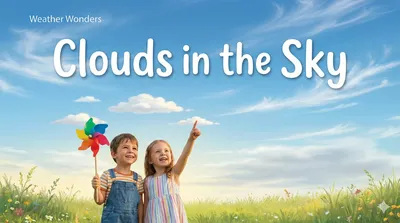 Clouds in the Sky
 Chasing the Drifting Clouds
 Light‘s Hidden Rainbow
 Weather Around Us for Beginning Readers
 A Visitor in a Tall Hat
 The Stardust Traveler's Earthly Lights
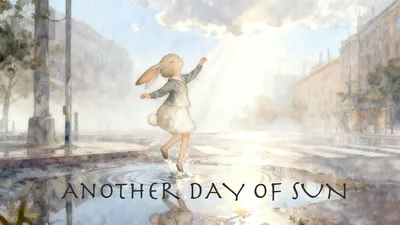 Another day of sun
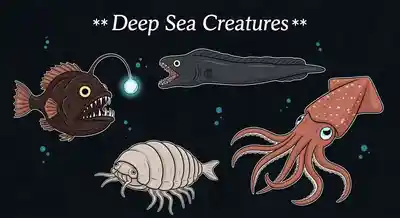 Deep Sea Creatures
 Opposites are Everywhere
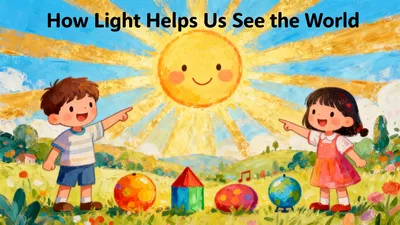 How Light Helps Us See the World
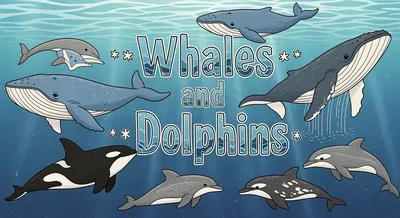 Whales and Dolphins
This book is a gentle nonfiction picture book that helps young readers notice how the sky changes from day to day. Perfect for ages 3–8 as a first step into weather science.
The picture book tells of the protagonist who gets lost at a crossroads at dusk and encounters a warm, bright wandering cloud. Chasing the cloud, they traverse unknown dangers, journey through years, and finally leave confusion behind, finding spiritual direction and comfort in the pursuit.
Book features animals,plants,fruits,and vegetables as its artistic themes. By contrasting these natural wonders in light and shadow, it reveals the magic of light, unveiling a vibrant world to kids and inspiring their love for nature and hope in life
A Bright Adventure from the Sun to Earth
An engaging non-fiction picture book for young learners that explores different types of weather, from sunny days and cloudy skies to rain, snow, and storms.
On a rainy afternoon, siblings Lila and Theo find their boredom lifted by a whimsical visitor wearing a tall hat decorated with clouds. Through playful magic involving paper airplanes and scarves, the mysterious guest turns a quiet day into a lively adventure, teaching about fun, messiness, and tidiness in a cozy suburban home setting. The story features gentle humor, imaginative fantasy, and warm family moments, perfect for young children.
A lonely stardust traveler discovers Earth’s gentle lights — guiding, joyful, and warm — all lit by people for one another. He transforms into a guardian star, forever watching over this planet where kindness shines brightest in the dark.
A story about Lumi, a little rabbit living in a city where it always rains, who learned patience and hope amidst the seemingly endless rainy days.
An informative and engaging introduction to the mysterious deep sea, exploring its unique environment and diverse creatures through clear, simple language suitable for young readers.
This is a simple story for young children about opposites. The story introduces pairs of contrasting concepts such as big and small, tall and short, loud and quiet, hot and cold, and full and empty, using examples with characters and everyday objects.
An interactive story that explores how light helps us see colors and identify objects through a series of questions and answers about common things like the sky, animals, and everyday items.
An informative and engaging exploration of whales and dolphins, detailing their biology, behavior, and ecological importance in the ocean. The story uses clear, accessible language suitable for young readers interested in marine life.
© Πνευματικά δικαιώματα 2024 - Giggle Academy
上海吉咯教育科技有限公司