

Paperbark Tree (Melaleuca)
 Sluvk
SluvkDiscover the incredible resilience and unique features of the Paperbark tree, a survivor that thrives in watery environments. Learn about its flame-resistant bark, special roots, medicinal oil, and its vital role in wetland ecosystems.
 8 - 12 سالگی
Dominating the waterlogged marshlands and coastal edges of Australia and Southeast Asia, the Melaleuca, or Paperbark tree, is a resilient survivor of the tides. It thrives in environments where soil remains permanently saturated, a condition that would drown the roots of most other terrestrial plants.
The most iconic feature of the Melaleuca is its distinctive, multi-layered white bark that peels away in thin, parchment-like sheets. This thick, spongy mantle acts as a sophisticated thermal insulator, protecting the tree's living inner core from the intense heat of bushfires while allowing it to breathe during prolonged floods.
Biologically, the Paperbark is equipped with specialized aerial roots and porous tissues called aerenchyma that transport oxygen down to the submerged root system. This "internal plumbing" allows the tree to maintain cellular respiration even when the ground is completely devoid of oxygen, turning swamps into thriving forests.
To defend itself against the relentless humidity of its habitat, the Melaleuca synthesizes a powerful essential oil known as Tea Tree oil within its needle-like leaves. This oil is a potent natural antiseptic, rich in terpenoids that inhibit the growth of fungi and bacteria that would otherwise feast on the plant in the damp air.
In the face of fire, the Melaleuca exhibits a paradoxical relationship with flames; while its papery bark ignites easily, it burns quickly without damaging the protected epicormic buds beneath. Like the Eucalyptus, it uses fire to clear out competing vegetation, swiftly resprouting from its charred trunk to reclaim its territory.
The reproductive strategy of the Paperbark is tied to the movement of water and wind, producing dense "bottlebrush" flower spikes that drip with nectar. these blooms attract a vast array of honeyeaters, bats, and insects, which facilitate pollination before the seeds are released to drift across the floodwaters.
In the realm of pharmacology and daily life, the extracts from Melaleuca alternifolia have become a global standard for natural skin care and infection control. Its ability to penetrate the skin and neutralize pathogens has made it a cornerstone of both traditional indigenous medicine and modern clinical dermatology.
Ecologically, Melaleuca forests act as vital "biological filters," trapping sediments and absorbing excess nutrients from runoff before they reach the ocean. Their complex root systems also provide essential nursery grounds for aquatic life and stabilize fragile shorelines against the erosive power of storm surges.
Modern science is exploring the use of Melaleuca in land restoration projects, as the tree is exceptionally efficient at reclaiming saline and degraded wetlands. Its hardiness makes it a primary candidate for "green belts" designed to combat rising sea levels and protect inland ecosystems from saltwater intrusion.
The story of the Paperbark is one of extraordinary versatility and protection. It stands as a guardian of the wetlands, a tree that wears its history in layers of paper and carries its medicine in every leaf, proving that life can be both delicate and indestructible.
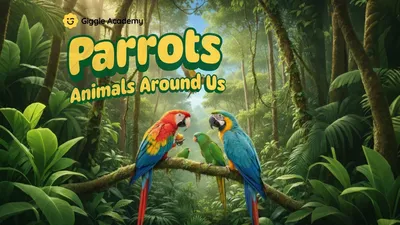 Parrots
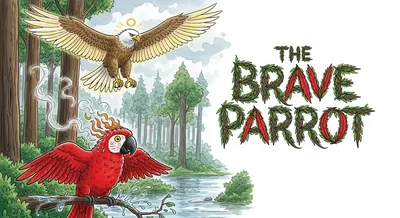 The Brave Parrot
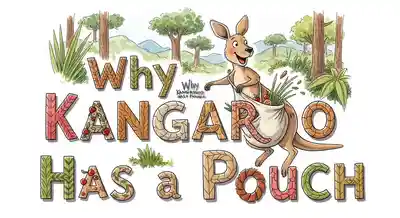 Why Kangaroo Has a Pouch
 Where is the Hat?
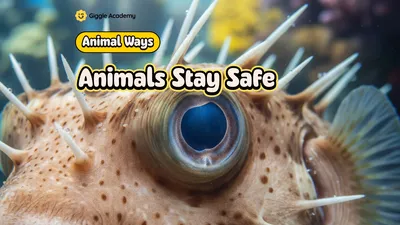 Animals Stay Safe
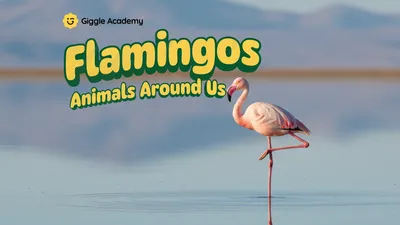 Flamingos
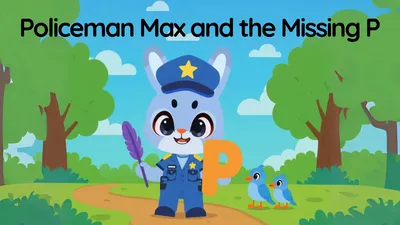 Policeman Max and the Missing P + Quiz
 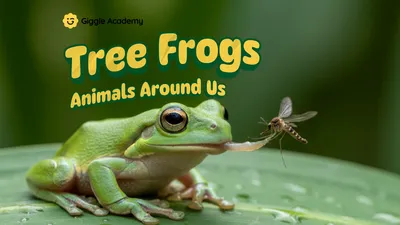 Tree Frogs
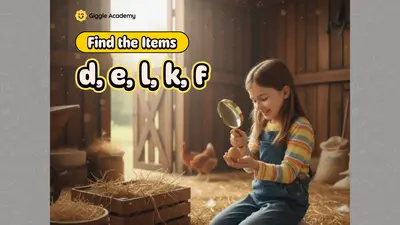 Find the Items (d, e, l, k, f)
 Animals That Sting
 What Is It?
 Winter and Spring
This factual picture book introduces young readers to parrots, covering their basic characteristics, habitats, and behaviors with clear, simple language and scientifically accurate information.
A heartwarming tale of courage and determination, 'The Brave Parrot' tells the story of a small red parrot who bravely fights a forest fire by repeatedly carrying water despite being told it is futile. The story emphasizes themes of bravery, perseverance, and compassion in a vibrant forest setting, making it suitable for young readers and their families.
A charming and playful tale explaining why kangaroos have pouches, following a snack-loving kangaroo's inventive attempts to carry her treats. Written in a lighthearted and engaging style, it's perfect for young children learning about animals through imaginative storytelling.
A simple and repetitive story perfect for early readers, introducing basic vocabulary and concepts of location with a hat, a cap, and a bat.
A simple and engaging story introducing young readers to various animals and their unique defense mechanisms or characteristic actions, perfect for early learning.
A factual, documentary-style picture book introducing young readers to the basic characteristics of flamingos, such as their habitat, physical features, diet, and social behavior.
Policeman Max is on a mission to solve the mystery of the missing letter P from the park sign! He searches high and low through the park to find out who took it!
A documentary-style picture book introducing young readers to the basic characteristics and habitats of tree frogs, using simple, factual language.
A simple and repetitive story that introduces young children to basic descriptive words and encourages observation and questioning.
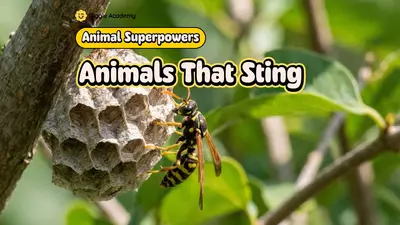
This book introduces young readers to various animals that sting, explaining why they sting and how it helps them survive. It covers bees, jellyfish, fireworms, rays, ants, and wasps.
A simple and repetitive story perfect for young children learning to say common conversational phrases, such as asking "what is it?" and replying "I know."
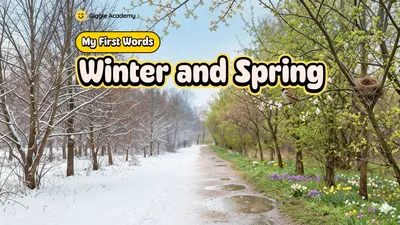
An early reader non-fiction book that introduces children to the clear visual differences between winter and spring. Using simple language and realistic illustrations, it highlights seasonal features like snow, rain, bare trees, birds, nests, and flowers, focusing on observation and basic facts.
© کپیرایت 2024 - آکادمی گیگل
上海吉咯教育科技有限公司
حقوق چاپ © 2026 - Giggle Academy