

The Desert Ship: Why Do Camels Have Humps?
 Sluvk
SluvkDiscover the incredible adaptations that make camels perfectly suited for desert life, from their mysterious humps to their sand-proof eyes and unique feet. Learn fascinating facts about these 'ships of the desert' in an engaging and informative way.
 6 - 8 bliain d’aois
I am looking at a sea of orange sand. The sun is very big and very hot. There is no water and no trees for many miles. But in the distance, I see a tall animal with long legs and a very funny back. It is a camel.
I zoom in on the camel’s back. He has one big, round mountain sitting right on top of him. Some of his friends have two! Many people think these bướu (humps) are filled with water like a giant bottle. But that is a big secret... it's not water!
I look inside the hump with my magic x-ray lens. It is actually filled with fat. The hump is like a giant lunchbox! When the camel cannot find any grass or thorns to eat in the desert, his body uses the fat in the hump for energy.
Why is the fat all in one place? I look at the rest of the camel's body. He has very little fat under his skin. If the fat were everywhere, he would be too hot, like wearing a thick winter coat in the sun! By putting the fat on his back, the rest of his body stays cool.
I see a camel that has been walking for many days without food. His hump looks floppy and small, like a deflated balloon. This is because he used up all his fat "snacks." After he eats and rests, the hump will become tall and hard again.
If the hump is not for water, how does he stay thirsty? I watch the camel find a small well. Slurp, slurp, slurp! He drinks so fast! He can drink 30 gallons of water in just ten minutes. That’s like filling up a whole bathtub!
Suddenly, the wind starts to blow the sand. The camel doesn't cry. I see his eyes have two rows of very long eyelashes. They act like a fence to keep the sand out. He even has a "third eyelid" that sweeps the dust away like a windshield wiper.
I look at the camel’s nose. He can close his nostrils completely! He snaps them shut so the sandy wind cannot get inside his nose. He is built perfectly for a sandstorm.
I look down at his feet. They are very wide and flat. When he steps on the soft sand, his feet spread out so he doesn't sink. It is like he is wearing "sand-shoes" to help him walk easily over the dunes.
I see the camel eating a bush with very sharp, long thorns. Crunch, crunch! It doesn't hurt him! His lips are very thick and tough, like leather. He can eat things that would prick our fingers.
The camel doesn't sweat much. He saves his water inside his blood, not his hump. He can travel for a long time in the heat while other animals would get too tired. He truly is the "Ship of the Desert."
I watch the camel disappear into the sunset. He is not afraid of the hot sun or the dry sand. With his lunchbox on his back and his sand-shoes on his feet, he is ready for any adventure.
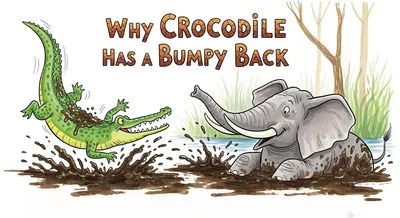 Why Crocodile Has a Bumpy Back
 Giraffes
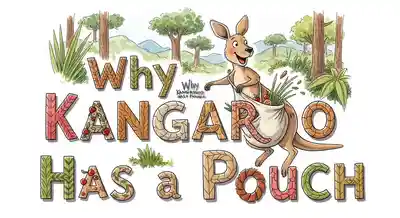 Why Kangaroo Has a Pouch
 Hippos
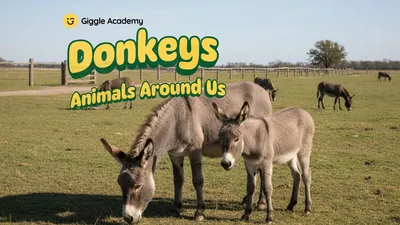 Donkeys
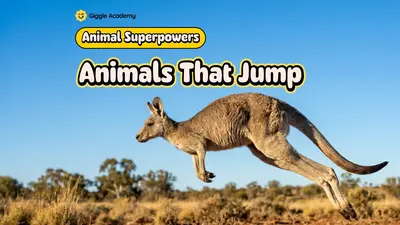 Animals That Jump
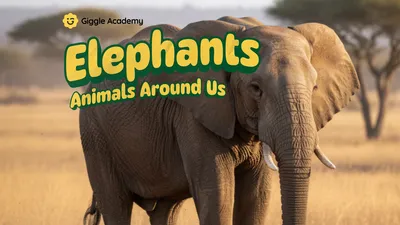 Elephants
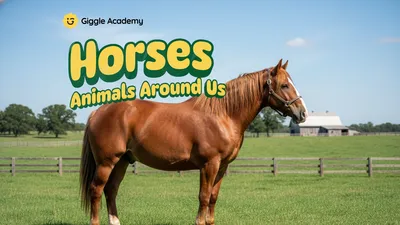 Horses
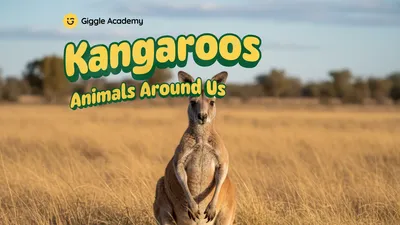 Kangaroos
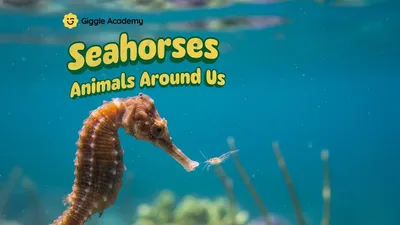 Seahorses
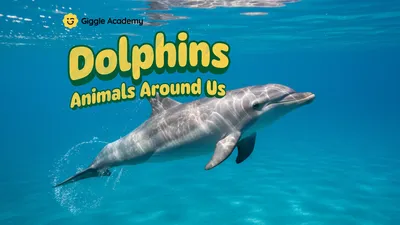 Dolphins
 Animals Feed
A charming and playful tale explaining why the crocodile has a bumpy back. Told with a lighthearted and fun tone, it follows Crocodile's love for cleanliness and how a dry season leads him to discover the beauty of his unique, bumpy skin. Perfect for young children who enjoy animal stories with a gentle moral about accepting oneself.
A simple, factual picture book introducing young readers to giraffes, describing their physical characteristics, habitat, diet, and social behavior.
A charming and playful tale explaining why kangaroos have pouches, following a snack-loving kangaroo's inventive attempts to carry her treats. Written in a lighthearted and engaging style, it's perfect for young children learning about animals through imaginative storytelling.
A factual and clear nonfiction book introducing young readers to hippos, their physical characteristics, habitat, and behaviors in a simple, direct manner.
A documentary-style picture book introducing young readers to donkeys as farm animals, describing their appearance and actions in clear, factual language.
Discover various animals and their unique jumping abilities. From frogs to kangaroos, learn how different animals use jumping for movement and safety.
A simple, factual book introducing young readers to elephants, focusing on their physical characteristics and behavior in a clear, concise manner, suitable for early vocabulary building.
A simple, non-fiction book introducing young readers to horses through basic vocabulary and concepts related to their life on a farm, including what they eat, their physical features, and their young.
A simple and factual introduction to kangaroos, describing their physical characteristics, diet, and social groups in a clear and concise manner.
A simple, factual picture book introducing young readers to seahorses, their physical characteristics, habitat, and basic behaviors in a calm, documentary-style narrative.
A simple non-fiction book that introduces young readers to dolphins, covering their habitat, physical characteristics, and behaviors in clear, concise language.
This educational story introduces young readers to various animals and how they feed their young, from cats and kangaroos to eagles and bees, highlighting the universal act of parental care in the animal kingdom.
© Cóipcheart 2024 - Acadamh Giggle
上海吉咯教育科技有限公司
Cóipcheart © 2026 - Giggle Academy