

The Bee Dance: How Do Bees Talk?
 Sluvk
SluvkDiscover the secret language of bees in this fascinating story. Join Bella the bee as she performs the waggling dance to show her friends where to find the best flowers, and learn how bees use the sun as their personal GPS.
 6 - 8 שנים
I am hovering at the entrance of a big wooden box. This is a beehive. Inside, thousands of honeybees are working. Some are cleaning, some are feeding babies, and some are just returning from the fields. It is very noisy: Bzzz... Bzzz...
I follow one bee named Bella. She just found a huge field of yellow sunflowers! They are full of sweet nectar. Bella is very excited. She needs to tell all her friends where the flowers are so they can help her.
Bella flies into the dark hive. She finds a flat area on the honeycomb. This is the "dance floor." Other bees gather around her. They touch her with their antennas to "listen" to what she is about to say.
Bella starts to move in a special way. She runs in a straight line while shaking her bottom very fast. Wiggle, wiggle, wiggle! Then she circles back and does it again. This is called the Waggle Dance.
I look at the direction Bella is facing. She is a tiny compass! If she wiggles straight up, it means: "Fly toward the sun!" If she wiggles at an angle, she is telling them exactly which way to turn to find the field.
How do the bees know if the flowers are near or far? I watch how long Bella wiggles. If she wiggles for a long time, the flowers are very far away. If she only wiggles for a split second, the flowers are just around the corner.
I see another bee returning. She found a rose bush very close to the hive. She doesn't waggle. Instead, she just runs in a small circle. This is the Round Dance. It means: "The food is very close! Just go outside and look!"
While Bella dances, the other bees sniff her. She smells like the sunflowers! She also gives them a tiny taste of the nectar she brought back. Now the other bees know exactly what kind of flower they are looking for.
The message is clear! Hundreds of bees leave the hive at once. They follow Bella's "dance map" across the sky. They don't get lost because they paid close attention to the waggle and the angle.
I realize that the sun is the bees' most important tool. Even if the sun is behind a cloud, the bees can still see where it is. They use the sun like a giant golden clock to help them measure their dance moves.
I see the bees returning with heavy yellow bags of pollen on their legs. Thanks to Bella's dance, the hive will have plenty of food for the winter. They are a perfect team, and dancing is their secret language.
The sun goes down, and the dancing stops. The bees huddle together to stay warm. I look at the honeycomb and realize that a simple dance helped build this whole golden city of honey. Nature is full of clever ways to share.
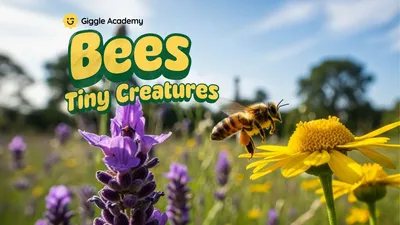 Bees
Bees Rainbow Sounds
 Ants Underground
 Max Wants to Be a Chef
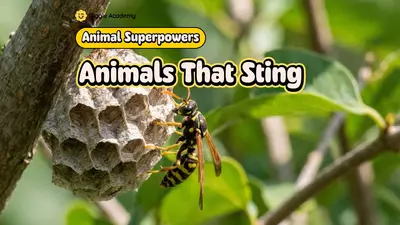 Animals That Sting
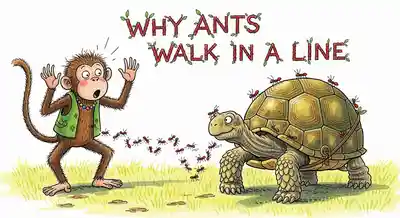 Why Ants Walk in a Line
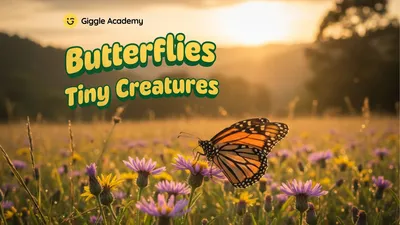 Butterflies
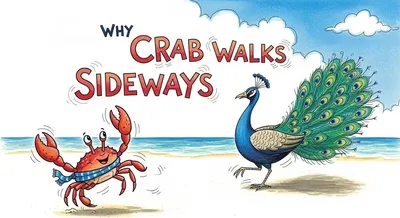 Why Crab Walks Sideways
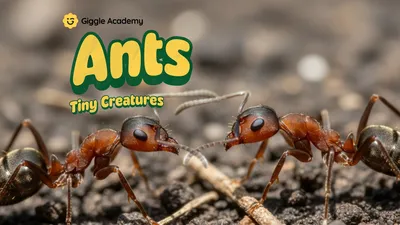 Bug Eyes: Ants
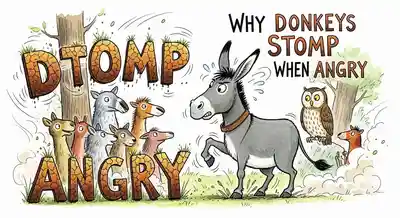 Why Donkeys Stomp When Angry
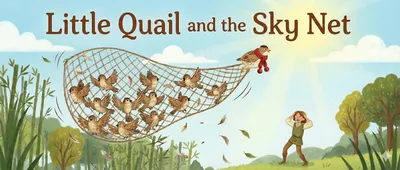 Little Quail and the Sky Net
This is an informative story that introduces young readers to the fascinating world of bees. It covers where bees live, their physical characteristics, how they work in a hive, the process of making honey, and their importance to plants.
Join Bimbee the Bee on a vibrant adventure as he discovers the world of colors and sounds in flowers. This charming story introduces young readers to various colors and the sounds associated with their names, making learning fun and engaging.
An informative and realistic exploration of ants and their colonies, explaining their roles, behaviors, and importance in nature. The story uses straightforward language and scientific facts to engage young readers interested in insects and biology.
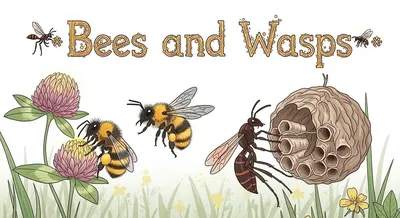
这是一篇关于蜜蜂与黄蜂的科学故事,通过真实细致的描写介绍了它们的外形特征、生活习性及生态功能。文字简洁易懂,适合儿童了解昆虫世界及其重要性。
Max wants to be a chef, and with his friend Lily, he attempts to bake a cake. Their cooking adventure quickly turns into a messy and humorous escapade involving eggs, flour, honey, and even some unexpected bee visitors, ultimately leading to a small, funny, and yummy cake.
This book introduces young readers to various animals that sting, explaining why they sting and how it helps them survive. It covers bees, jellyfish, fireworms, rays, ants, and wasps.
A playful and charming story about a group of ants learning to walk in a line with the help of friendly animals. Through lively dialogue and fun illustrations, children discover the value of working together and being organized, all told with humor and whimsy.
Discover the amazing world of butterflies in this factual and wonder-filled reader. Learn about their colorful wings, unique feeding habits, incredible life cycle from egg to chrysalis, and the astonishing journeys some take across vast distances, all while helping flowers grow.
A charming and playful story about a crab who desires to dance like the other animals. Through trial and error, Crab discovers his own unique dance—the sideways crab walk—celebrating individuality and creativity. The story uses simple language and fun onomatopoeia, perfect for young children.
This is an informative story about ants, detailing their physical characteristics, social structure, daily activities, and life cycle. Perfect for young readers curious about the natural world.
A whimsical and charming story about Donkey, who struggles to express his feelings with words but finds a unique voice through stomping. Through simple, rhythmic narration and vivid animal characters, the tale explores emotions and communication in a playful way suitable for young children.
A gentle retelling of a Jataka tale where a little quail teaches her flock the power of unity against a hunter. When squabbles begin to break their rhythm, they learn a hard lesson about the importance of togetherness.
© זכויות יוצרים 2024 - ג'יגל אקדמי
上海吉咯教育科技有限公司
© 2026 - Giggle Academy