

Jane Goodall – The woman who learned the language of the chimpanzees
 Sluvk
SluvkDiscover the incredible true story of Jane Goodall, a remarkable woman who defied expectations to live among wild chimpanzees in Africa. Learn about her patience, empathy, and groundbreaking discoveries that changed how we understand animals and our planet.
 6 - 10 שנים
Once upon a time, in a house in England, lived a little girl named Jane. Unlike other children who wanted dolls or toy cars, Jane’s favorite toy was a stuffed chimpanzee named Jubilee. She loved to sit in the garden for hours, watching how a hen laid an egg or how squirrels gathered nuts. This was her first secret: She was a Silent Watcher. She had the gift of quietness, waiting for nature to reveal its secrets to her.
Jane had a big dream: she wanted to go to Africa to live with wild animals and write books about them. People told her it was impossible because she was "just a girl" and didn't have much money. But Jane’s mother told her, "If you really want something and you work hard, you will find a way." Jane worked as a waitress and saved every penny until she finally had enough to buy a ticket for a big ship to Africa.
When she arrived in a place called Gombe in Tanzania, she didn't find the chimpanzees right away. They were shy and would run away as soon as they saw a human. Most people would have given up, but Jane used her secret power: Infinite Patience. Every morning, she climbed to a high peak and sat perfectly still. She didn't chase the chimps; she just let them get used to her being there.
After many months, a chimpanzee with a grey chin—whom Jane named David Greybeard—decided that Jane wasn't scary. He came close to her, and soon, the whole troop of chimpanzees accepted her as their friend. This was the first time a human had ever lived as a part of a chimpanzee family.
One day, Jane saw something that changed the world. She watched David Greybeard pick up a small twig, strip off the leaves, and poke it into a termite mound to "fish" for a snack. Before this, scientists thought only humans could make and use Tools. Jane’s discovery proved that animals are much smarter than we ever imagined! She showed us that we are not the only ones who can solve problems.
Jane also noticed that chimpanzees have big feelings, just like us. She saw them hug each other when they were happy, pat each other's hands to give comfort, and even throw "temper tantrums" when they were upset. She gave them names like Flo, Fifi, and Frodo instead of just giving them numbers. This was her second secret: Empathy. She treated the animals like her friends, which helped her understand their "language" of touch and sound.
For years, Jane lived in a small tent in the forest, waking up with the sun and falling asleep under the stars. She realized that the forest was a beautiful, fragile home that was in danger. Trees were being cut down, and the chimpanzees were losing their place to live. Jane decided she couldn't just watch anymore; she had to become a Voice for the Forest.
Jane began to travel all over the world, talking to people about how to protect our planet. She started a club for kids called Roots & Shoots. She taught children that every single person makes a difference every single day. She showed us that even a small seed (a Root) can grow into a giant tree that breaks through a brick wall (a Shoot).
Today, Jane Goodall is a very famous scientist and a Dame (like a knight!), but she still feels like that little girl with the toy chimpanzee. She travels almost every day, sharing a message of Hope. She believes that if we all use our brains and our hearts together, we can save the animals and the Earth.
What was the secret of Jane Goodall? It was her Gentle Spirit. She didn't use loud machines or big cages to study animals; she used her eyes, her notebook, and her kindness. She taught us that the best way to learn about the world is to listen quietly and treat every living thing with respect.
You can be like Jane too! The next time you see a bird in a tree or an ant on the sidewalk, stop and watch it for a while. Be a silent observer. Remember that every animal has a story to tell, and if you are patient and kind, you might just learn the secret language of the world around you.
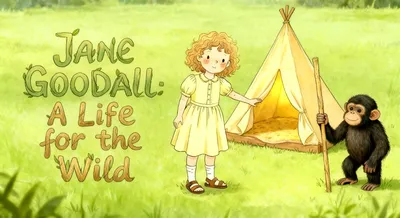 Jane Goodall: A Life for the Wild
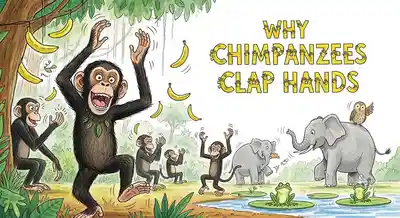 Why Chimpanzees Clap Hands
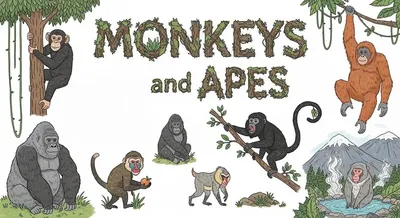 Monkeys and Apes
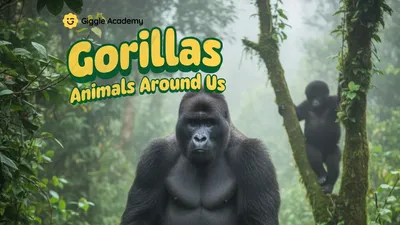 Gorillas
 I Don't Understand
 Orangutans
 Animals Feed
 Why Monkey Swings in the Trees
 Why Donkeys Stomp When Angry
 The Merchant and the Foolish Monkey
 Geese
Geese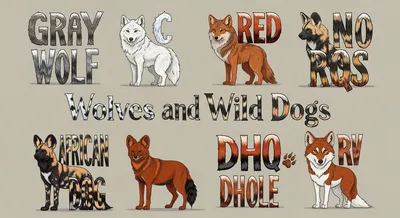 Wolves and Wild Dogs
Follow the inspiring journey of Jane Goodall, from a curious young girl observing chickens in her garden to a renowned scientist who uncovered the secrets of chimpanzees and dedicated her life to protecting wildlife and our planet. This biographical story highlights patience, discovery, and how one person can make a profound difference.
A playful and rhythmic tale about how chimpanzees discovered clapping to scare away birds and ended up creating music together in the forest. The story combines fun animal characters with a lighthearted moral about rhythm and community, ideal for young children.
An informative and realistic introduction to various species of monkeys and apes, exploring their characteristics, habitats, behaviors, and the importance of conservation efforts to protect these intelligent primates.
A simple and factual introduction to gorillas, exploring their habitat, physical characteristics, and behaviors through clear and concise language, suitable for young readers.
A playful and simple story where Max does not understand what the animals are trying to tell him, leading to a surprising and relatable conclusion about lunchtime.
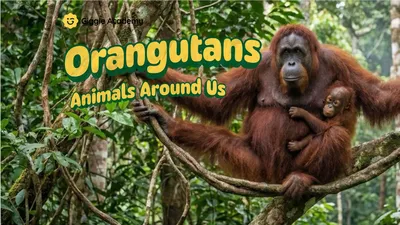
This is a factual and straightforward non-fiction book that introduces young readers to orangutans, covering their habitat, physical characteristics, diet, and social behavior in a calm and accurate tone.
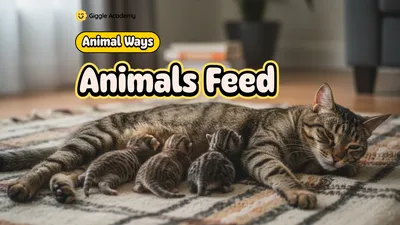
This educational story introduces young readers to various animals and how they feed their young, from cats and kangaroos to eagles and bees, highlighting the universal act of parental care in the animal kingdom.
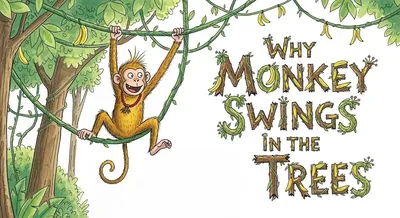
A playful and imaginative story explaining why Monkey swings in the trees, filled with lively animal characters and fun antics. The tale uses simple language and repetition to engage young readers, emphasizing fun, mischief, and problem-solving among forest friends.
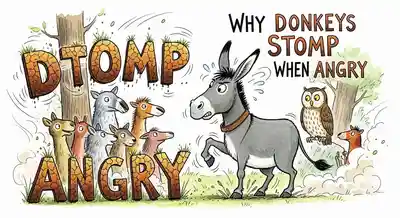
A whimsical and charming story about Donkey, who struggles to express his feelings with words but finds a unique voice through stomping. Through simple, rhythmic narration and vivid animal characters, the tale explores emotions and communication in a playful way suitable for young children.
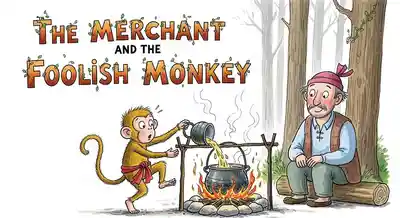
A gentle, humorous story about a well-meaning monkey who tries to help a merchant cook soup but misunderstands instructions, causing a mess. Through this, the monkey learns the value of patience and observation. The simple language and playful tone make it ideal for young children.
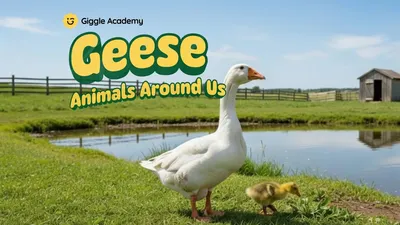
This is a simple, factual picture book that introduces young readers to geese as farm animals. It highlights key features such as their long necks, beaks, and behaviors like eating plants, walking, and swimming, along with introducing the term 'gosling' for a baby goose.
This educational story explores different species of wolves and wild dogs, describing their habitats, hunting behaviors, social structures, and the importance of conservation efforts. Written in clear, simple language, it is ideal for young readers interested in wildlife and nature.
© זכויות יוצרים 2024 - ג'יגל אקדמי
上海吉咯教育科技有限公司
© 2026 - Giggle Academy